Six tea families, many ways to welcome a guest, and drinks shaped by everyday life.
Chinese tea is commonly grouped by processing into green, white, yellow, oolong, black (hongcha) and dark tea (heicha). Jasmine tea is scented tea, not a seventh basic family. Tea-making skills and associated social practices were inscribed by UNESCO in 2022.
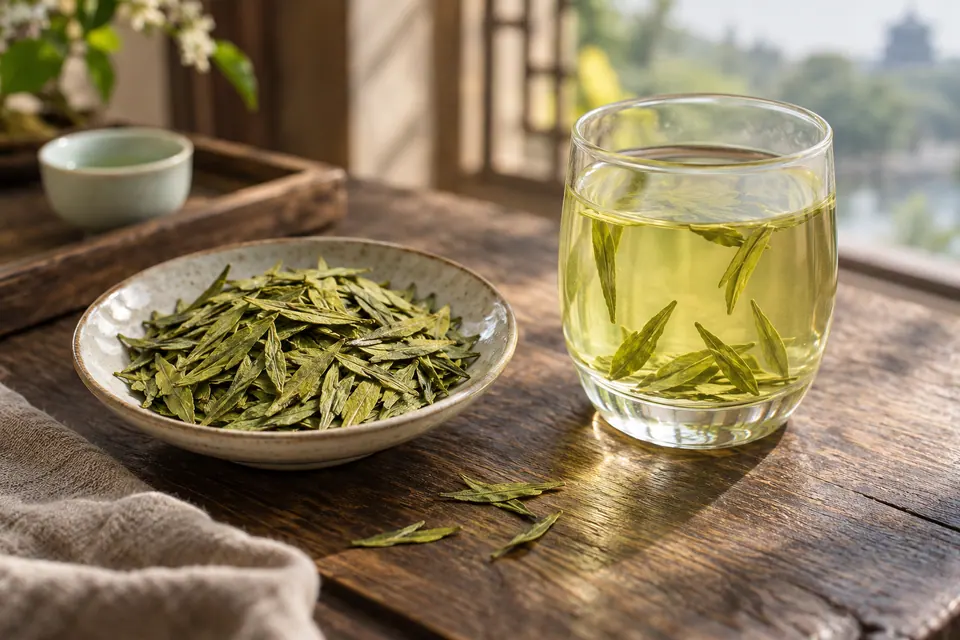
Longjing green teaAI-generated · representative preparation
Flat green leaves with a fresh, often chestnut-like aroma and a clear, gentle infusion.
The story behind it
Pan-firing stops oxidation and helps shape the leaves. West Lake Longjing is a specific origin designation, not a label for every flat green tea; growing area, cultivar, harvest and processing all influence the cup.
At the table
Begin with water around 80–85°C and adjust to the leaf; avoid prolonged steeping if bitterness builds.
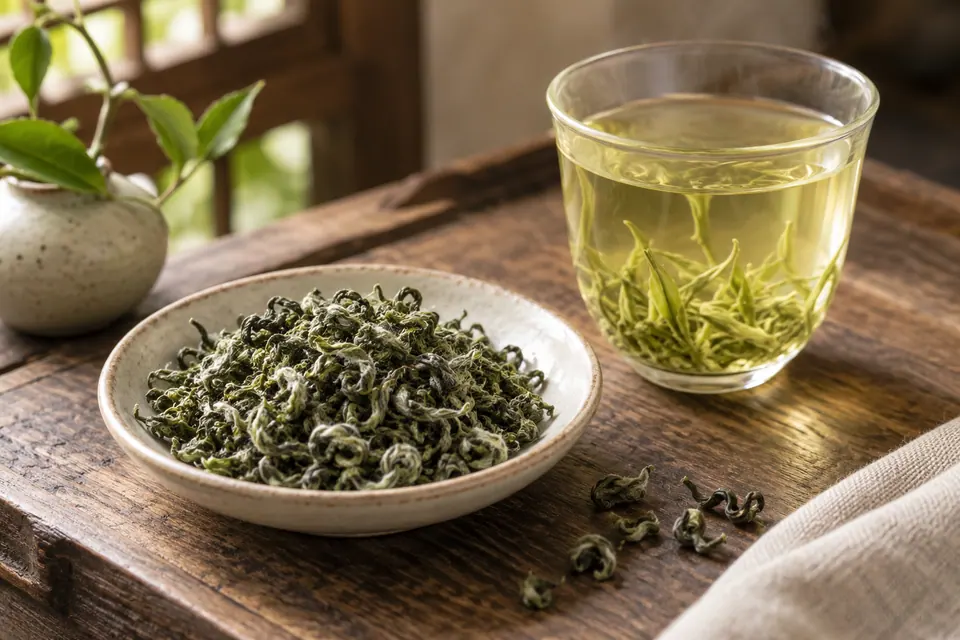
Biluochun green teaAI-generated · representative preparation
Fine curled leaves with downy tips, a fresh aroma and delicate flavor.
The story behind it
Traditional Dongting Biluochun is linked to the hills around Lake Tai, not to Dongting Lake in Hunan. Its curled shape and early spring picking distinguish it from flat-leaf Longjing, even though both are green teas.
At the table
Use moderately cooled water and a light hand with the leaf quantity.
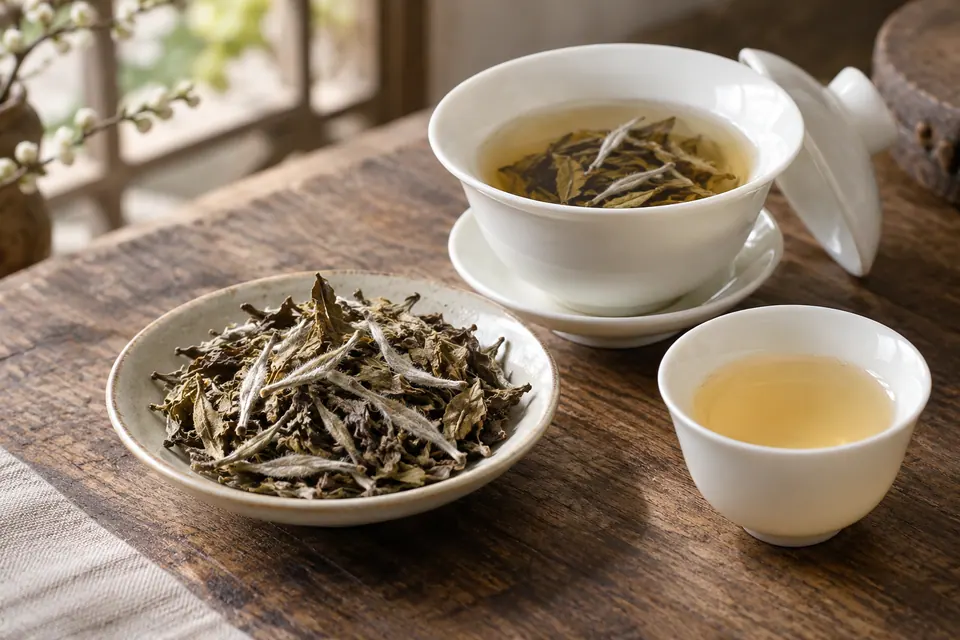
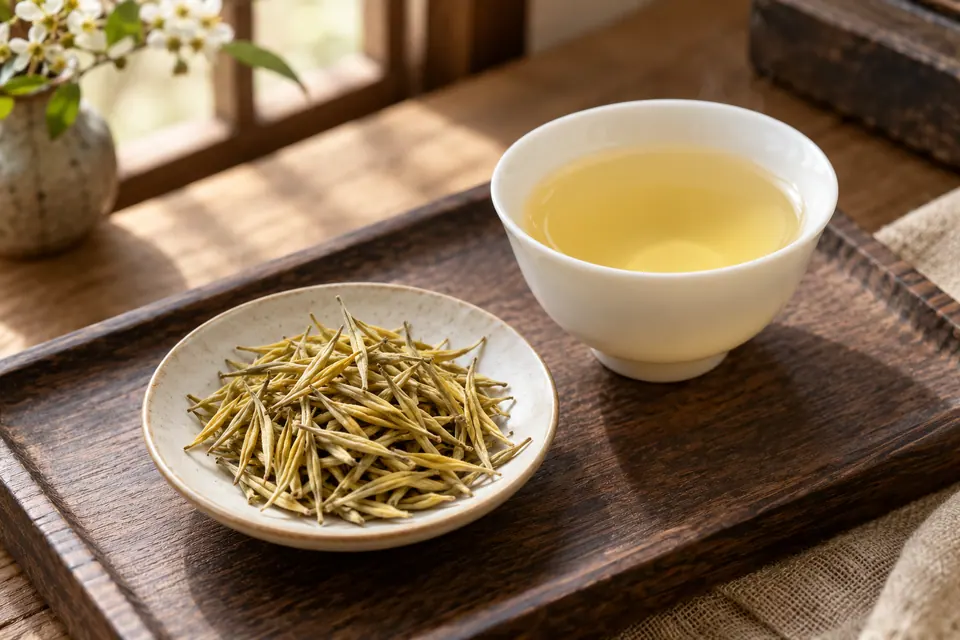
Bai Mudan-style white teaAI-generated · representative preparation
Often softly floral, hay-like or honeyed, with styles ranging from buds to mature leaves.
The story behind it
White tea relies mainly on withering and drying, with less shaping than many other teas. Silver Needle, White Peony and Shou Mei use different leaf grades. Anji Baicha, despite its name, is processed as green tea.
At the table
Adjust water temperature and steeping to leaf grade and age; older tea is not automatically better.
A mellow tea with a gentle yellow-green infusion and less grassy sharpness than some green teas.
The story behind it
The distinctive menhuang, or covered yellowing, step gives yellow tea its own processing category. Junshan Yinzhen and Mengding Huangya are examples; it is not simply green tea that has turned yellow in storage.
At the table
Use a small pot or glass and adjust the infusion to the specific tea rather than its color alone.
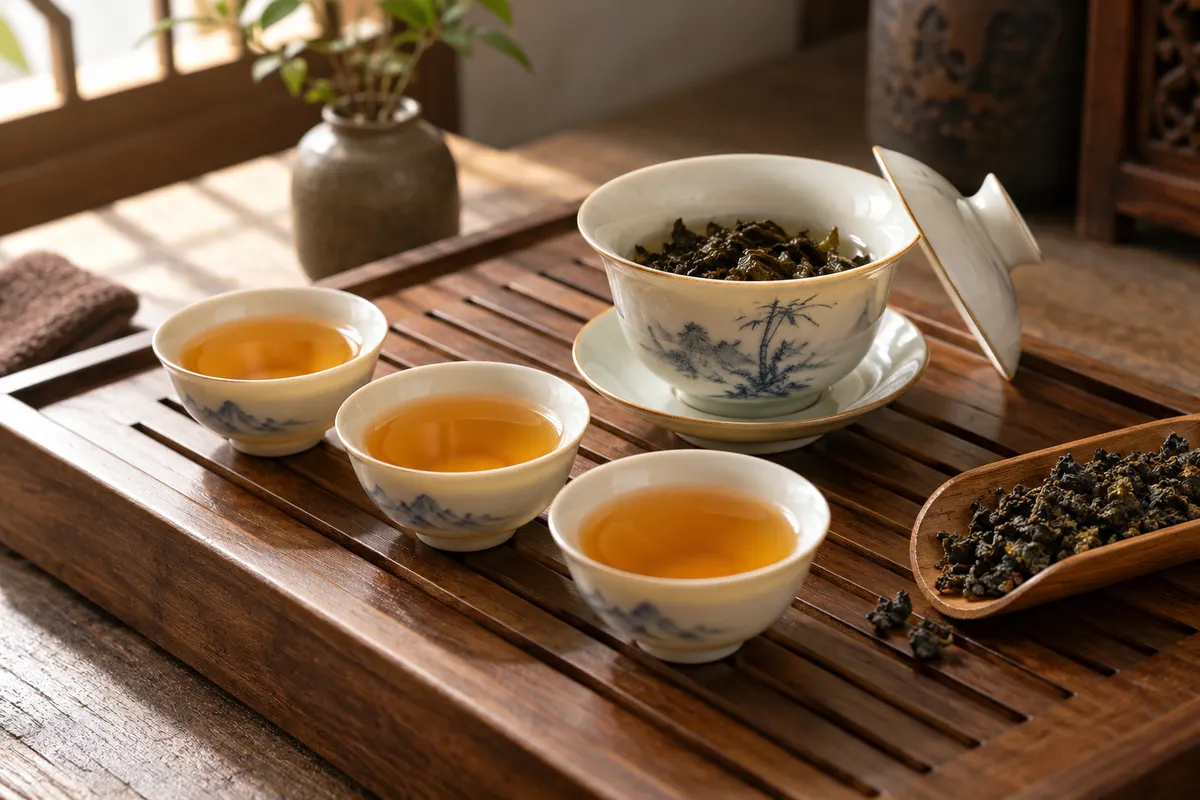
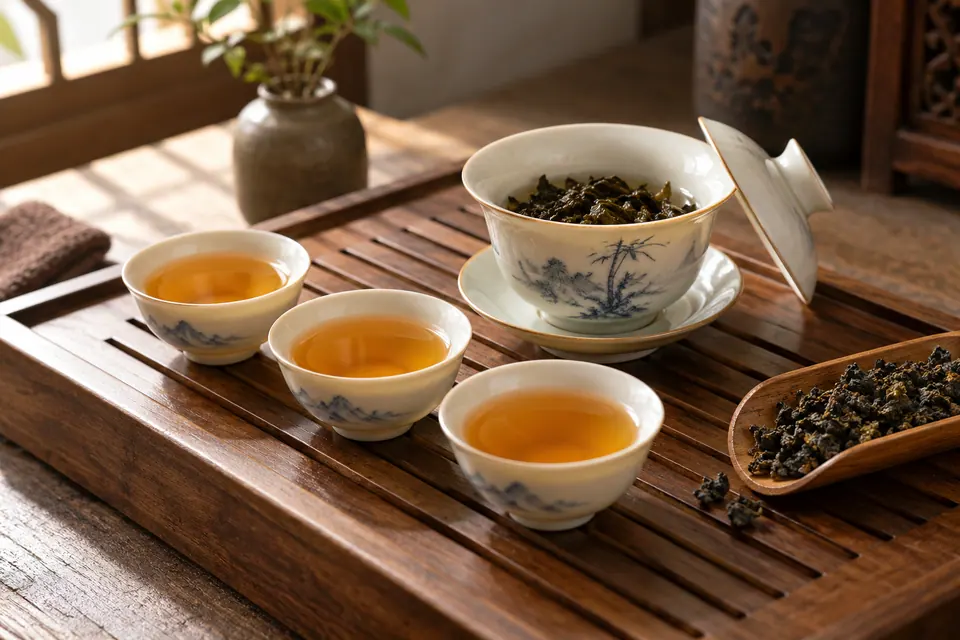
Tieguanyin names both a tea cultivar and a well-known tea style. Partial oxidation, rolling and roasting create a range of expressions, so a light floral cup and a warm roasted cup can both belong to this tradition.
At the table
Try short repeated infusions in a gaiwan, comparing aroma across steeps.
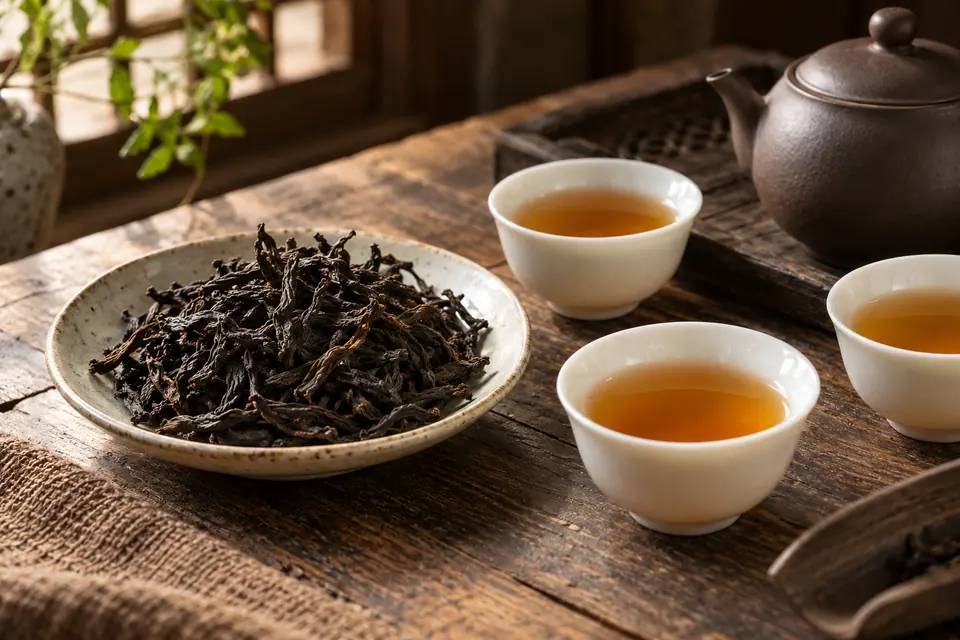
Wuyi rock oolongAI-generated · representative preparation
Oolong with roasted, floral or fruit-like notes and a lingering finish, depending on cultivar and roast.
The story behind it
The rocky Wuyi landscape is associated with this tea tradition. Dahongpao, Rougui and Shuixian are familiar names, but origin, cultivar and roast should be distinguished rather than treated as a single flavor.
At the table
Brew with hot water in short infusions and let the cup cool slightly before smelling and tasting.
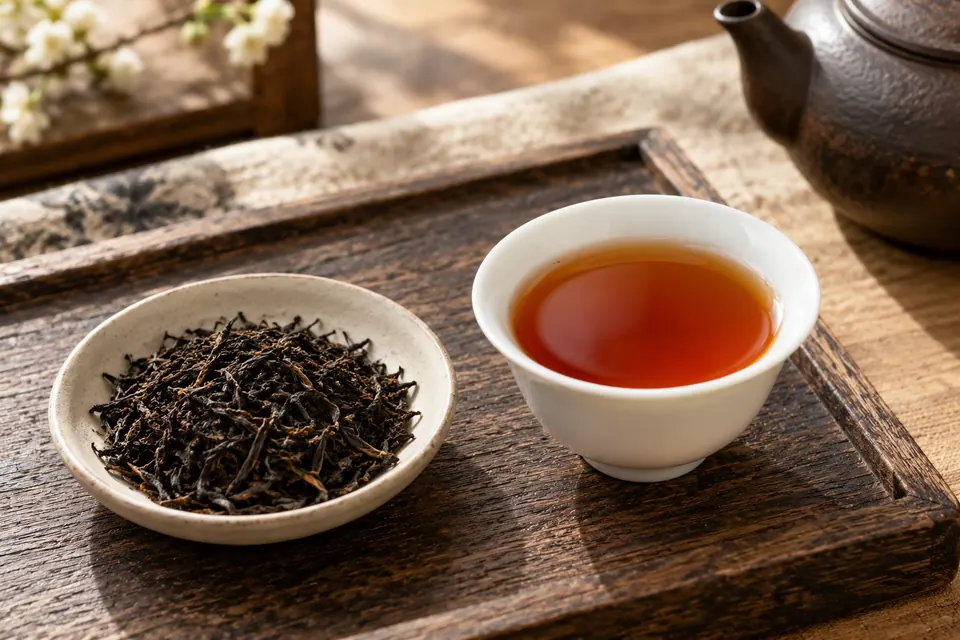
Qimen / Keemun black teaAI-generated · representative preparation
A fully oxidized tea with a bright infusion and floral, fruity or honeyed aromas.
The story behind it
English “black tea” is hongcha, literally red tea, in Chinese, named for the liquor rather than the dry leaf. Qimen is an important example; Yunnan Dianhong and Fujian black teas offer other regional expressions.
At the table
Taste plain first to notice the aroma before adding milk or sugar.
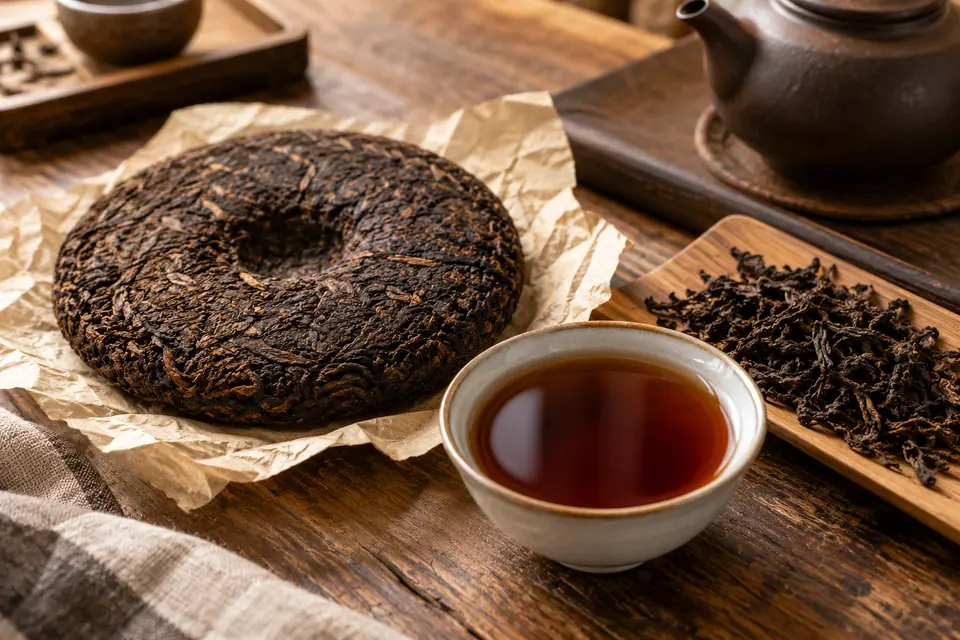
Ripe pu-erh tea and a compressed tea cakeAI-generated · representative preparation
Sheng can be brisk and aromatic; shu often tastes mellow and earthy. Both change with storage.
The story behind it
Pu’er is not one uniform dark tea. Sheng, or raw, and shu, or ripened, have different processing paths; shu uses an accelerated pile-fermentation step. Tea forests and the knowledge of local communities are part of Yunnan’s broader tea heritage.
At the table
Ask whether it is sheng or shu, and use several short infusions; age alone does not prove quality.
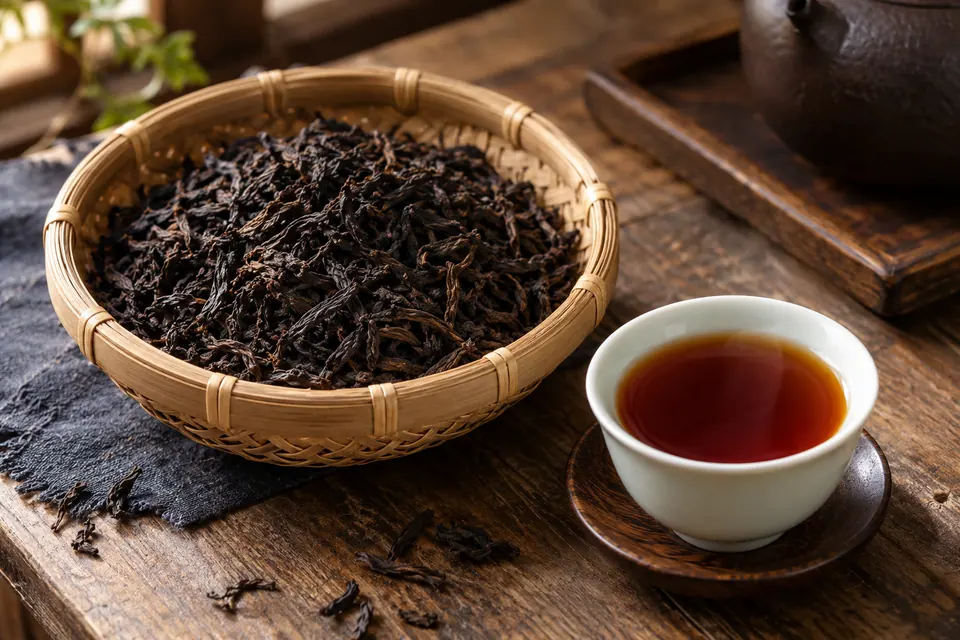
Liubao dark teaAI-generated · representative preparation
A post-fermented dark tea with a deep infusion and mellow, often woody or earthy notes.
The story behind it
Heicha, or dark tea, is a different family from English black tea. Liubao’s fermentation and storage traditions place it in this category, alongside other regional dark teas such as Hunan’s Anhua tea.
At the table
Try short infusions with near-boiling water, adjusting strength to the batch.
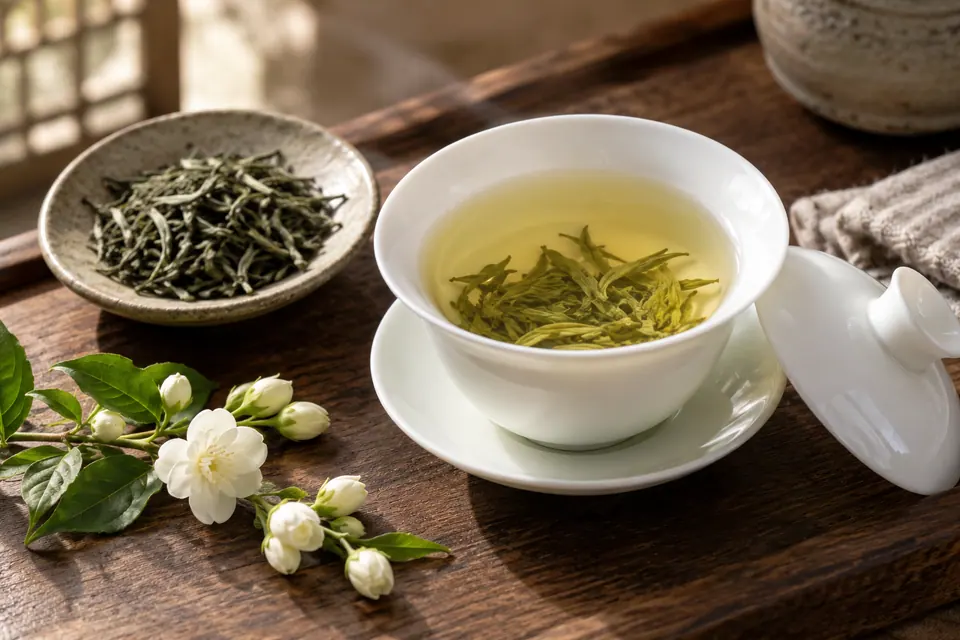
Tea leaves scented with jasmine blossoms, usually producing a floral cup over a green-tea base.
The story behind it
Scenting transfers fragrance from flowers to processed tea. The blossoms may be removed, so an absence of petals does not mean an absence of real jasmine scenting. Fuzhou is a well-known center of this craft.
At the table
Brew gently if the base tea is delicate; flower aroma need not come with added sweetness.
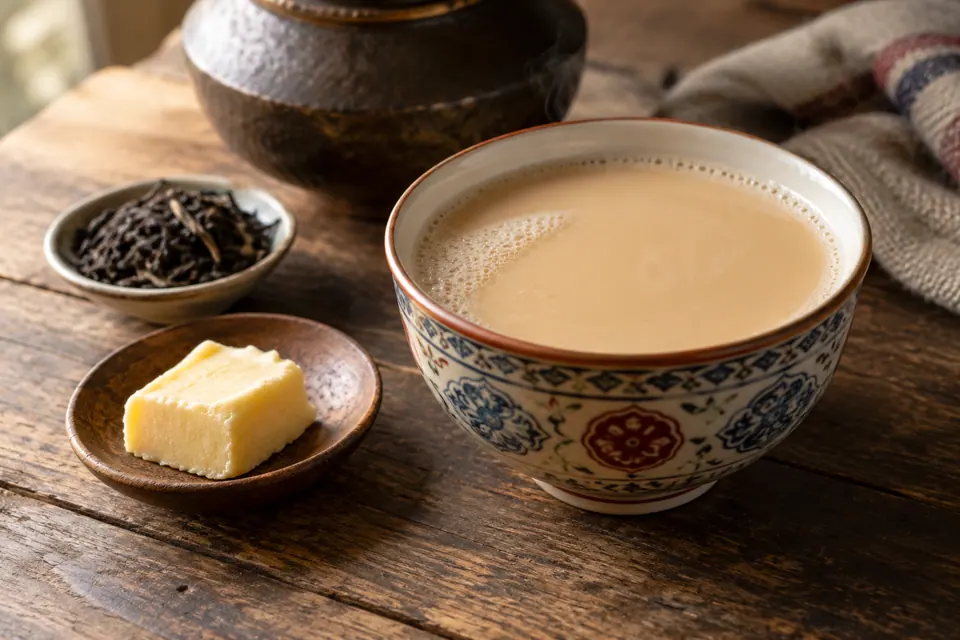
Tea blended with butter and salt into a warm, savory drink rather than a sweet milk tea.
The story behind it
Butter tea is part of Tibetan everyday hospitality and is often paired with tsampa. It reflects highland food traditions and the movement of tea into pastoral regions; it is a prepared drink, not a separate botanical tea family.
At the table
Take a small sip first to get used to the salt and butter; dairy is integral to the usual recipe.
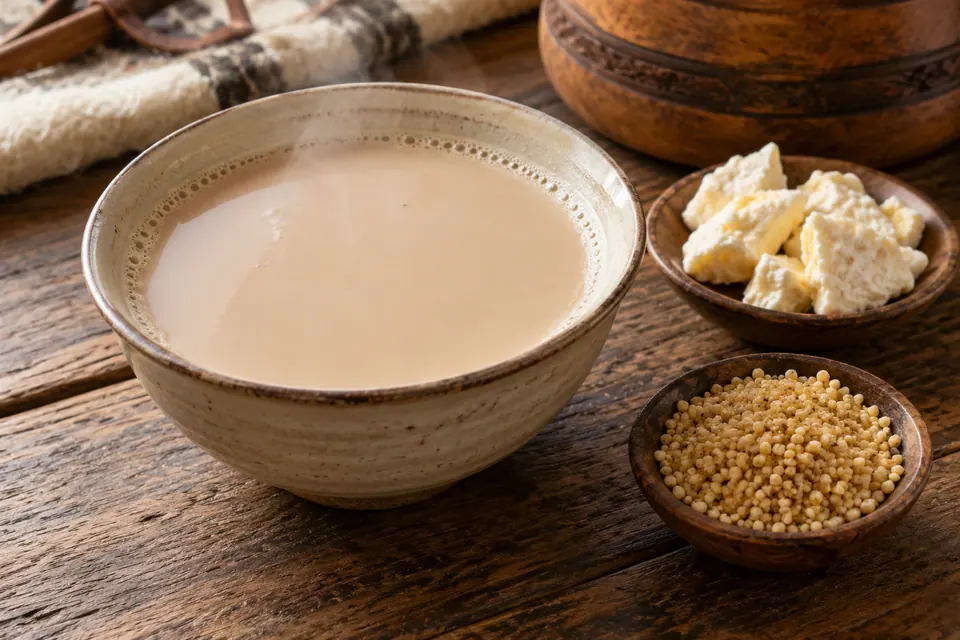
Tea simmered with milk and often salt, sometimes accompanied by toasted grains or dairy foods.
The story behind it
Milk tea fits the pastoral food traditions of Mongolian communities. Preparation and accompaniments vary by household and locality, and its savory role at the table differs from a sweet café drink.
At the table
Try with toasted millet or local breads when offered.
Hong Kong milk teaAI-generated · representative preparation
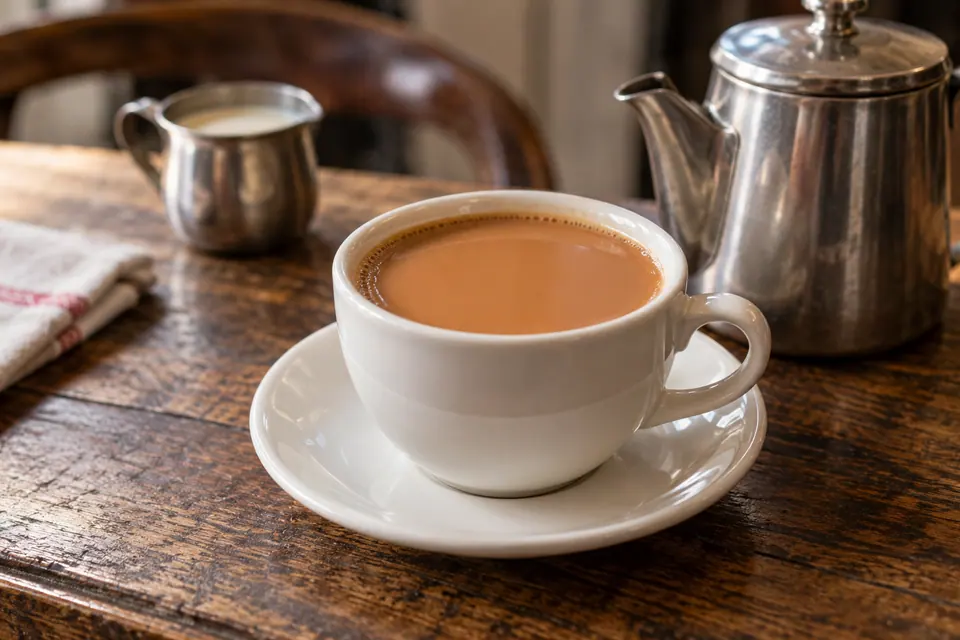
Strong black tea blended with evaporated milk for a brisk, creamy cup, served hot or iced.
The story behind it
A cha chaan teng staple, Hong Kong milk tea developed through local adaptation of British-style tea drinking. Straining and repeated pouring are part of the craft; the tea blend matters as much as the milk.
At the table
Try it with an egg tart or pineapple bun, adjusting sugar to your preference.
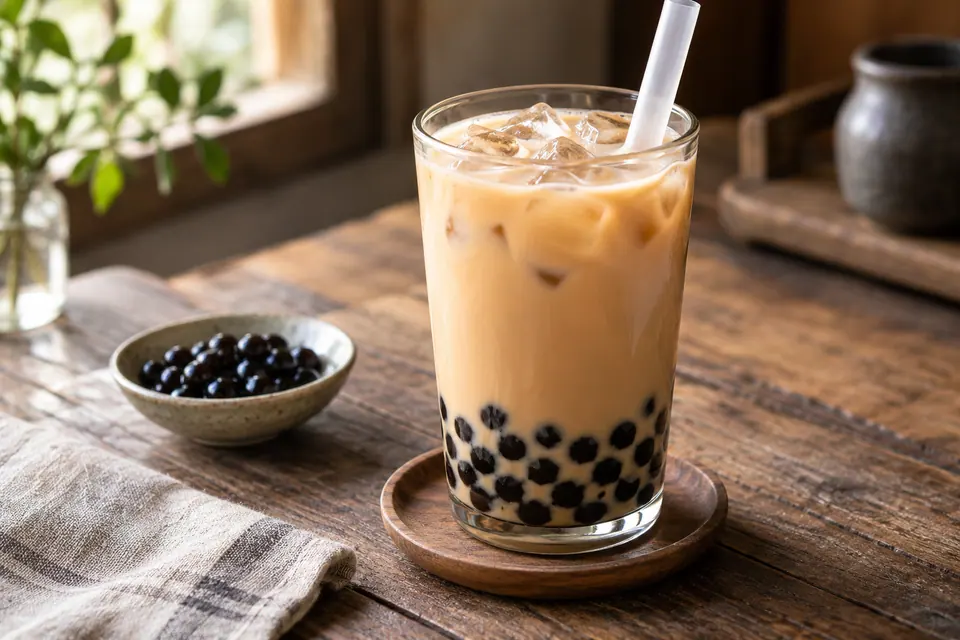
Tea with milk or creamer and chewy tapioca pearls, often served chilled and sweetened.
The story behind it
Bubble tea grew from Taiwan’s modern tea-shop culture and became an international drink. Competing invention claims remain, so its development is better described as a local commercial innovation than a single uncontested origin story.
At the table
Choose sugar and ice levels where available; a milk-tea label does not guarantee fresh dairy milk.