Pleated, steamed, boiled or pan-fried. Small parcels with very different stories.
A dumpling is a family of foods, not one recipe. Wheat wrappers, rice dough and translucent starch skins produce different textures. Northern jiaozi often belong to family meals; Cantonese dim sum belongs to the shared tea table.
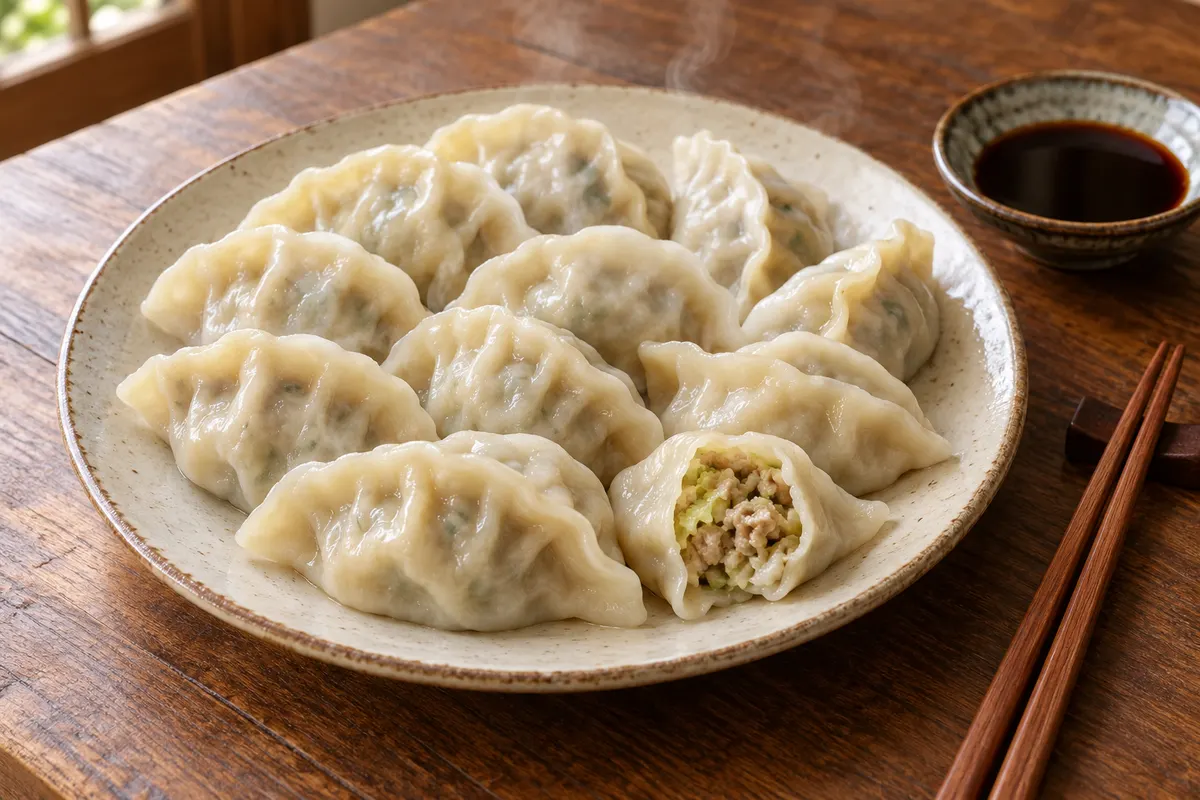
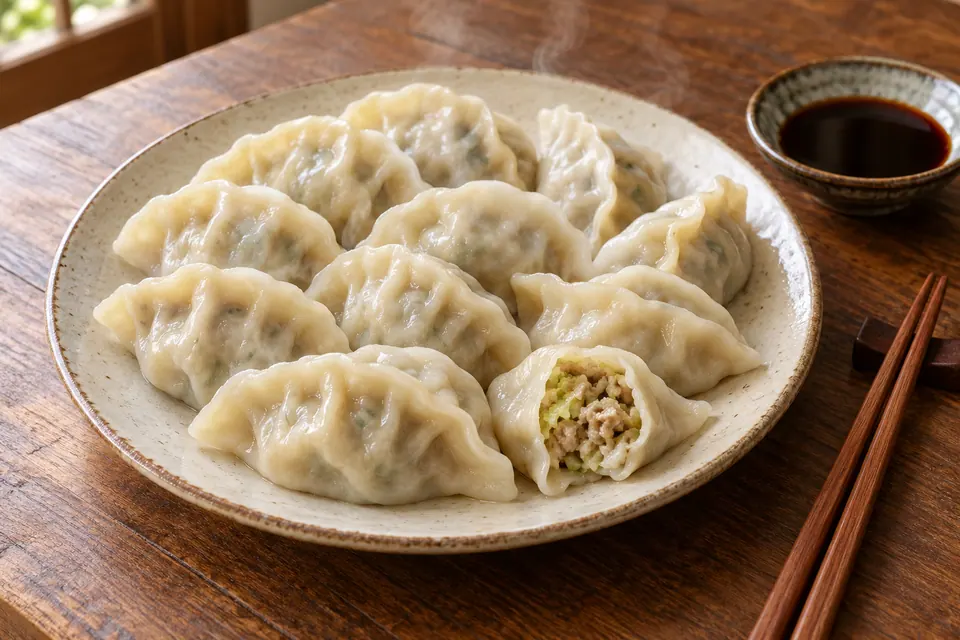
Crescent-shaped wheat wrappers with juicy meat or vegetable fillings, boiled, steamed or pan-fried.
The story behind it
Making jiaozi together is part of Lunar New Year in many northern households. Their ingot-like shape carries wishes for prosperity. Stories crediting the physician Zhang Zhongjing with inventing them are folklore, not a settled historical origin.
At the table
Try cabbage and pork, chive and egg, or lamb; vinegar and garlic are common accompaniments.
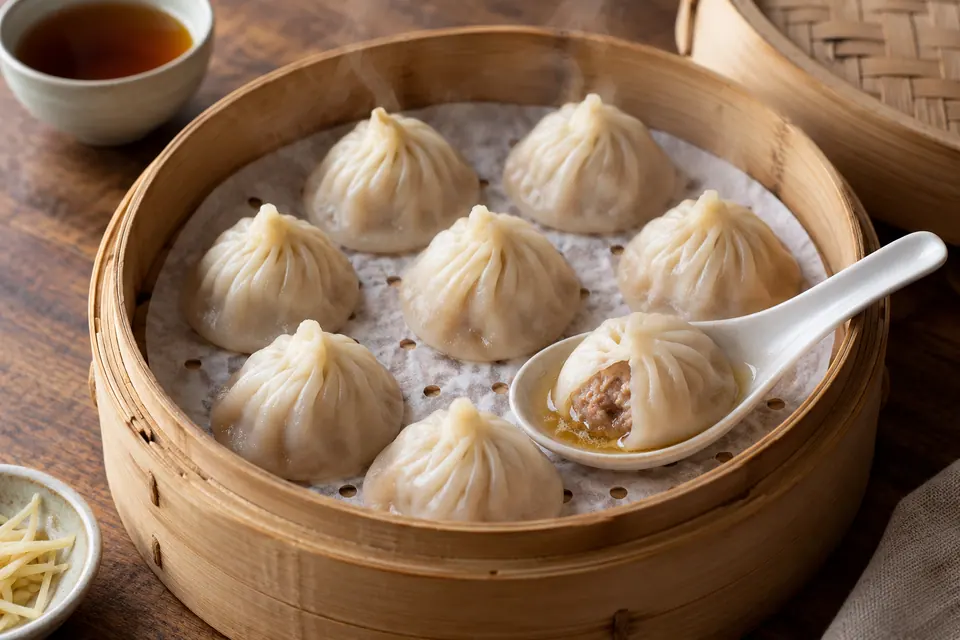
Thin pleated wrappers enclose pork and hot broth created as aspic melts during steaming.
The story behind it
Nanxiang in Shanghai is closely associated with this craft, while other Jiangnan towns have their own versions. Despite the word bao, the wrapper is generally unleavened; it differs from a fluffy breakfast bun.
At the table
Rest one on a spoon, open a small hole and let the broth cool; try vinegar with fine ginger.
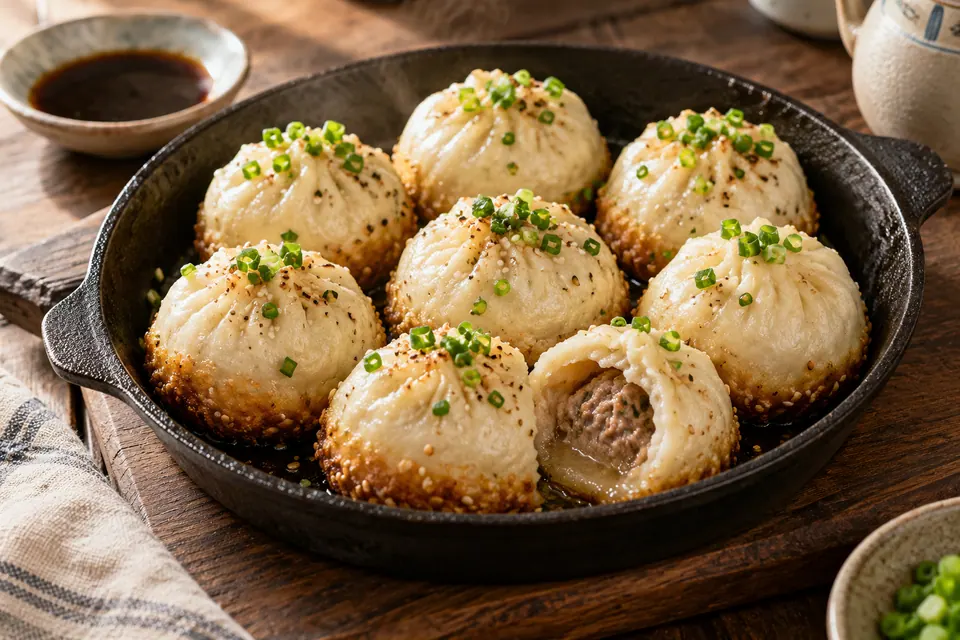
A crisp golden base, a soft upper wrapper and a savory pork center; some styles are very soupy.
The story behind it
Shanghai retains the Jiangnan use of mantou for filled buns. Shengjian belongs to neighborhood snack shops and teahouse culture, with both soup-rich and less soupy styles rather than one universal formula.
At the table
Take a small first bite to release hot steam before eating the crisp base.
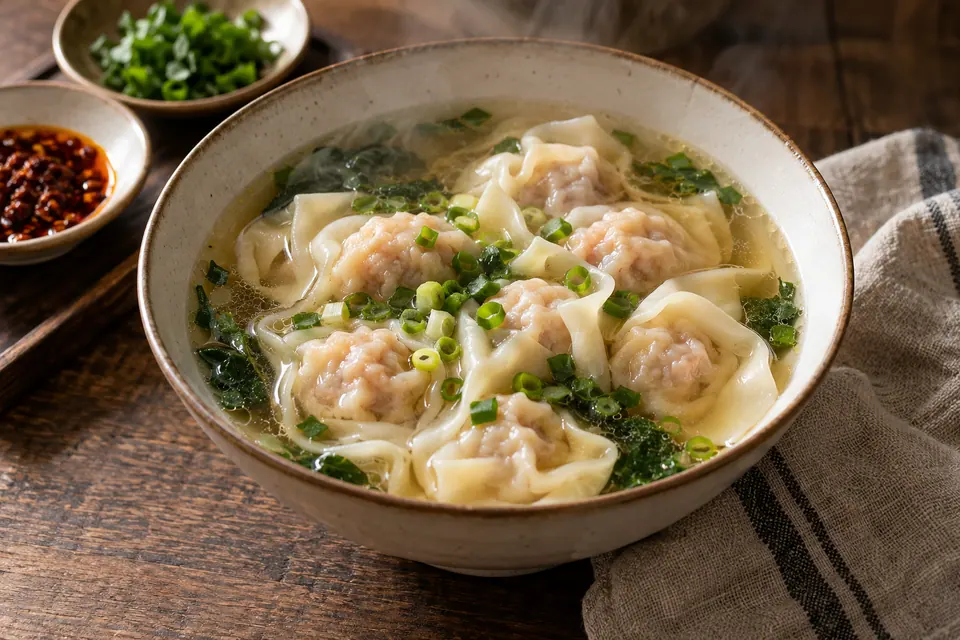
Wontons in clear brothAI-generated · representative preparation
Thin wrappers around meat or shrimp, served in broth or with a lively chili dressing.
The story behind it
Regional names tell a story: huntun in much of Jiangnan, yuntun in Cantonese-speaking areas and chaoshou in Sichuan. Wrapper size, folding and soup change along with the name.
At the table
Compare Jiangnan shepherd’s-purse wontons, shrimp wontons and Sichuan red-oil chaoshou.
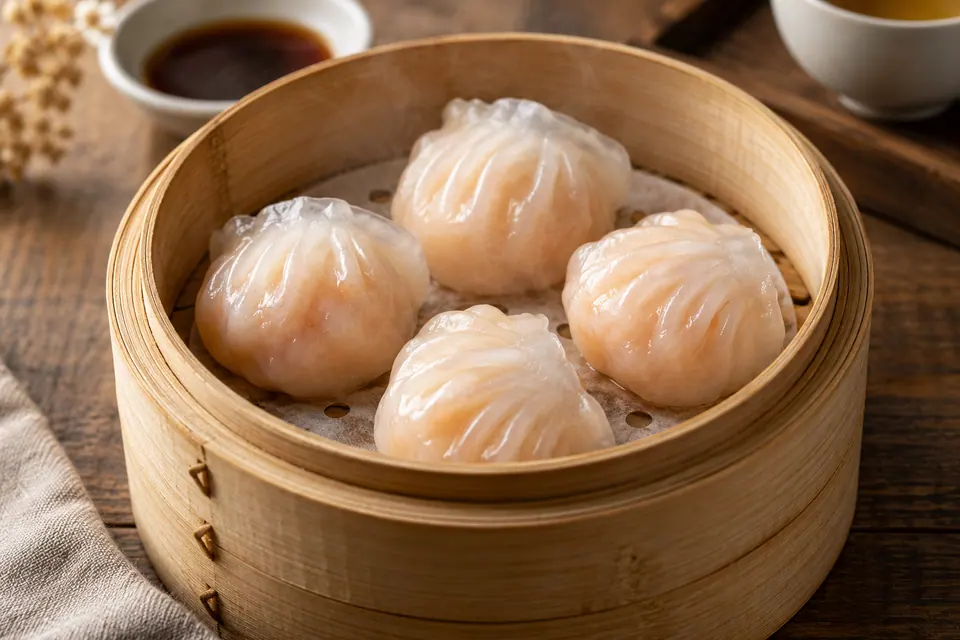
Har gow shrimp dumplingsAI-generated · representative preparation
Translucent starch wrappers surround springy shrimp, with a delicate bite rather than a bready texture.
The story behind it
A classic of Cantonese yum cha, har gow shows a dim sum cook’s control of wrapper thickness and steaming. Tea and small shared dishes turn the meal into a social occasion.
At the table
Eat while warm before the skin firms up; fillings may also include pork fat or bamboo shoots.
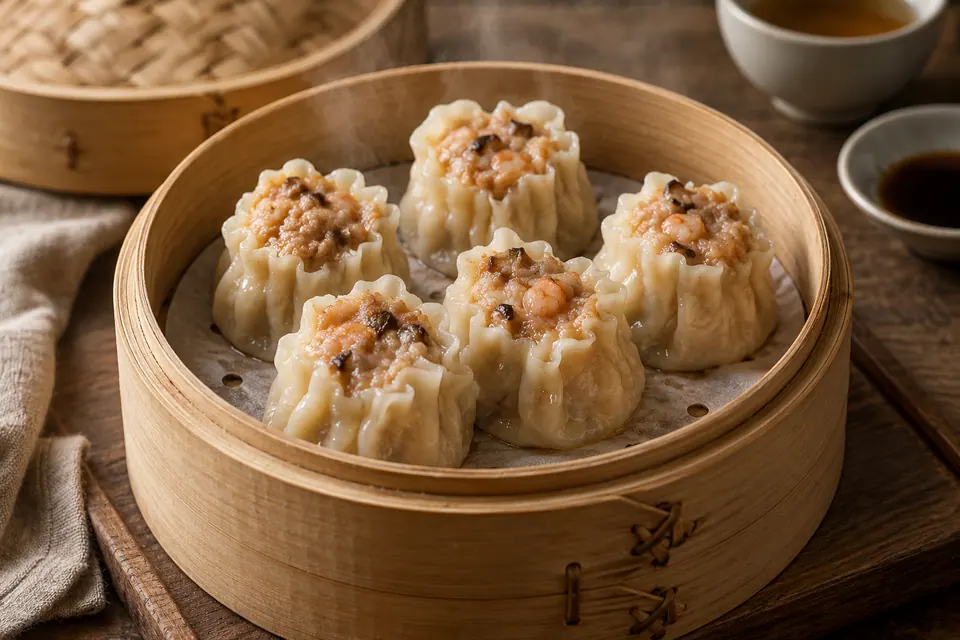
Cantonese-style pork and shrimp siu maiAI-generated · representative preparation
Open-topped dumplings that may hold lamb, sticky rice or a pork-and-shrimp mixture.
The story behind it
A shared name hides different foods: Hohhot shaomai often features lamb, Jiangnan versions favor glutinous rice, and Cantonese siu mai commonly combines pork and shrimp. Regional context matters more than the English label.
At the table
Order a small basket with tea and compare the filling and wrapper of each style.
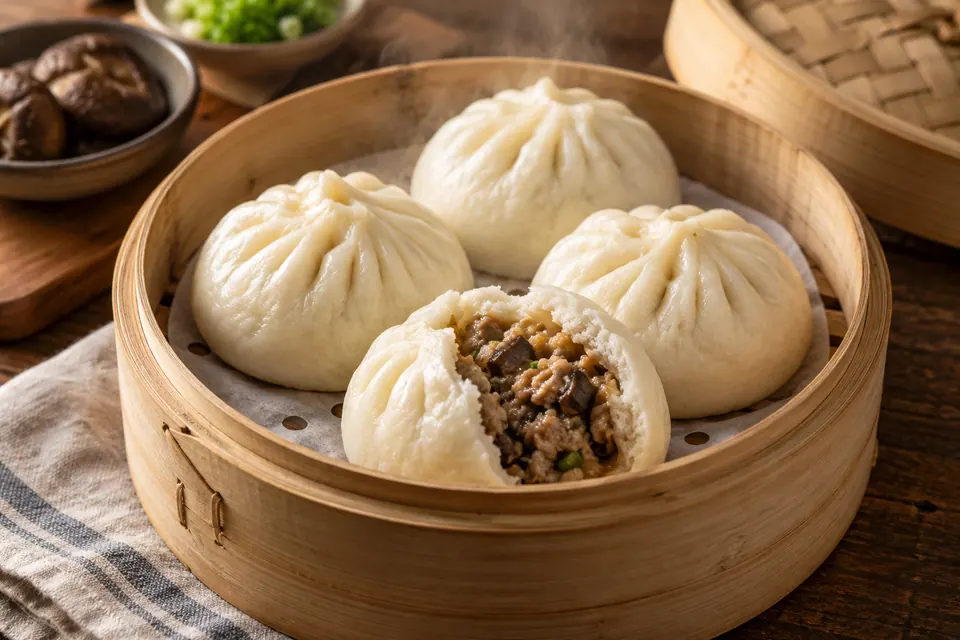
Baozi is everyday breakfast and portable lunch as much as restaurant food. Local forms range from Tianjin-style meat buns to Sichuan buns and Jiangnan vegetable buns; filling and dough are both part of their identity.
At the table
Pair with soy milk or congee; ask about the filling before choosing a vegetarian version.
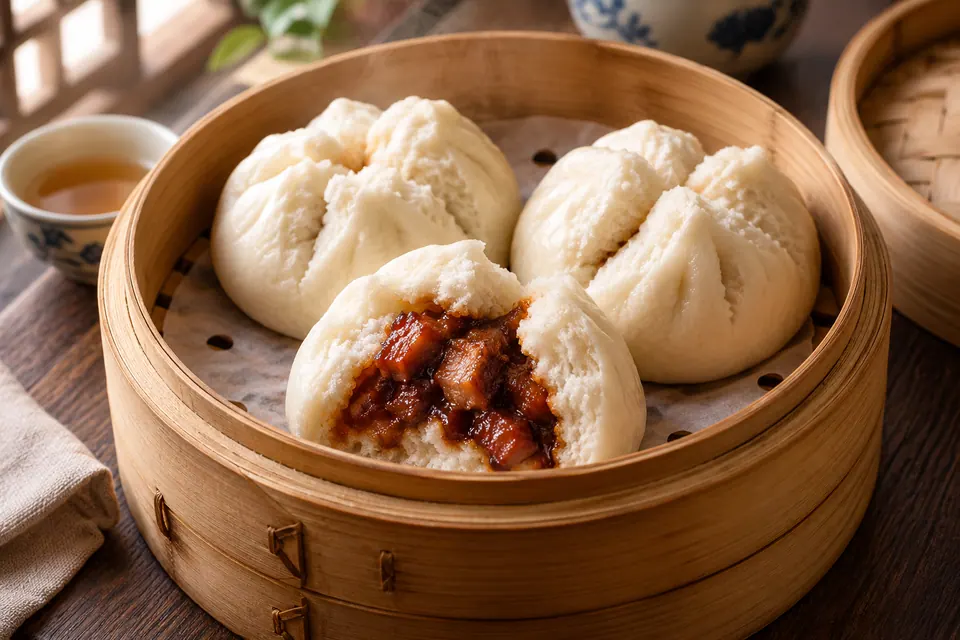
Soft steamed buns with a sweet-savory barbecued pork filling; baked versions have glossy tops.
The story behind it
These buns bring Cantonese roast-meat craft to the dim sum table. The cracked top of many steamed versions comes from their particular dough and leavening, not from being a soup dumpling.
At the table
Share a basket during yum cha; expect a distinctly sweet sauce around the pork.
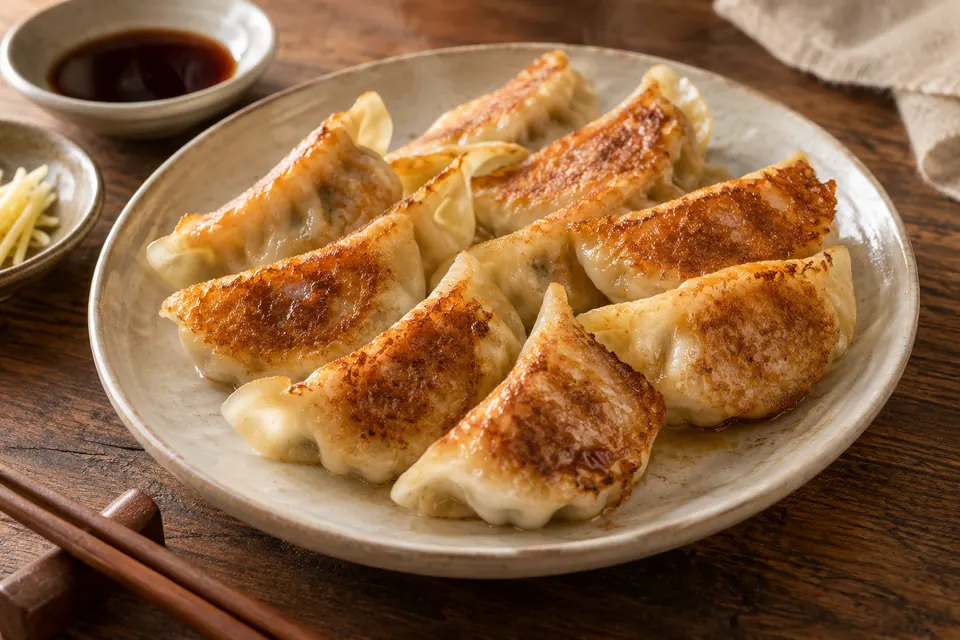
Wheat dumplings pan-fried and steam-cooked until the bottom is crisp and the filling stays juicy.
The story behind it
Guotie belongs to a wider family of fried dumplings. Some northern versions have open ends; others are fully sealed. The defining pleasure is the contrast between the browned base and tender wrapper.
At the table
Eat freshly cooked with vinegar; the crisp base softens as it sits.
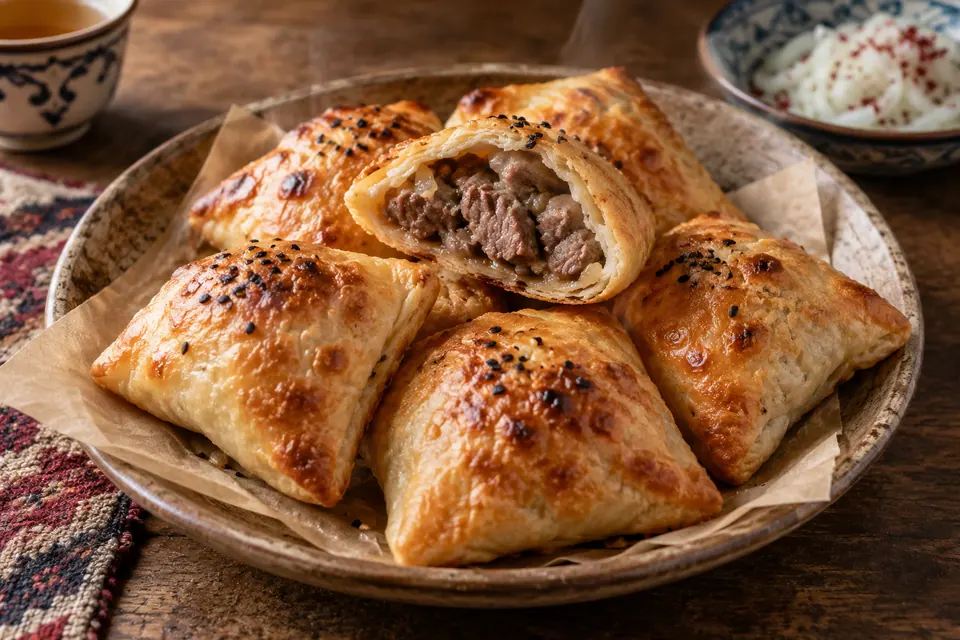
Crisp baked parcels filled with chopped lamb, onion and pepper, with juicy centers.
The story behind it
Known locally as samsa, these oven-baked parcels connect Xinjiang’s foodways with Central Asian baking traditions. They differ from steamed baozi in both dough texture and the heat of the nang oven.
At the table
Try warm with tea; the lamb fat and juices inside can be very hot.