A market stall, a paper bag, a quick bite. Meet the foods that make a city feel like itself.
Snacks are closely tied to markets, morning routines and neighborhood shops. Names travel, recipes change, and several towns may claim a familiar food. These entries describe common versions rather than a single definitive recipe.
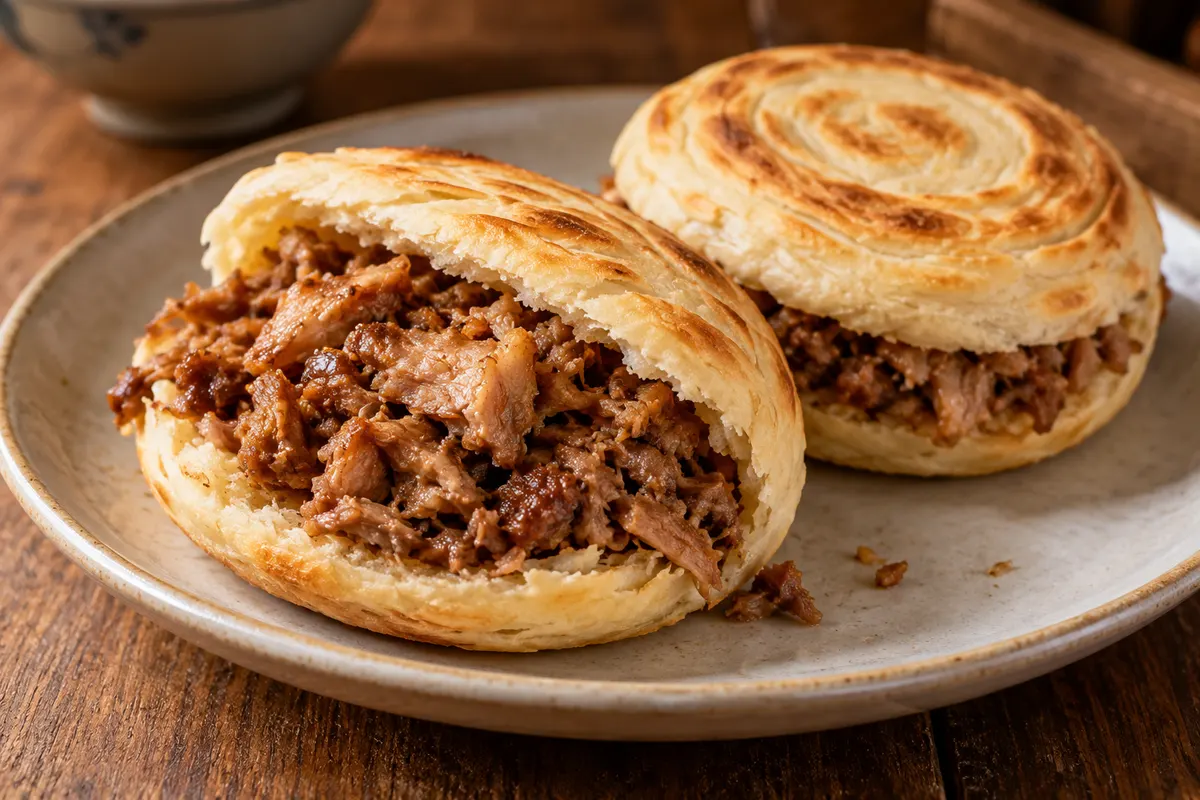
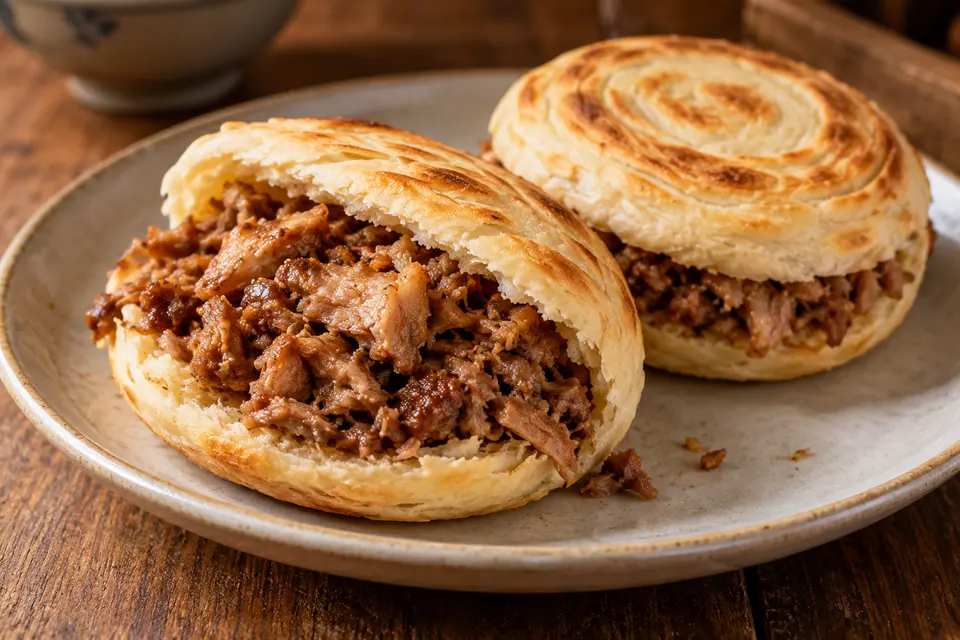
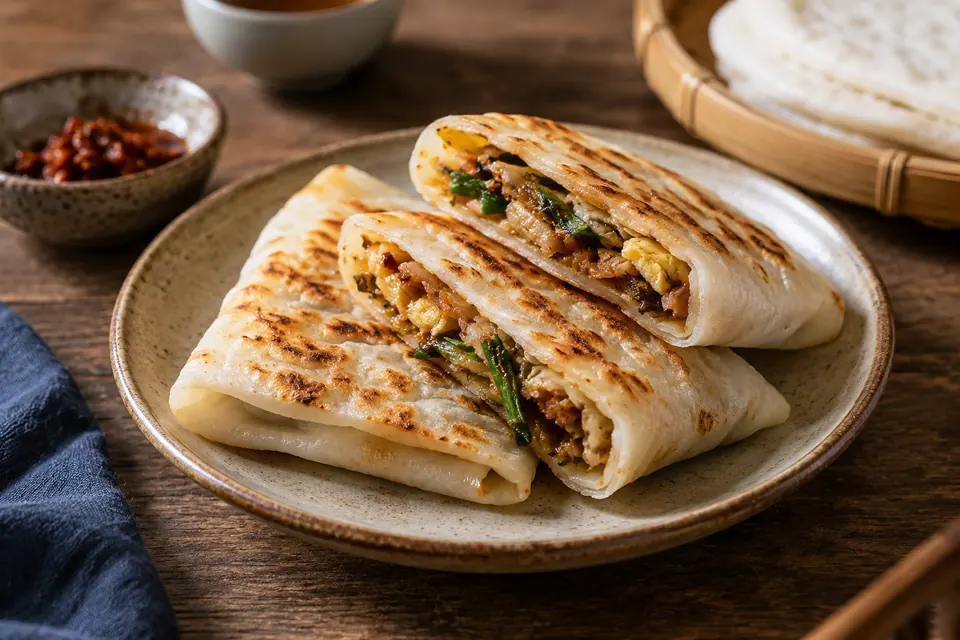
Chopped braised meat tucked into a round wheat bread, rich with cooking juices.
The story behind it
Shaanxi has several traditions: pork lazhi roujiamo, Muslim-style cured beef fillings, and flaky Tongguan breads are not all the same food. Both the mo and the meat determine the local identity.
At the table
Eat warm and ask about the meat and bread style; pork is common but not universal.
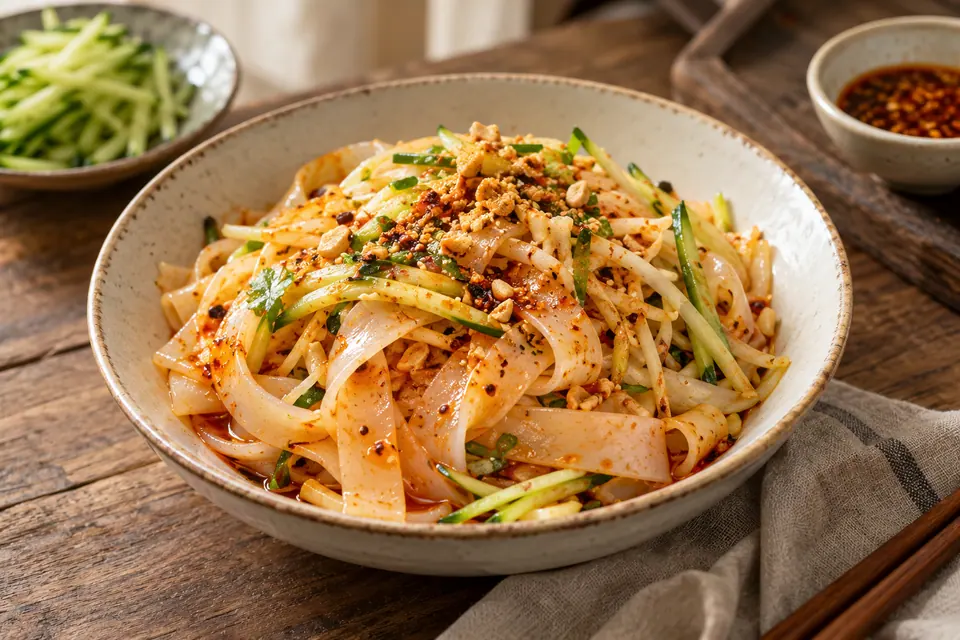
Cool, slippery sheets cut into strips and dressed with vinegar, chili oil, garlic and vegetables.
The story behind it
The name covers rice-based and wheat-based versions. Washed-wheat liangpi often includes the separated gluten, called mianjin, while Hanzhong and other local styles have different grains and serving temperatures.
At the table
Mix well; rice-based versions are not automatically free of wheat-containing sauces or gluten toppings.
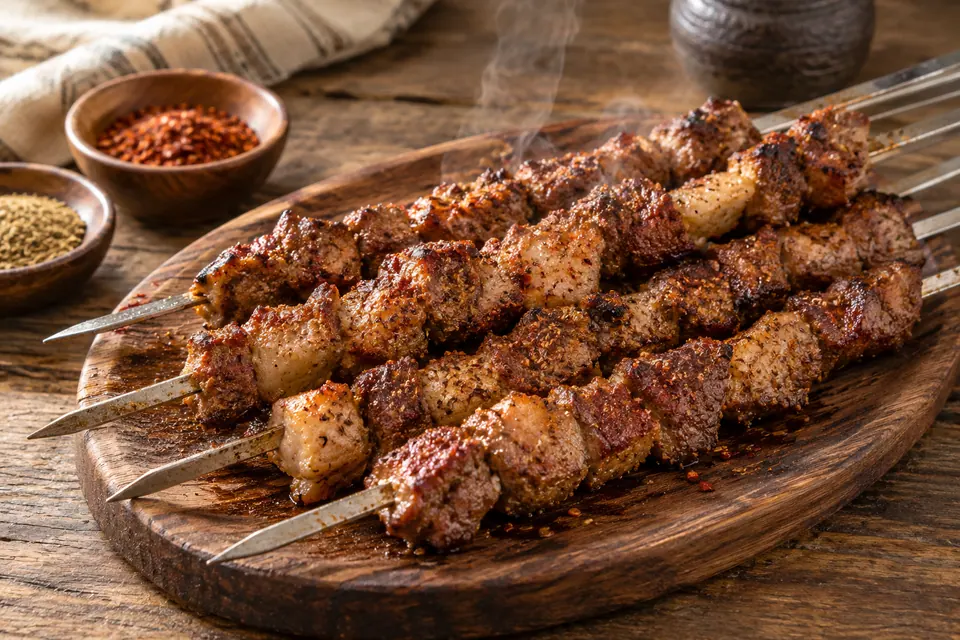
Lamb grilled on skewers with salt, cumin and often chili, with browned edges and juicy fat.
The story behind it
Uyghur grill traditions are an important part of Xinjiang’s market food culture. The style has spread widely, but cuts, skewer size and seasoning differ from the many other barbecue traditions across China.
At the table
Pair with nang and a fresh salad; tell the cook if you prefer less chili.
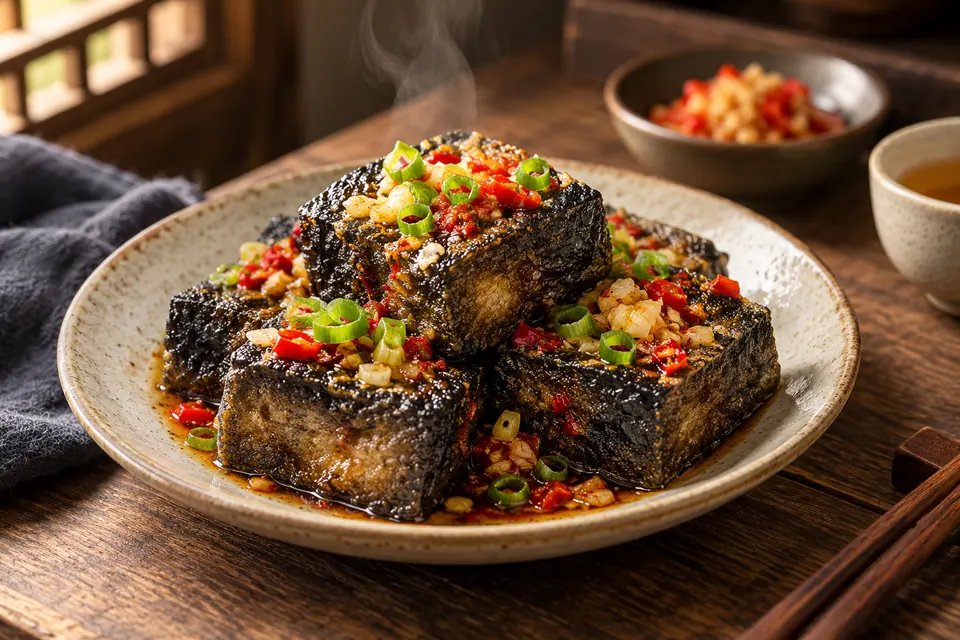
Fermented tofu with a powerful aroma, fried or steamed, often served with chili and savory sauce.
The story behind it
Changsha’s dark fried version and Shaoxing’s paler preparations belong to different local traditions. The name describes a broad family of fermented tofu foods, not a single color, starter or recipe.
At the table
Start with a small portion and enjoy the contrast of crisp shell and soft center.
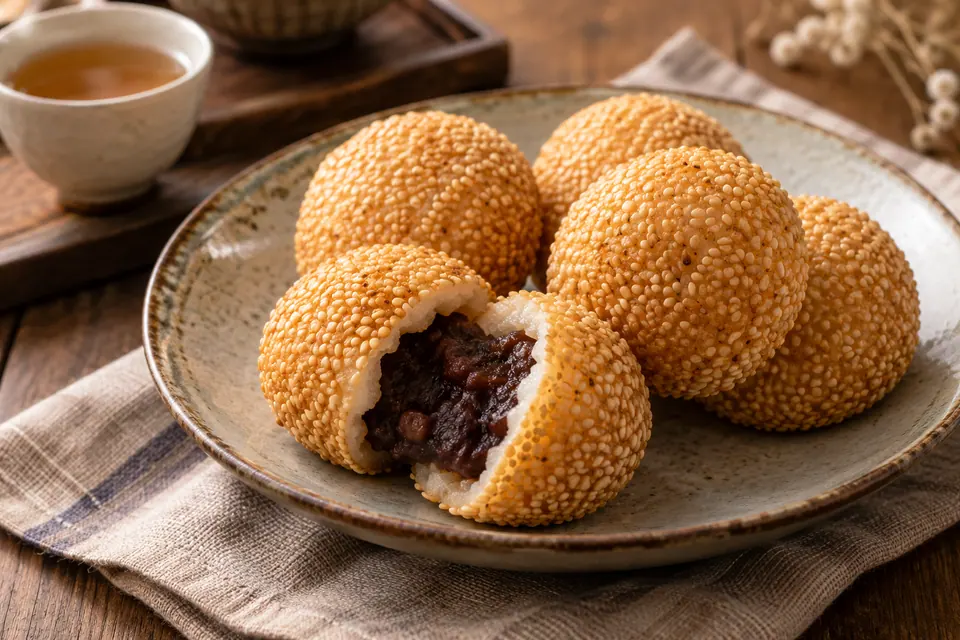
Fried glutinous-rice dough with sesame outside and sometimes sweet bean or lotus filling within.
The story behind it
Called jiandui in Cantonese traditions and matuan in many Mandarin-speaking places, these golden balls appear at snack stalls, dim sum meals and celebrations. Good frying creates expansion without a heavy, dense shell.
At the table
Eat warm, allowing the sweet filling to cool slightly first.
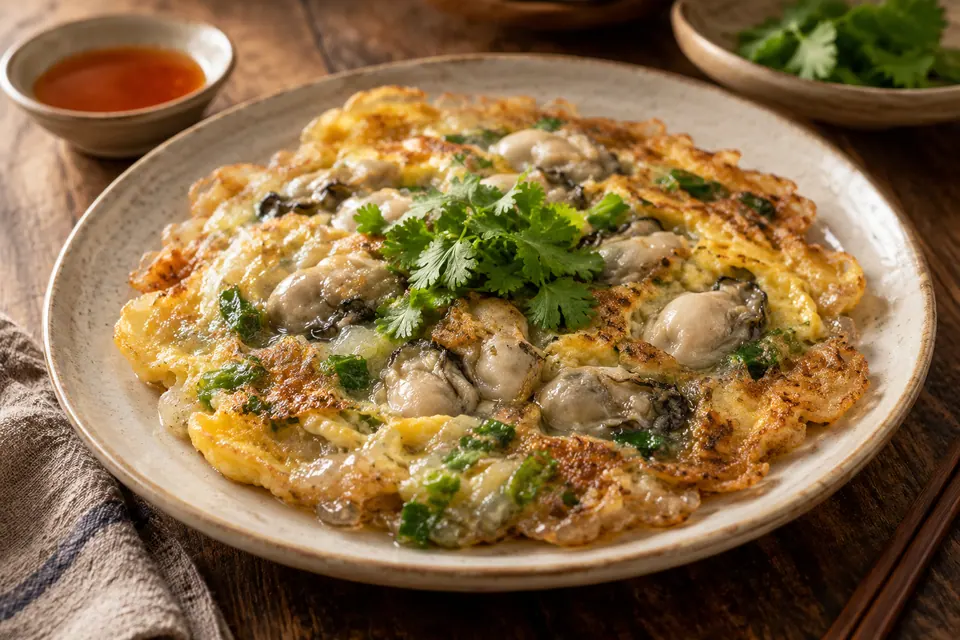
Oysters cooked with egg and a starch batter, ranging from crisp-edged to soft and chewy.
The story behind it
Shared coastal ingredients link these food traditions, but sauces, greens and the ratio of egg to starch differ. Taiwanese night-market oyster omelettes and Chaoshan oyster pancakes are related, not identical.
At the table
Try with the local sauce and notice whether the style favors crispness or chew.
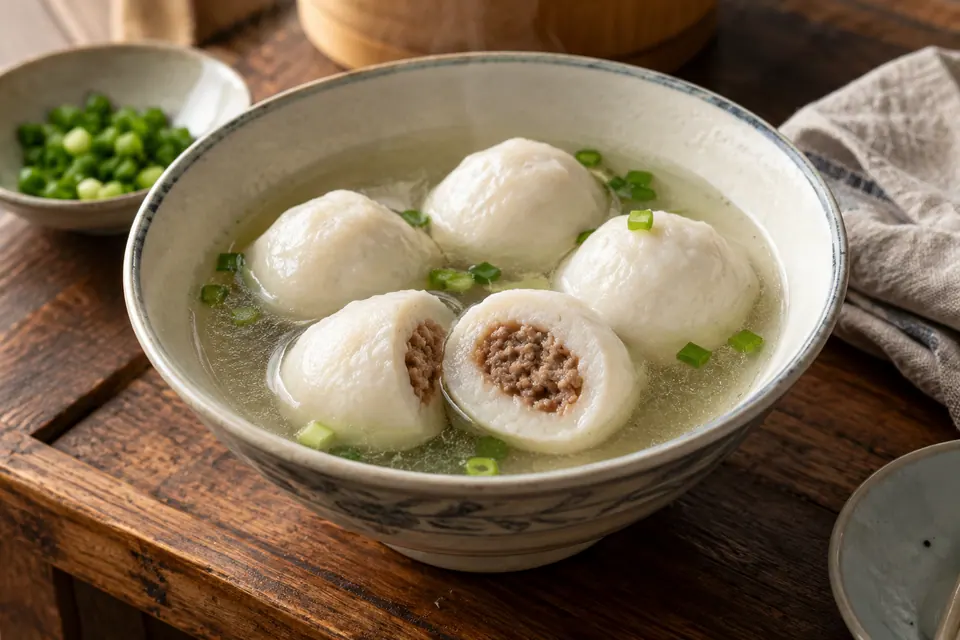
Fuzhou & Chaoshan fish ballsAI-generated · representative preparation
Fish paste shaped into springy balls and cooked in soup or broth.
The story behind it
Fish-ball making turns fresh coastal fish into a distinctive texture through beating and shaping. Fuzhou versions often hide a pork filling, while many Chaoshan versions emphasize the fish paste itself.
At the table
Bite carefully into stuffed versions; the center may contain hot juices and pork.
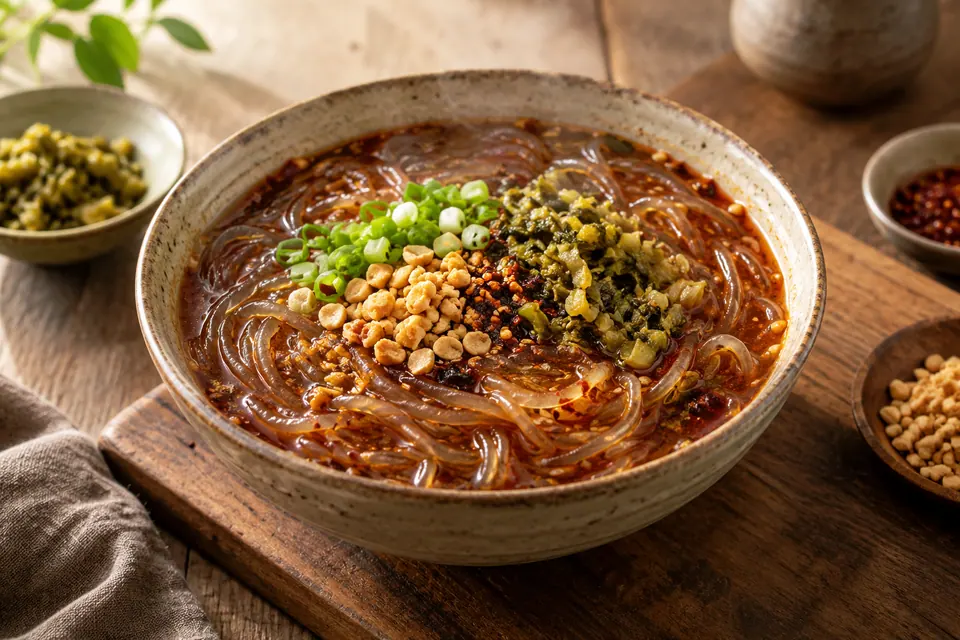
Chewy starch noodles in a sharp vinegar-and-chili broth, with pickles and crunchy toppings.
The story behind it
Often made with sweet-potato starch, these translucent noodles are different from wheat noodles or rice vermicelli. The snack-shop bowl relies on the interplay of acid, heat, soft strands and crisp beans or peanuts.
At the table
Stir the seasonings well and ask about peanuts or soybeans in the toppings.
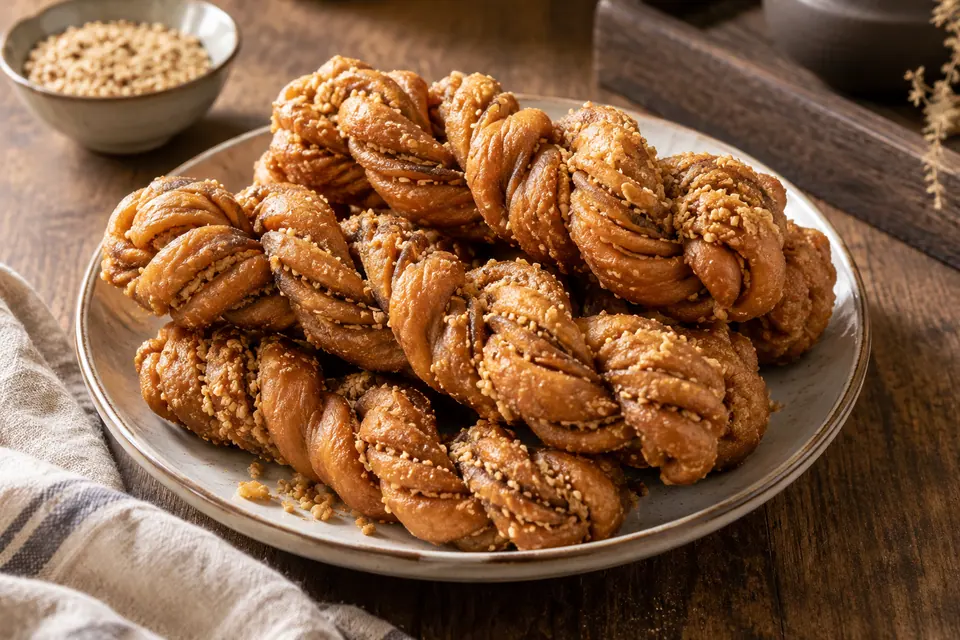
Twisted fried wheat dough with a firm crunch, sometimes layered with sweet or nutty fillings.
The story behind it
Mahua exists in many regions, but Tianjin’s large, layered twists became a recognizable local gift food. Size, sweetness and texture vary; some elsewhere are soft enough for breakfast rather than a crisp snack.
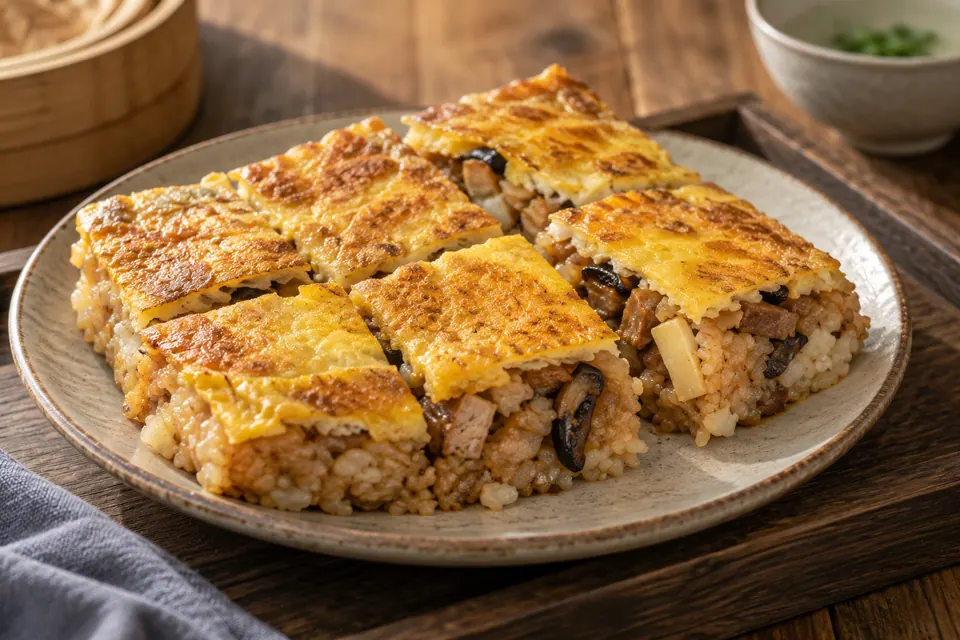
Sticky rice and savory fillings enclosed under a thin bean-and-rice crêpe with a golden egg crust.
The story behind it
Another part of Wuhan’s guozao breakfast culture, doupi here is a filled griddle food. The name should not be confused with the dried tofu skin also called doupi elsewhere; its rice center makes it a substantial meal.
At the table
Try a freshly cut square while the outer layer is crisp.
Grilled erkuai wrapped around savory fillingsAI-generated · representative preparation
Pounded rice cakes, grilled and folded around fillings or sliced for stir-fries.
The story behind it
Erkuai is a staple of Yunnan’s rice-food repertoire. Breakfast stalls grill a round until pliable, then add sweet or savory sauces; local grains and pounding give it a texture distinct from many glutinous rice cakes.
At the table
Choose sweet, savory or spicy sauce; some stalls wrap a youtiao inside.
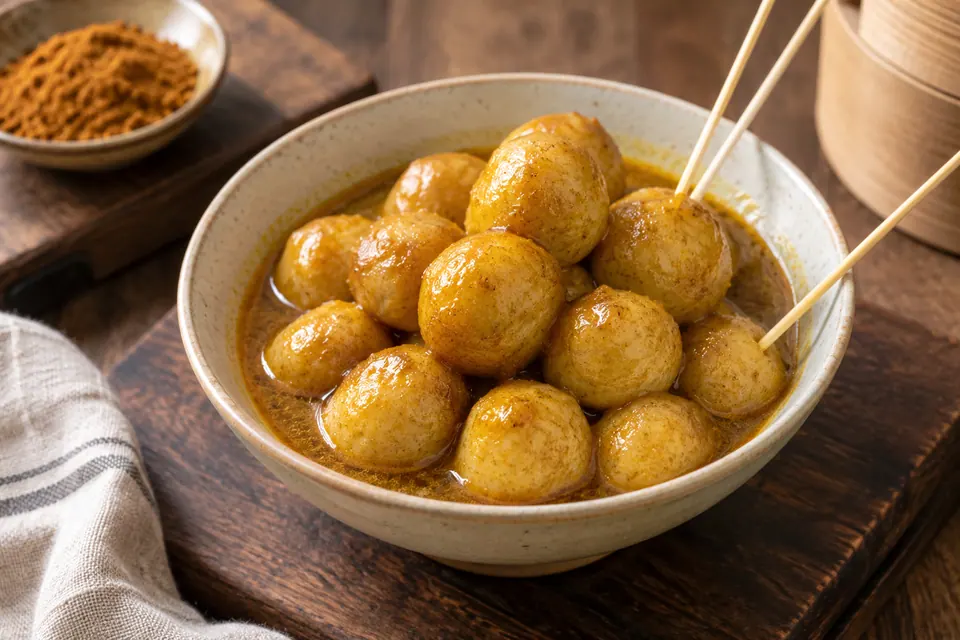
Hong Kong curry fish ballsAI-generated · representative preparation
Small springy fish balls simmered in a fragrant curry sauce and served on skewers or in cups.
The story behind it
A familiar Hong Kong street snack, curry fish balls show how local fish-paste foods absorbed outside seasonings into an everyday city flavor. The appeal lies in the curry coating and bouncy texture rather than a large fish fillet.
At the table
Choose a mild or hot sauce where offered and eat with the skewer provided.