Hand-pulled strands, knife-cut ribbons and silky rice noodles, from breakfast to midnight.
Wheat dominates many northern noodle traditions, while rice noodles are especially varied in the south. Broth, sauce, noodle shape and garnishes matter as much as the grain. The same name can describe noticeably different local bowls.
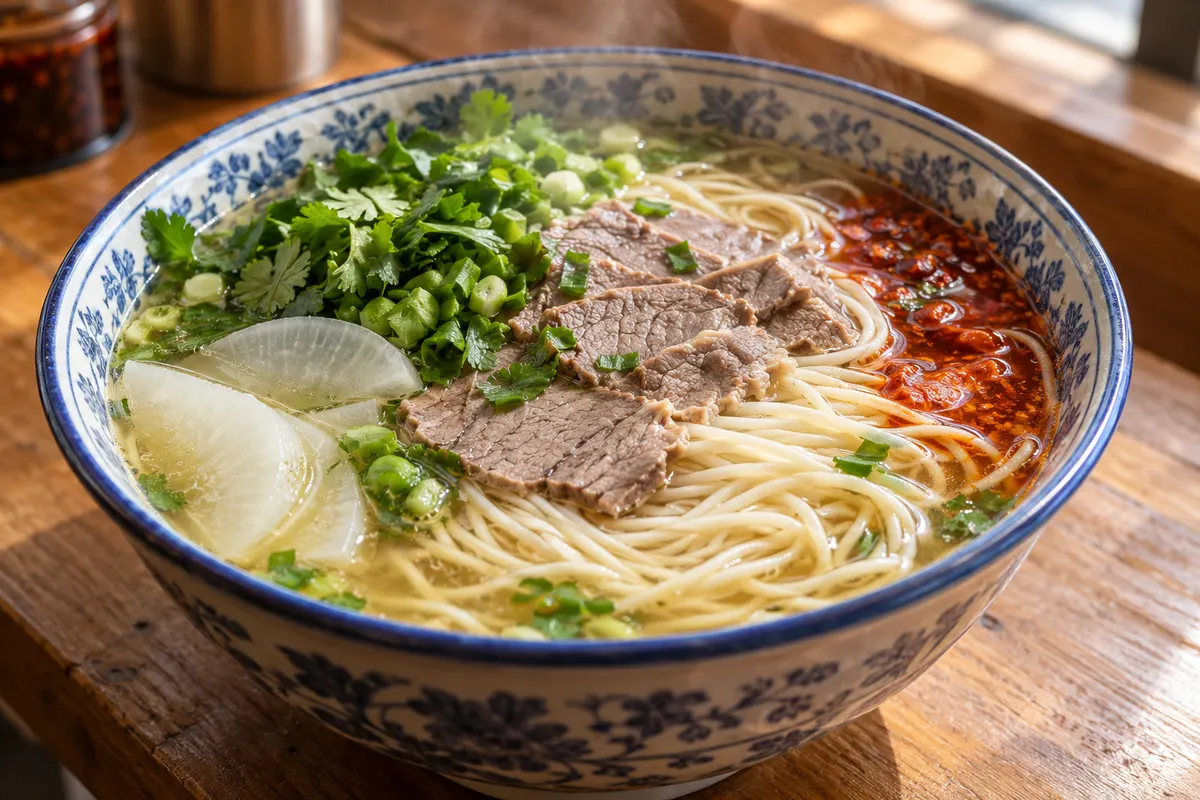
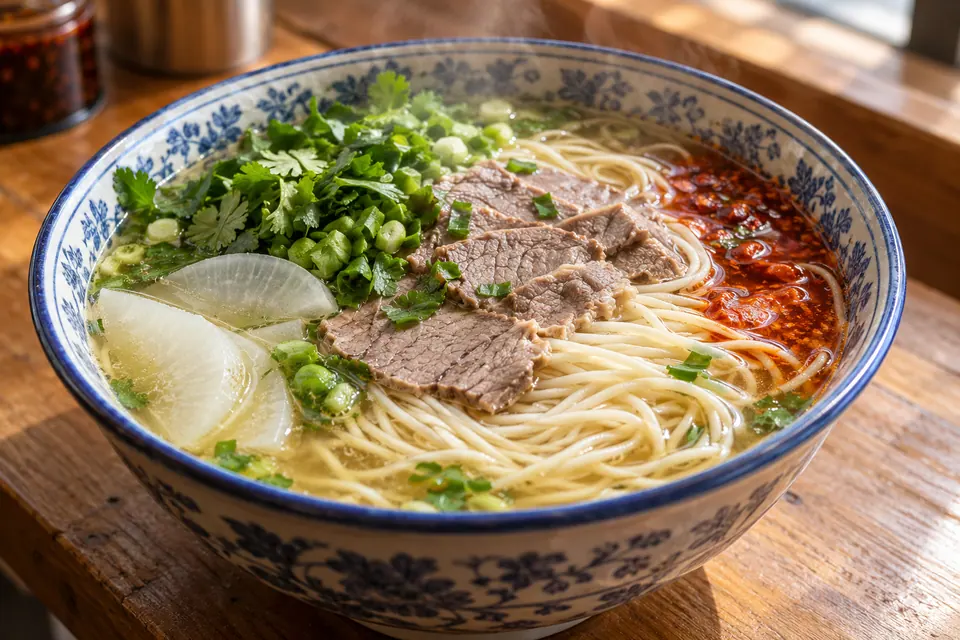
Hand-pulled wheat noodles in clear beef broth with radish, herbs and optional chili oil.
The story behind it
Lanzhou’s noodle-shop culture is closely connected to Hui Muslim cooks and everyday breakfast. The noodles are pulled to order in several widths; the beef garnish is only one part of a bowl centered on broth and noodle craft.
At the table
Choose the noodle width and ask for chili oil separately if you prefer a milder bowl.
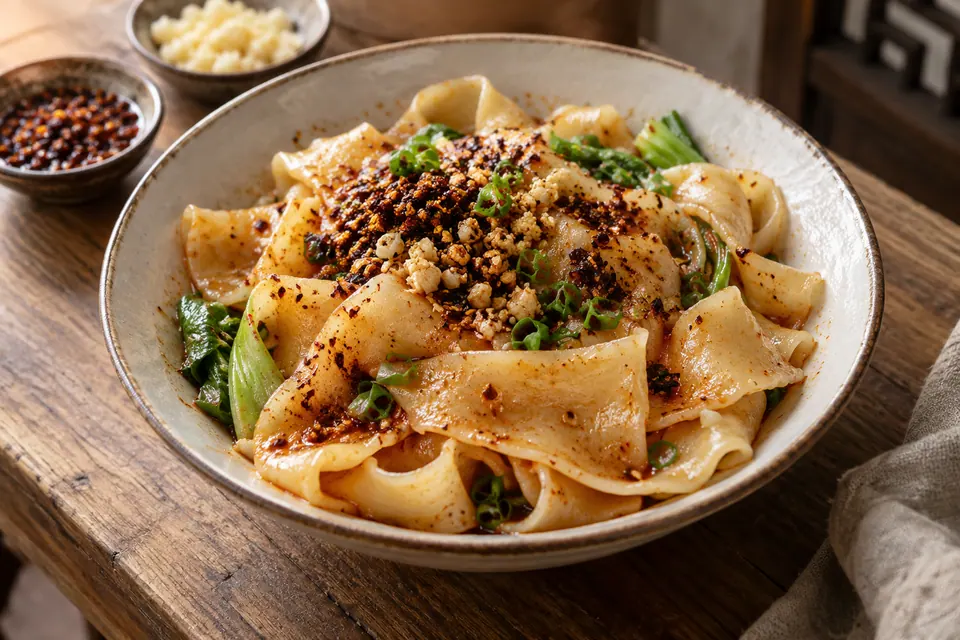
Very broad wheat ribbons, chewy and often dressed with hot oil, chili and garlic.
The story behind it
Shaanxi’s wheat-growing food culture favors filling noodles and breads. The name evokes the sound of dough slapping the board; its famously complex character has many folk explanations, not one securely documented invention story.
At the table
Toss thoroughly so the seasoning coats the wide ribbons.
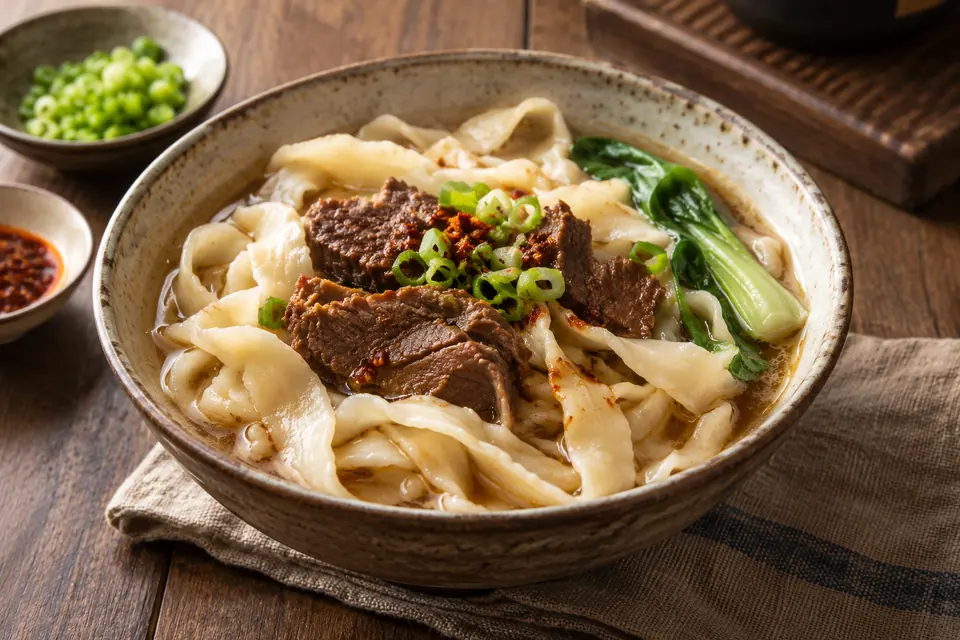
Thick-centered, thin-edged noodles shaved from a block of dough directly into boiling water.
The story behind it
Shanxi is known for many ways of shaping wheat dough. Knife-cut noodles showcase speed and control at the stove, with a firmer center that stands up to meat gravies, tomato-egg sauce or broth.
At the table
Try with a little mature Shanxi vinegar at the table.
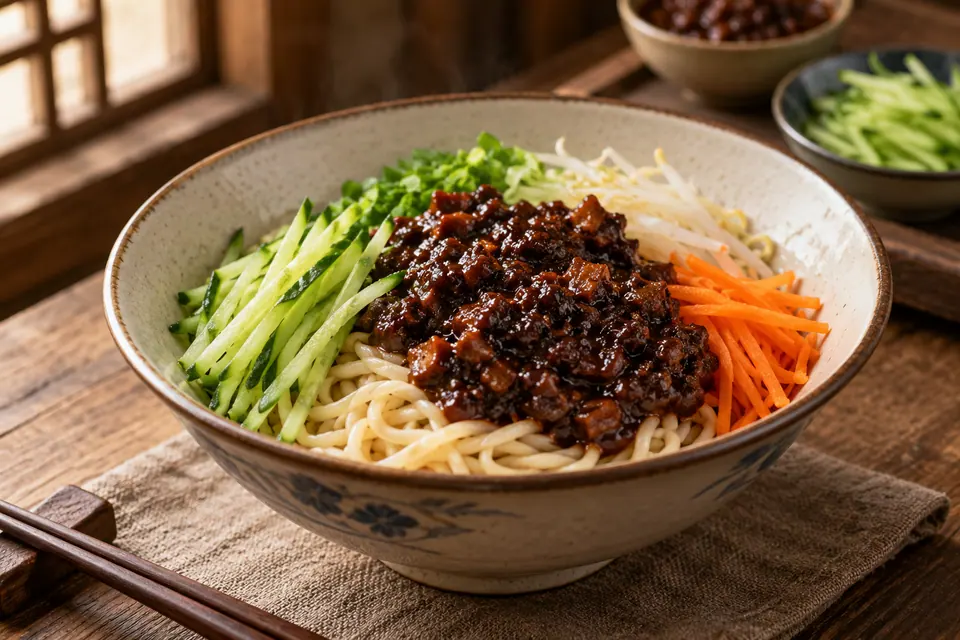
Wheat noodles with a concentrated savory bean-paste sauce and crisp vegetable shreds.
The story behind it
Beijing-style zhajiangmian balances a salty, slowly fried sauce with fresh seasonal vegetables. Household sauces vary, and the bowl’s appeal lies in mixing rich sauce, plain noodles and raw or blanched accompaniments yourself.
At the table
Add the sauce gradually, then mix in cucumber and other vegetable toppings.
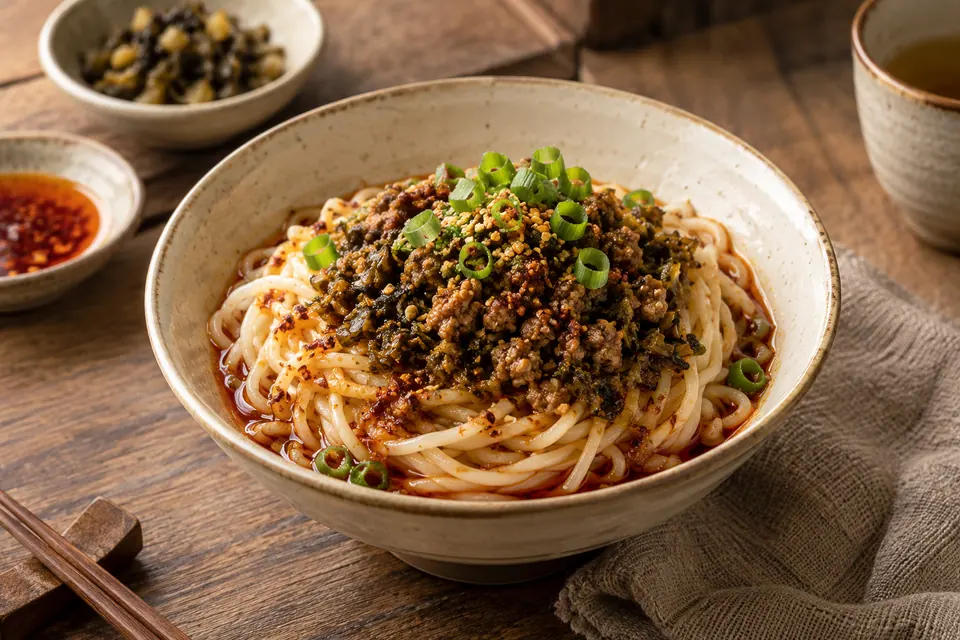
Small bowls of noodles with chili oil, Sichuan pepper, preserved vegetables and usually minced meat.
The story behind it
The name recalls vendors carrying noodles and condiments on a shoulder pole, or dandan. It is a snack-sized Sichuan noodle tradition; peanut-heavy or very soupy overseas versions are only some of its later variations.
At the table
Stir from the bottom to bring up the sauce before taking a bite.
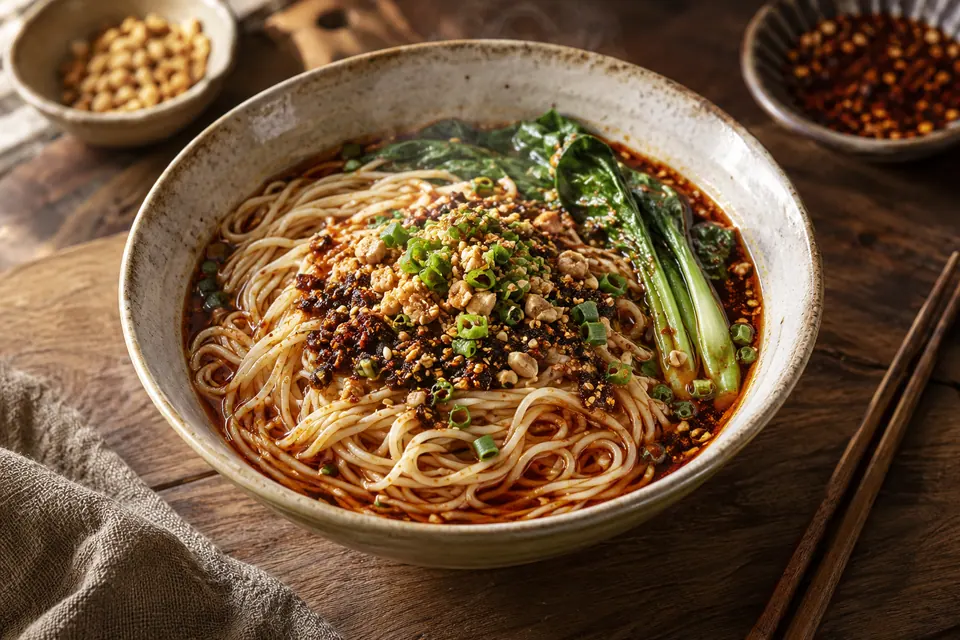
Alkaline wheat noodles with leafy greens and a fragrant, often numbing-spicy dressing or broth.
The story behind it
Small neighborhood noodle shops are part of Chongqing’s morning routine. The simplest xiaomian has no large meat topping; adding peas and minced meat makes the popular wanza variation.
At the table
Choose soup or dry-mixed noodles and request less chili if needed.
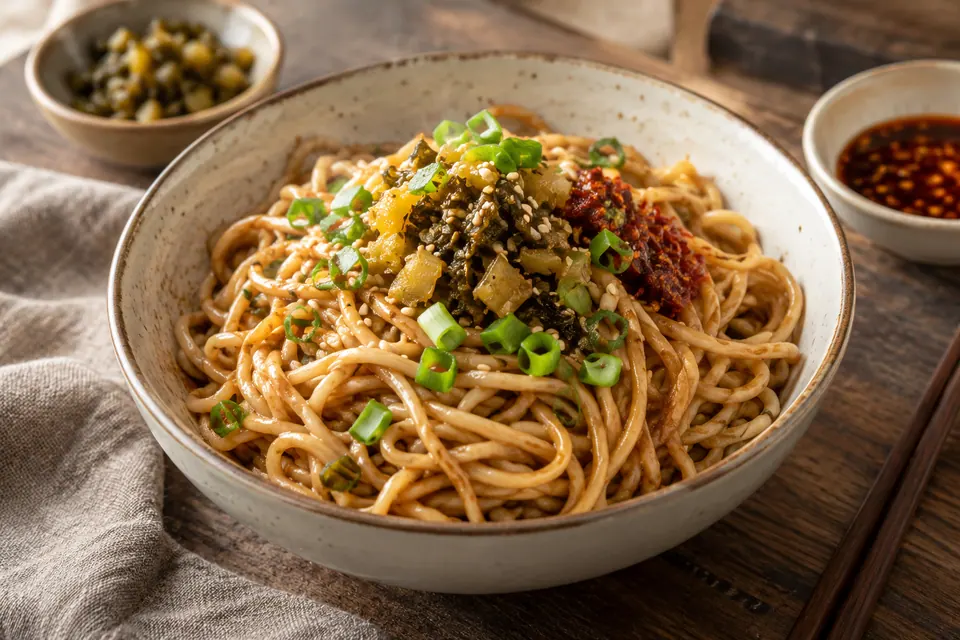
Springy noodles coated in sesame paste, with pickles, soy seasoning and optional chili.
The story behind it
Hot-dry noodles are central to Wuhan’s guozao, the local culture of eating breakfast. They are reheated briefly and dressed without a soup base, giving a dense, nutty sauce that clings to the strands.
At the table
Mix immediately while warm; sesame sauce thickens as it cools.
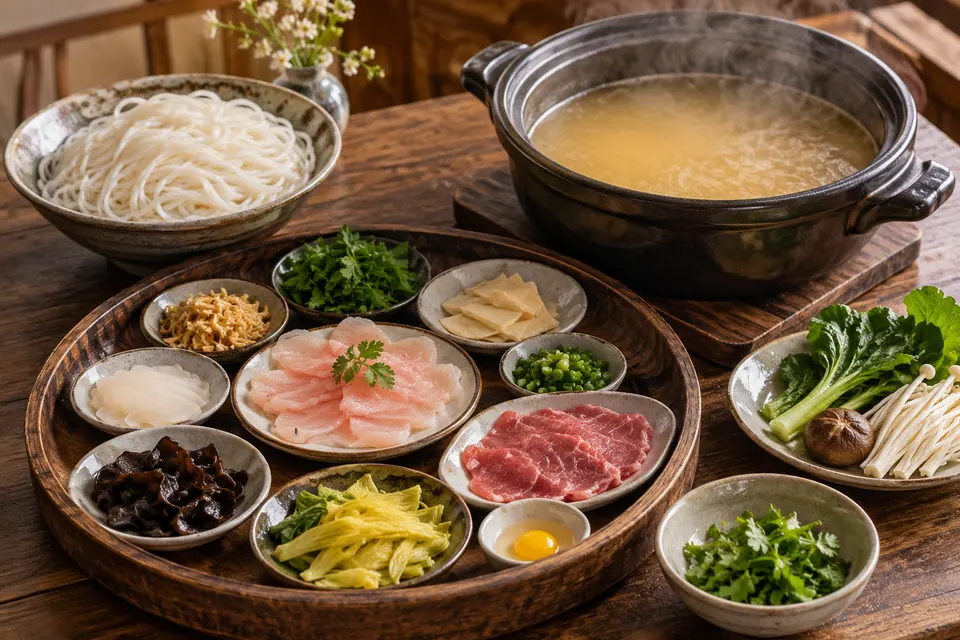
Rice noodles served with very hot broth and separate plates of meat, vegetables and other additions.
The story behind it
Mengzi is strongly associated with this meal. The familiar tale of a scholar and a spouse carrying food across a bridge is an origin legend. The table-side assembly is a distinctive part of the dining experience.
At the table
Follow the restaurant’s order for adding ingredients, ensuring meat cooks fully before eating.
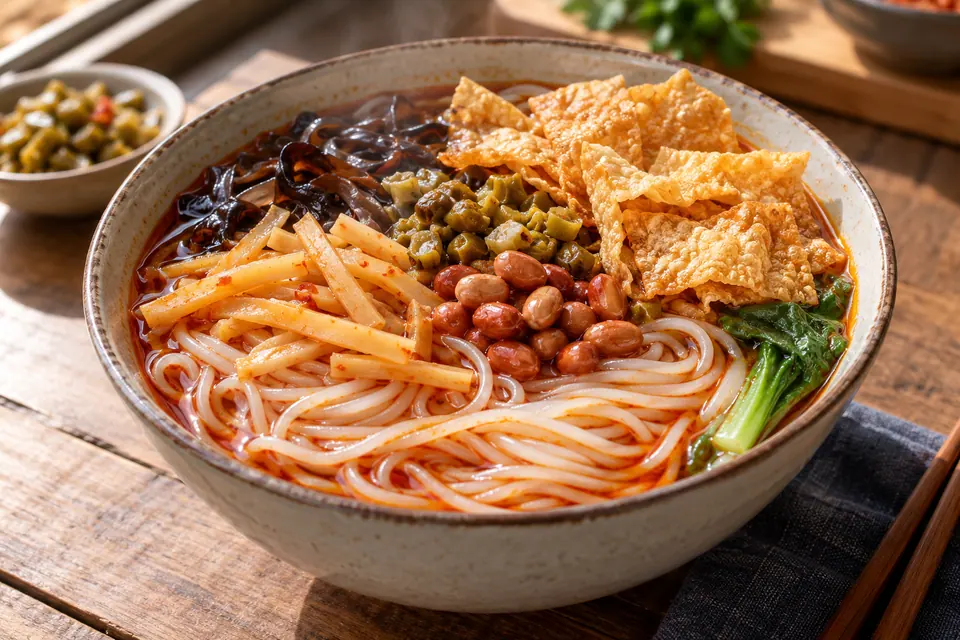
Rice noodles in a sour, spicy broth, with fermented bamboo shoots, tofu skin and often peanuts.
The story behind it
The dish’s strong aroma comes largely from fermented bamboo shoots. Snails flavor the broth even when there is no visible snail meat in the bowl; packaged versions have made a local street food widely familiar.
At the table
Expect sourness and heat; check broth and toppings if avoiding shellfish or peanuts.
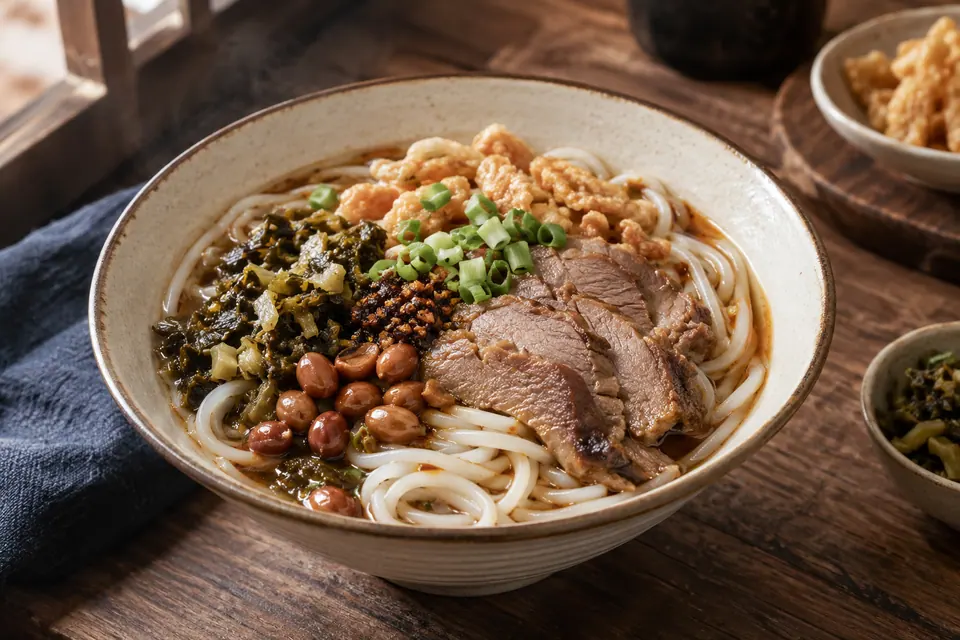
Rice noodles with a seasoned braising sauce, sliced meat, pickles and crisp toppings.
The story behind it
Guilin’s noodle shops often serve a dry-mixed bowl first, with broth available separately. The flavor depends on each shop’s lu, a spiced braising sauce; it is a different tradition from nearby Liuzhou luosifen.
At the table
Taste the mixed noodles first, then add broth if you like.
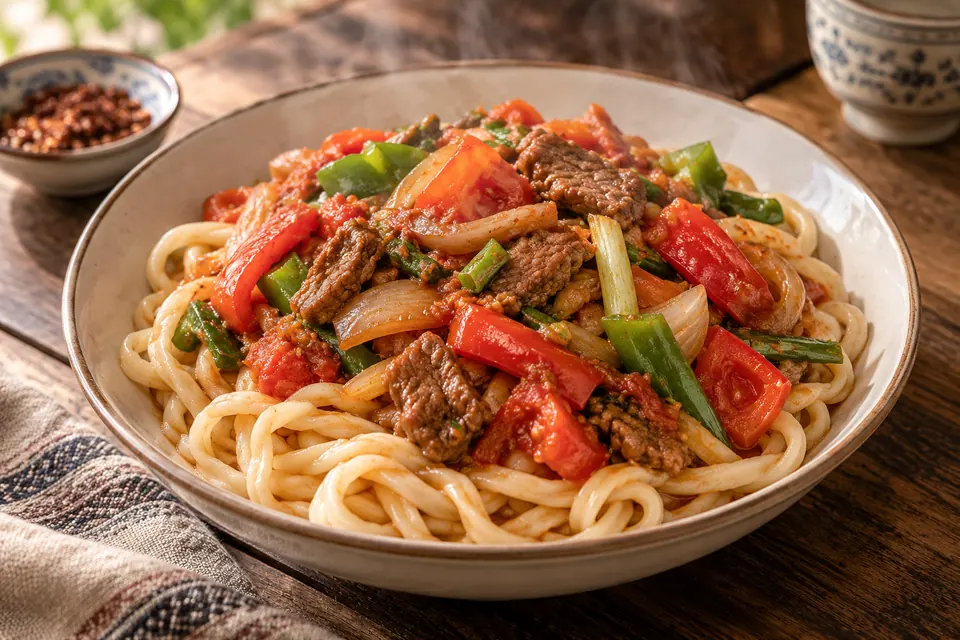
Hand-pulled noodles topped with a stir-fry of meat, peppers, tomatoes and vegetables.
The story behind it
Often called latiaozi in Mandarin, laghman belongs to a wider Central Asian noodle tradition. Xinjiang versions pair elastic wheat noodles with robust vegetable-and-meat toppings, connecting farming, market produce and household cooking.
At the table
Mix topping and noodles together; meat and vegetables vary by shop and season.
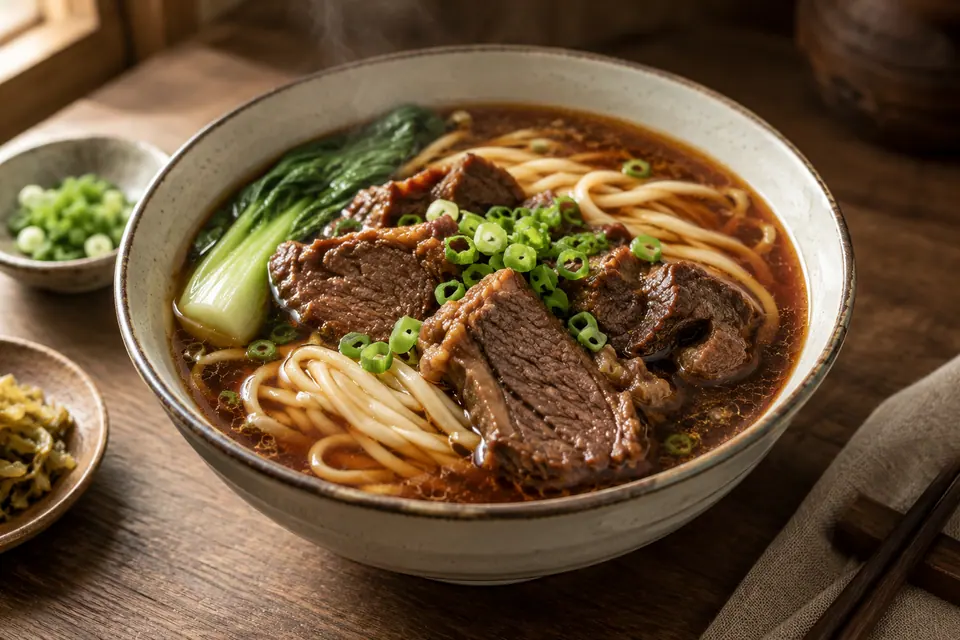
Wheat noodles with tender beef in either a deep soy-braised broth or a lighter clear soup.
The story behind it
The modern dish developed through migration and adaptation in twentieth-century Taiwan. It now spans humble noodle shops and elaborate restaurant bowls; red-braised and clear-broth versions are both important, not interchangeable with Lanzhou noodles.
At the table
Try pickled mustard greens on the side and choose beef, tendon or a combination.
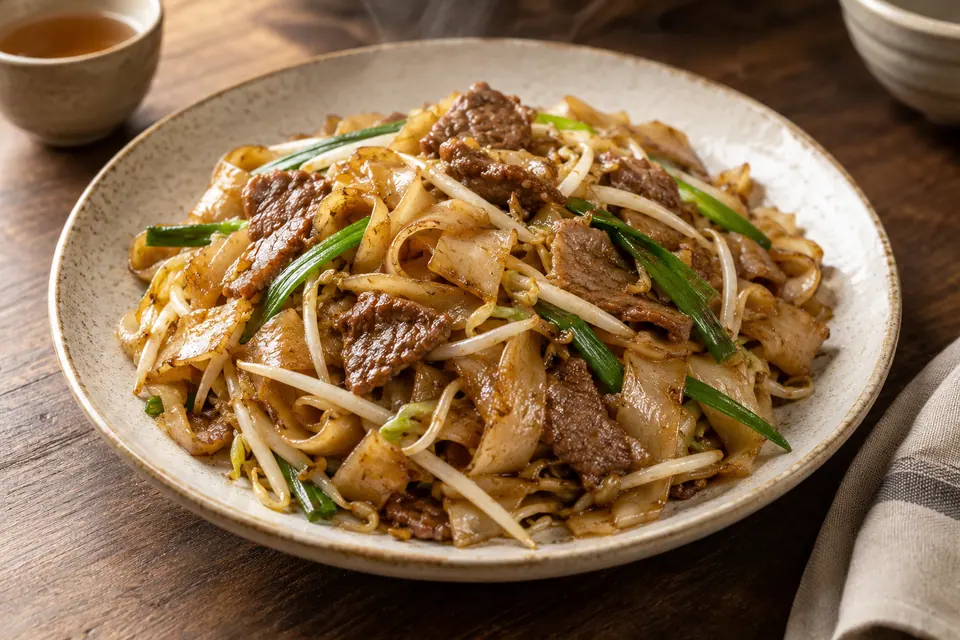
Wide flat rice noodles stir-fried with beef, bean sprouts and scallions, with a light coating of savory sauce.
The story behind it
This Cantonese restaurant and cha chaan teng staple showcases control of a hot wok. Fresh rice noodles are fragile: the cook aims for separated ribbons and tender beef without breaking the noodles or leaving a pool of oil. The dry-fried name distinguishes it from versions with a thick gravy.
At the table
Eat straight from the wok, while the noodles are supple and the bean sprouts still crisp.