Xinjiang nang, flaky pancakes and the everyday comfort of a warm breakfast.
Bread in China is often steamed, griddled or baked against the wall of an oven. Breakfast has its own local vocabulary: the same wheat can become soft mantou, crisp shaobing or a thin jianbing wrapped around a crunchy center.
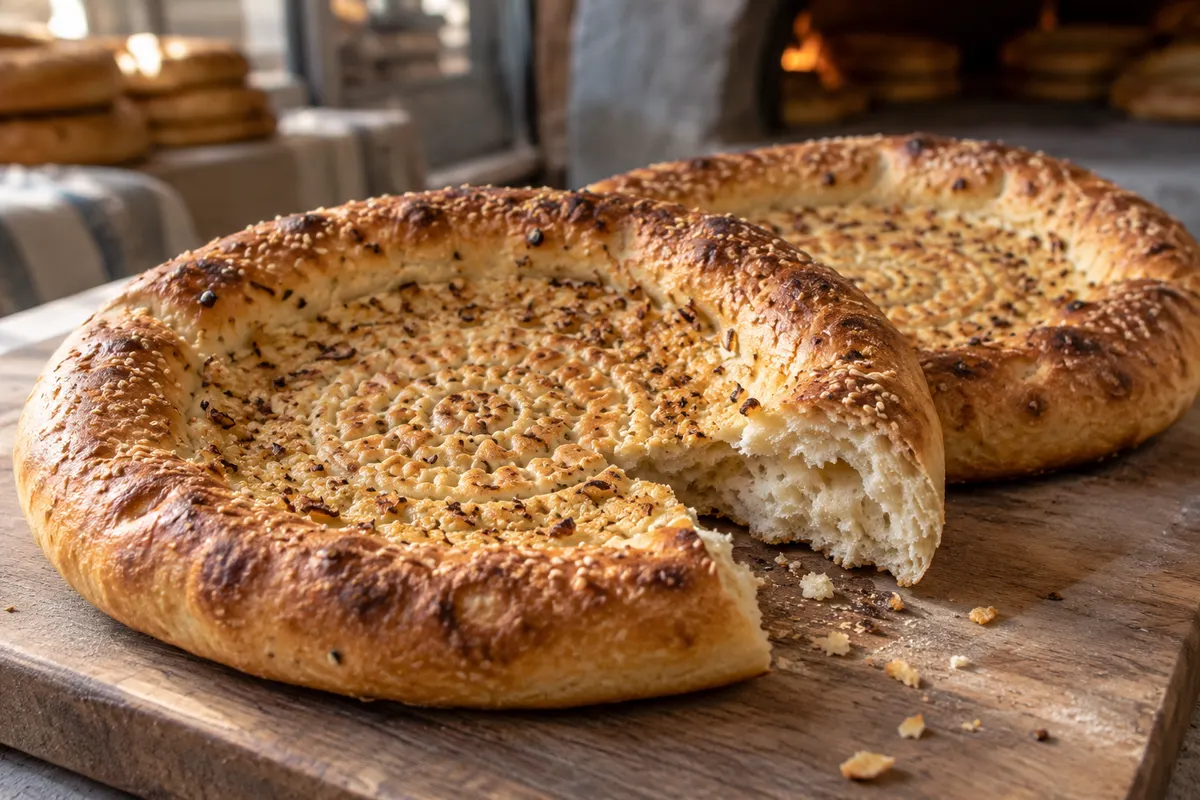
Xinjiang nang breadAI-generated · representative preparation
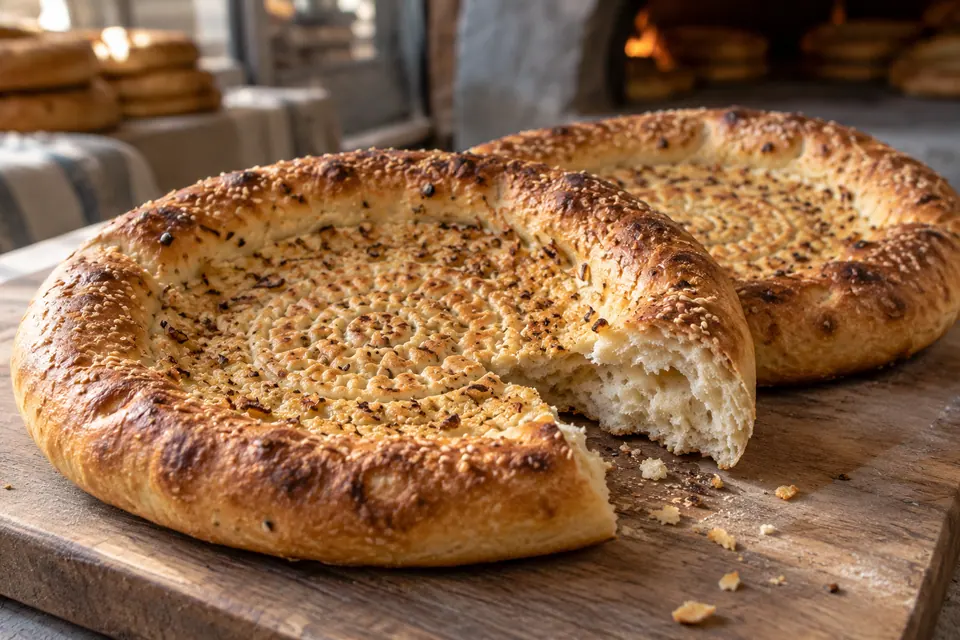
Oven-baked wheat bread, often round with a raised rim, stamped center and sesame or onion seasoning.
The story behind it
Nang is a daily staple in Uyghur households and among other communities in Xinjiang. Bakers stamp the dough and bake it against the oven wall. Sizes, doughs and toppings vary greatly, including the especially large Kuqa style.
At the table
Tear and share with tea, yogurt or grilled lamb; a dry, toasted texture is part of its character.
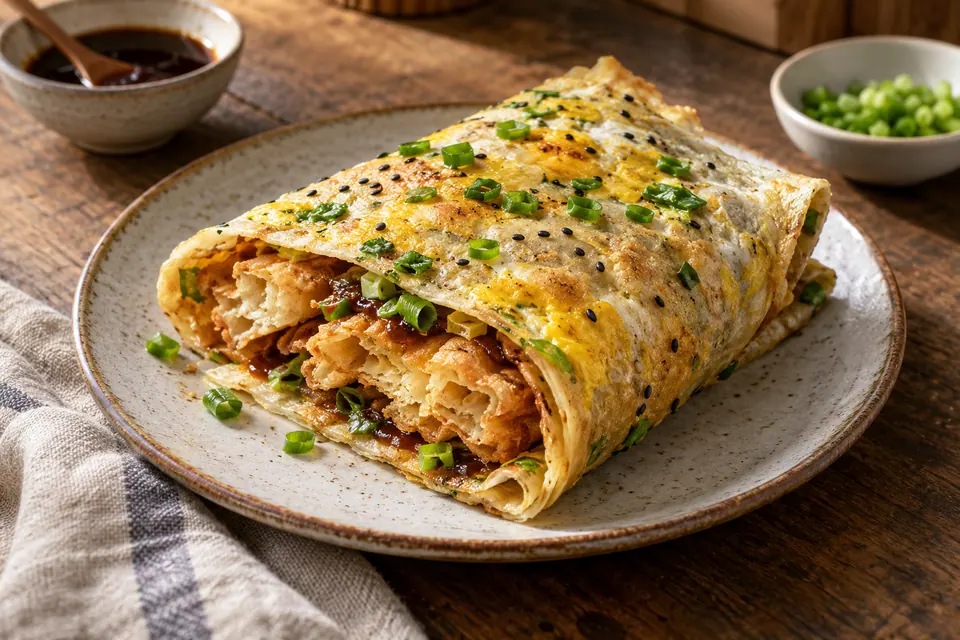
A thin griddle crêpe with egg, sauces, scallions and a crisp fried center, folded to eat by hand.
The story behind it
Tianjin jianbing guozi traditionally uses a mung-bean-based batter and youtiao or a crisp sheet inside. Other cities use mixed grains and different fillings, so a familiar street-food name covers many local interpretations.
At the table
Eat just off the griddle while the inner crisp is still crunchy.
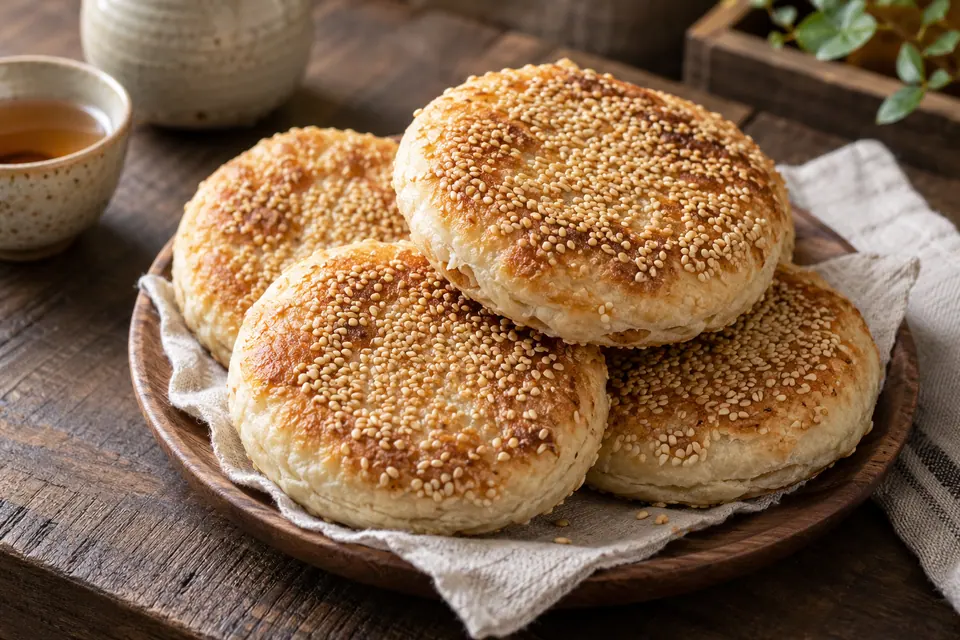
Baked or griddled wheat breads, often sesame-coated, either plain or filled and sometimes flaky.
The story behind it
Shaobing is a broad category rather than one regional recipe. Northern sesame breads, Huangshan small pastries and Jinyun meat-and-preserved-vegetable breads share a name but differ in oven, size and filling.
At the table
Try plain sesame shaobing with a warm drink, or a filled version straight from the oven.
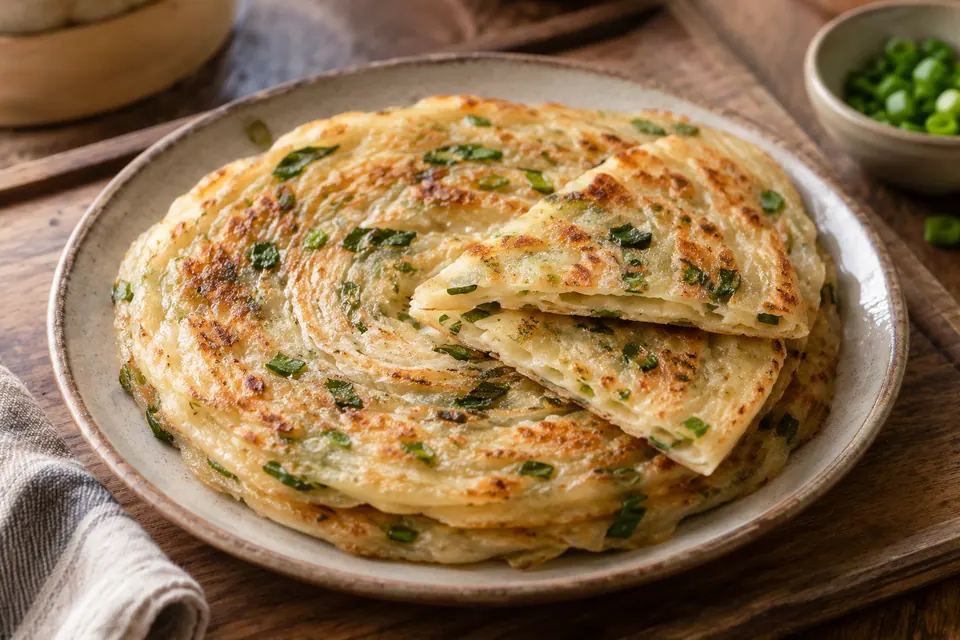
Layered wheat dough with scallions and oil, griddled until crisp outside and tender within.
The story behind it
Unlike a poured pancake batter, many congyoubing are rolled and coiled to build layers. Shanghai snack-shop versions may finish in an oven after griddling, showing how a simple ingredient list depends on shaping and heat.
At the table
Best hot, when the layers separate and the scallion aroma is strongest.
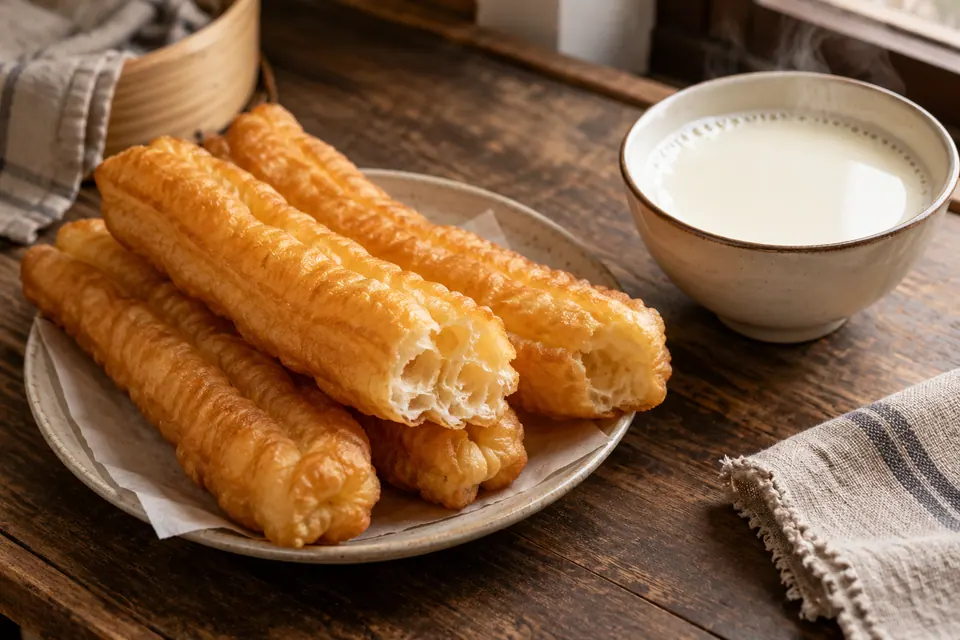
Airy fried dough sticks paired with warm soy milk, sweetened or unsweetened.
The story behind it
A breakfast pairing found in many Chinese-speaking communities, it combines a crisp wheat food with a bean-based drink. Soy milk also has savory versions, especially around Jiangnan and Taiwan, with vinegar and small toppings.
At the table
Dip briefly if you like a softer texture, or eat separately to keep the dough crisp.
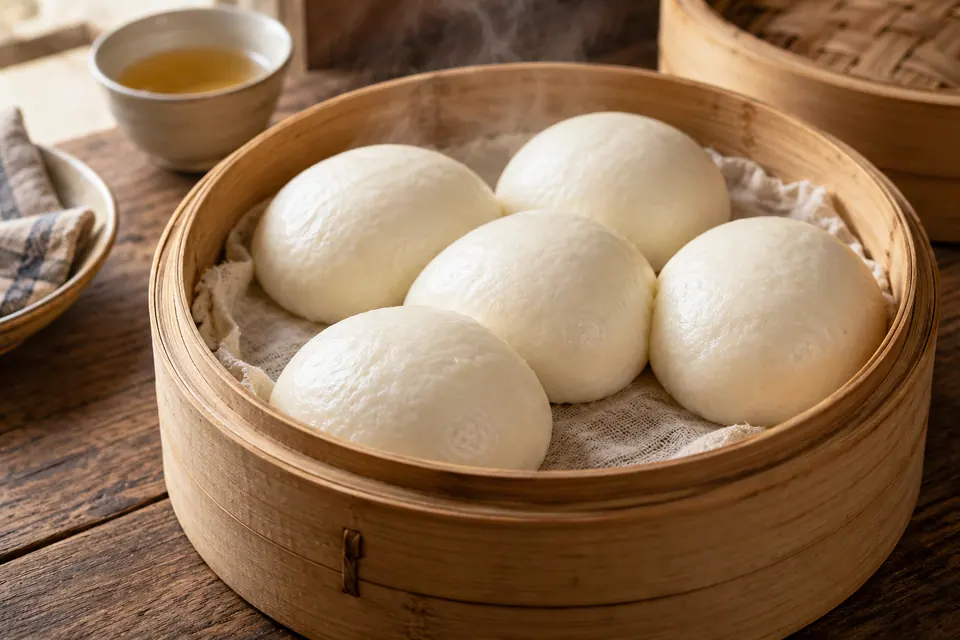
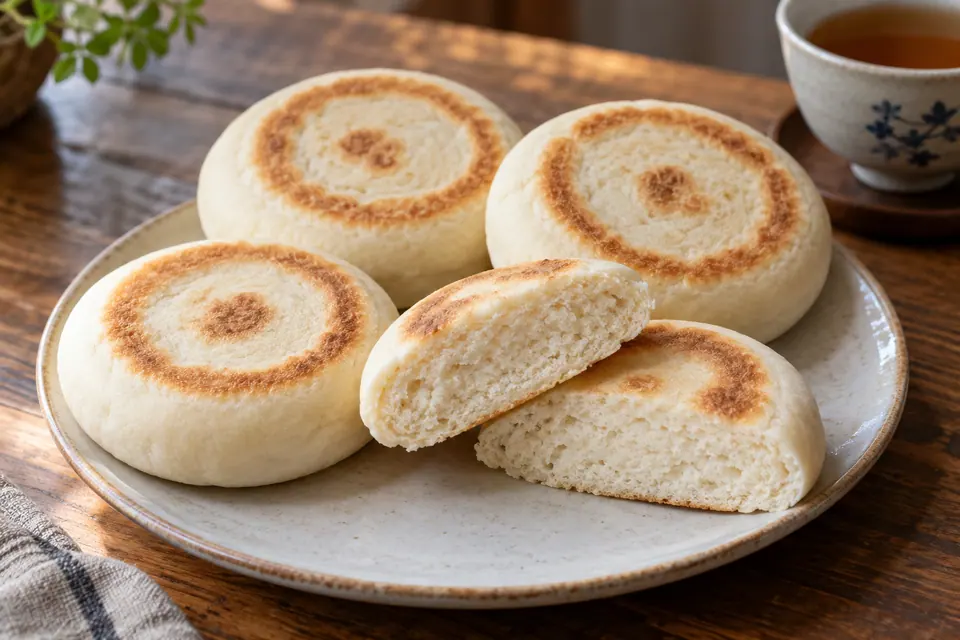
Plain leavened wheat bread steamed into soft, springy rounds or rolls.
The story behind it
Mantou is a staple alongside vegetables and meat in many wheat-growing regions. Modern northern usage distinguishes plain mantou from filled baozi, while older Jiangnan naming sometimes calls filled buns mantou too.
At the table
Try a fresh plain bun with a savory dish; cornmeal and whole-grain versions are also common.
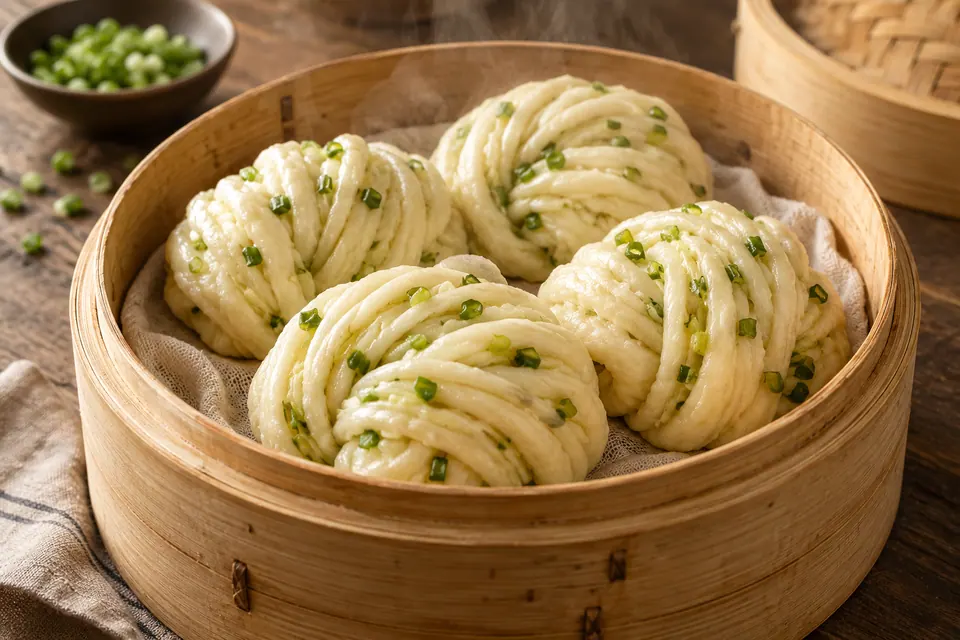
Steamed twisted rolls with layered dough, often seasoned with scallions, salt and oil.
The story behind it
Huajuan turns the same everyday dough as mantou into a seasoned bread through rolling, folding and twisting. The visible layers make household technique part of the presentation without needing an elaborate filling.
At the table
Pull apart the layers and serve with congee or a vegetable dish.
Shaanxi baijimo, before fillingAI-generated · representative preparation
Round breads for roujiamo: baijimo is firm and fragrant, while Tongguan-style mo is notably flaky.
The story behind it
The bread is not an interchangeable wrapper. Different Shaanxi traditions pair braised fillings with different structures: a bread can absorb juices, hold its shape or break into crisp layers, changing the whole bite.
At the table
Compare the breads themselves as well as the filling.
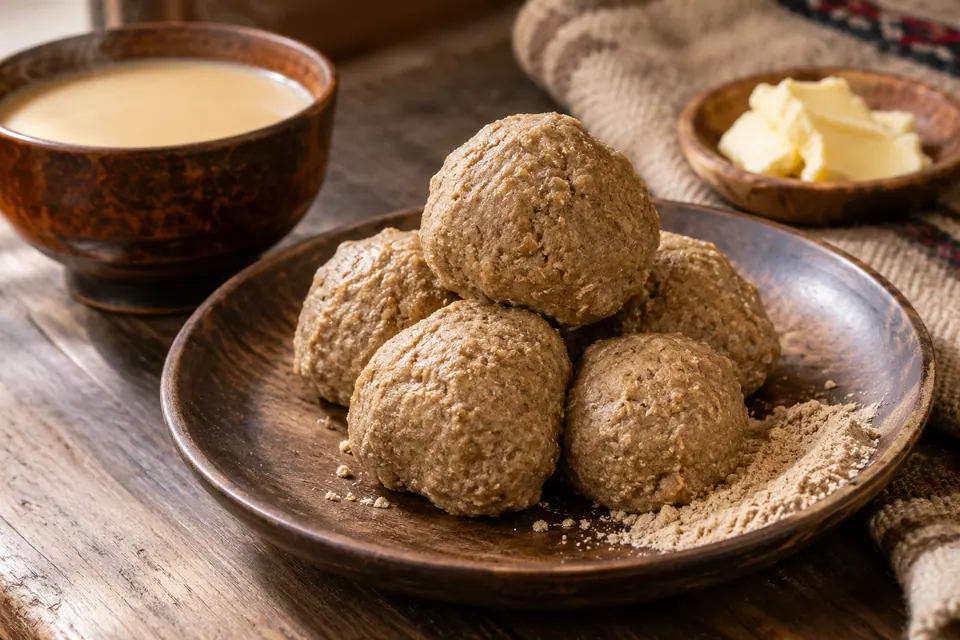
Roasted barley flour mixed with tea and often butter into a soft, hand-shaped food.
The story behind it
Tsampa is a grain staple rather than a baked bread. It reflects highland barley cultivation and Tibetan household food traditions, where dry roasted flour can be carried easily and mixed into a meal without an oven.
At the table
Try with butter tea and follow the host’s way of mixing it in the bowl.
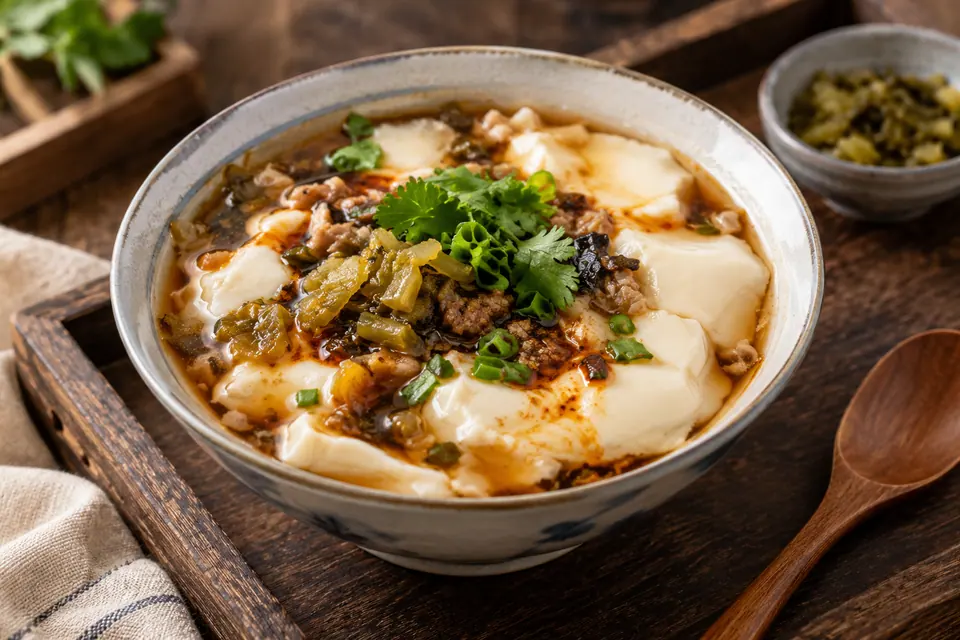
Silky fresh tofu with a savory gravy, pickles, herbs or chili according to the region.
The story behind it
Breakfast tofu has many names and tastes. Northern doufunao often comes with a savory topping, while southern douhua may be sweet or savory. Texture connects them, but toppings and the place in a meal differ.
At the table
Pair with youtiao or shaobing; a savory gravy may contain meat, egg or dried seafood.