Many ways to celebrate.

The timing below describes cultural traditions, not a confirmed 2026 or 2027 event program. Check the host community’s announcement before planning a visit.

Showing 20 of 20 cultural celebrations

Dai communities; related celebrations among De’ang and other neighbors

Water Splashing Festival

泼水节 · Pōshuǐ Jié
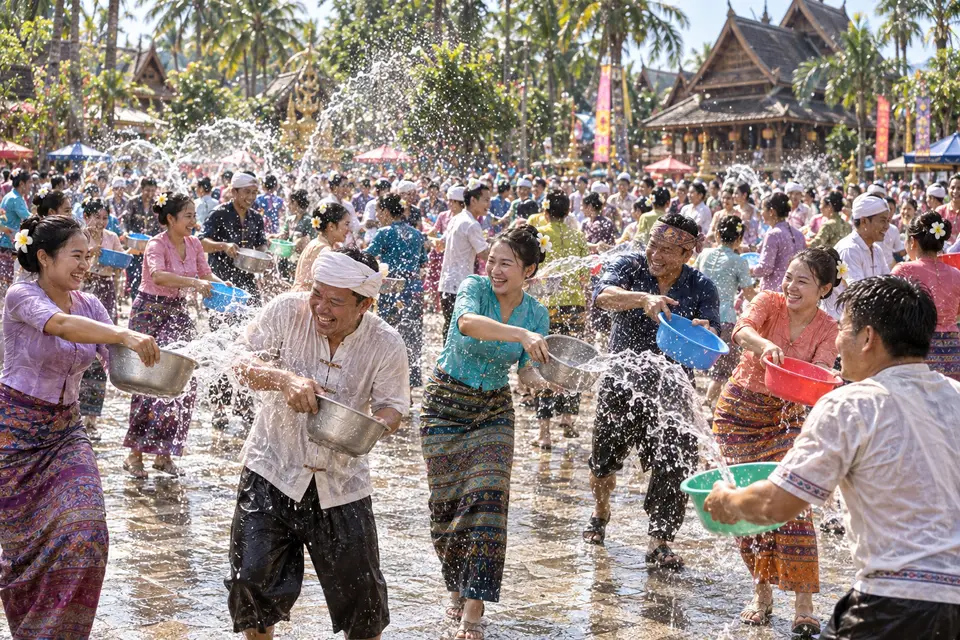
A lively crowd in Dai festive clothing splashing water in a square

Colorful Dai festive clothing, a lively crowd and sunlit splashes evoke the shared water blessings of the Dai New Year in Yunnan.

A new year carried in clear water, blessings and the rhythm of elephant-foot drums.

Where
Xishuangbanna and Dehong, Yunnan
When
Usually mid-April; local programs vary
  • New year & renewal
  • Music & dance
Stories, customs & visiting

Background & history

For Dai communities, this is the turning of the year in the Dai calendar. The festival brings together seasonal renewal, respect for elders and Buddhist traditions. Stories explaining the arrival of water blessings are passed down as folklore, with different tellings in different places.

How it is celebrated

Preparations and temple observances accompany the lively public celebrations. People offer water blessings, exchange good wishes and gather for elephant-foot drumming and peacock dance; some places also hold dragon boat races. Gently pouring water for an elder and splashing in a public square have different settings and etiquette.

Meaning & local differences

The water is a way of wishing someone well and renewing relationships. Xishuangbanna and Dehong retain distinct practices, while De’ang and other neighboring communities have their own celebrations. Learning the host community’s greetings makes the experience more meaningful than treating every water celebration as the same event.

As a guest

Ask before splashing someone; join designated public activities and follow the host’s temple etiquette.

Timing basis: Community calendar
Yi communities; Bai and other communities have distinct traditions

Torch Festival

火把节 · Huǒbǎ Jié

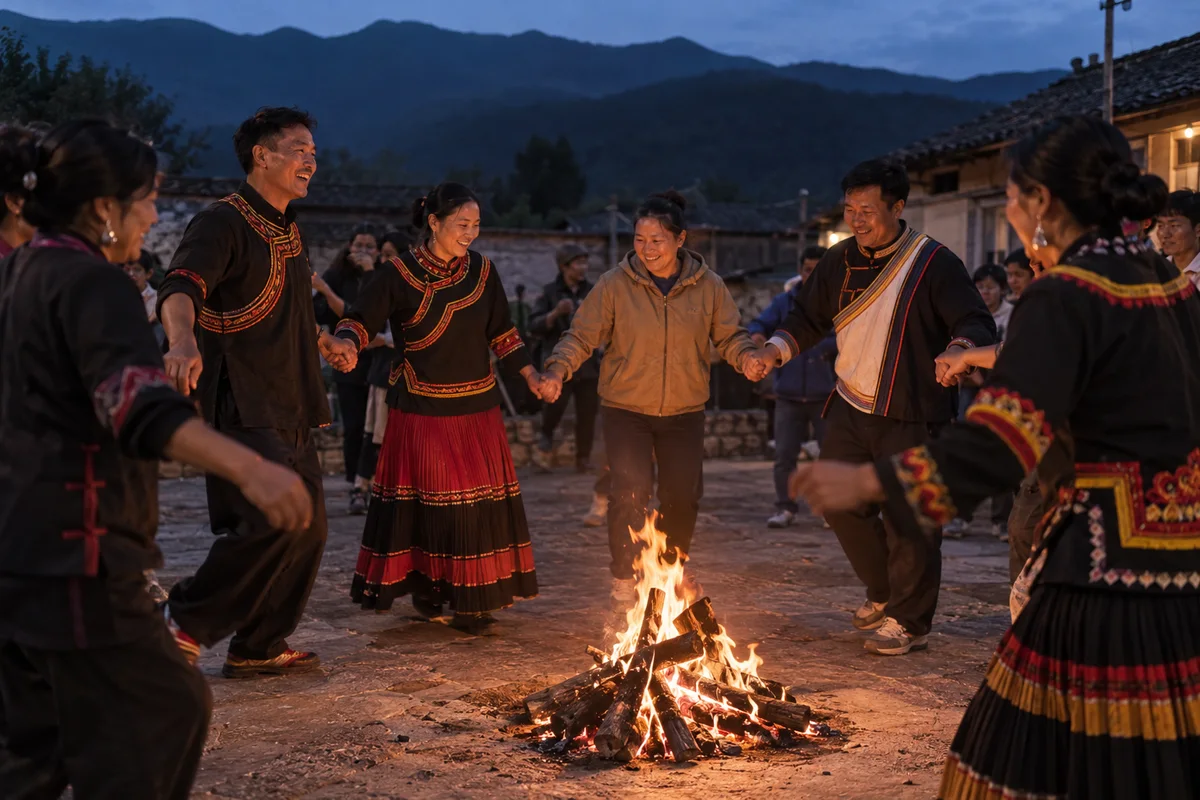
Villagers dancing around a small bonfire

A circle of dancers and the glow of a bonfire evoke the shared rhythms of Yi Torch Festival gatherings.

Torchlight, circle dancing and hopes for a flourishing harvest.

Where
Liangshan, Sichuan; Chuxiong and Dali, Yunnan
When
Often lunar month 6, day 24 or 25; varies by community
  • Harvest & land
  • Music & dance
  • Traditional sports
Stories, customs & visiting

Background & history

Torch festivals grew within the agricultural and communal life of southwest China. Yi traditions connect fire with protection, hopes for good crops and stories of courage. There are several local origin legends, so the festival cannot be reduced to one historical event or one version of a story.

How it is celebrated

As night falls, torches and bonfires become gathering points for singing and circle dancing. Daytime programs can include wrestling, horse events and displays of festival dress. What happens in a household, a village and a large public celebration may differ, even within the same region.

Meaning & local differences

The festival gives families and neighboring villages a time to meet after work in the fields. Bai Torch Festival in Dali has its own stories and ritual arrangements; it should not be presented as simply another version of Yi celebrations. The date and meaning of each gathering belong to its local setting.

As a guest

Follow local fire arrangements and watch from the areas set aside for visitors.

Timing basis: Chinese lunar calendar

Mongolian communities

Naadam

那达慕 · Nàdámù

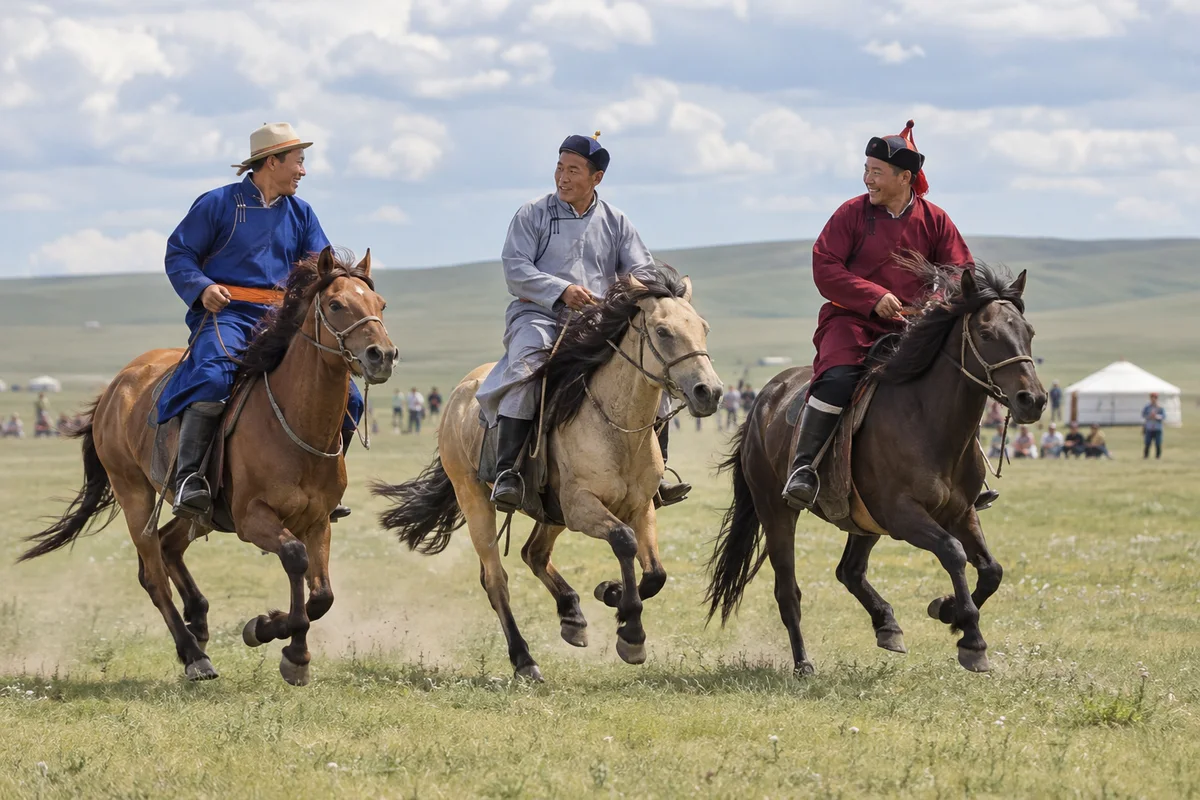
Three riders crossing the grassland on horseback

Riders on an open grassland bring the horsemanship and community spirit of Naadam into view.

Wrestling, horsemanship and archery bring people together on the grasslands.

Where
Inner Mongolia; also Qinghai and Xinjiang
When
Often in summer; each gathering sets its own dates
  • Traditional sports
  • Music & dance
Stories, customs & visiting

Background & history

Naadam is rooted in Mongolian gatherings where pastoral communities meet, compete and exchange goods. Wrestling, horse racing and archery draw on skills valued in grassland life. Over time, these gatherings also became occasions for music, friendship and the passing on of sporting traditions.

How it is celebrated

A gathering may feature several kinds of competition alongside songs, dance and market stalls. The three familiar sports do not guarantee an identical program everywhere. Listen to local explanations of wrestling dress, competition rules and the roles of riders rather than assuming all events use the same format.

Meaning & local differences

Naadam expresses skill through a shared public occasion, linking competitors with families, musicians and spectators. Gatherings in Inner Mongolia, Qinghai and Xinjiang have different histories and schedules. A locally announced event date is more useful for travel than a single generalized “Naadam day.”

As a guest

Enjoy competitions from spectator areas and ask before approaching riders or horses.

Timing basis: Locally arranged dates

Tibetan communities

Losar · Tibetan New Year

藏历新年 · Zànglì Xīnnián

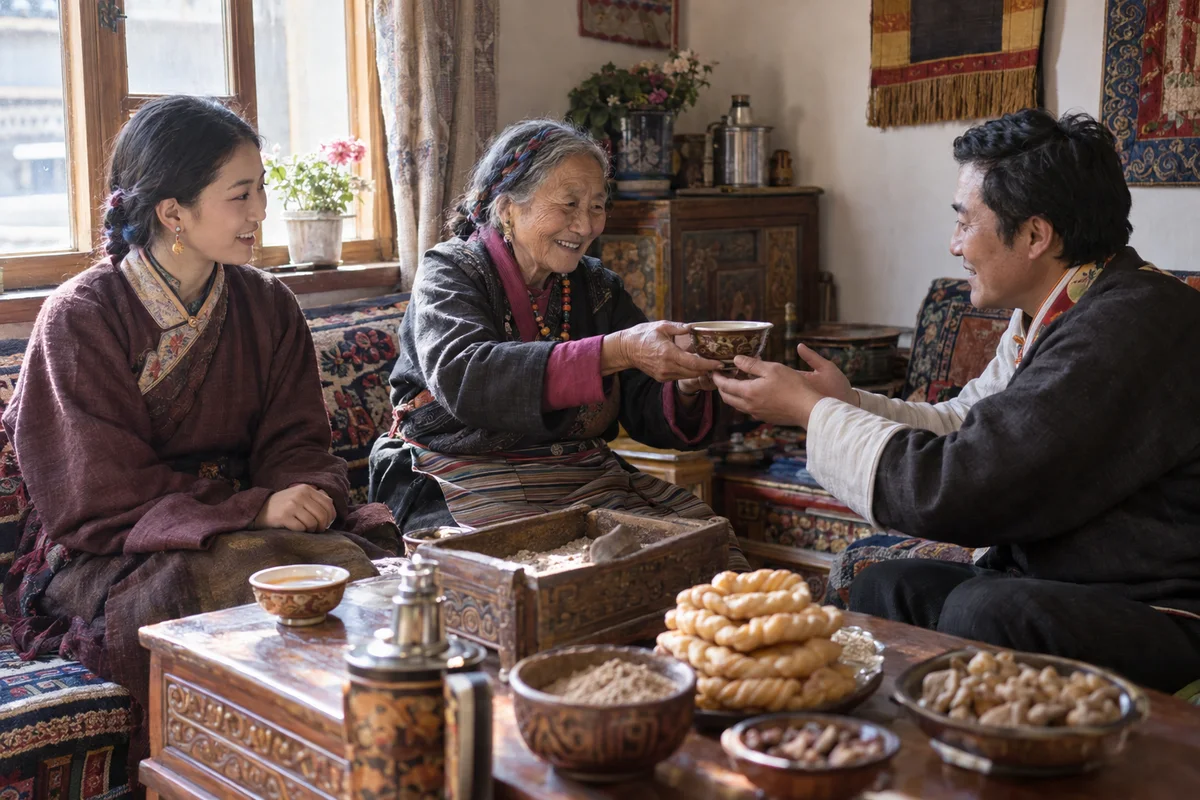
Family members sharing tea beside chemar and khapse

Tea, chemar and khapse pastries frame a family greeting inspired by Tibetan New Year traditions.

A chemar offering box, crisp khapse pastries and wishes for the year ahead.

Where
Lhasa and other Tibetan communities; regional New Years differ
When
First day of the Tibetan year; check the local calendar
  • New year & renewal
  • Food & hospitality
Stories, customs & visiting

Background & history

Losar marks the start of the Tibetan year and draws together household renewal, farming hopes and religious observances. The Tibetan calendar has its own calculations. Dates may coincide with Chinese New Year in some years and differ in others; regional agricultural New Years also have their own timing.

How it is celebrated

In Lhasa traditions, families clean their homes, prepare fried khapse pastries and arrange chemar boxes with grain and tsampa. Year-end guthuk soup and New Year greetings are familiar parts of the season. Offerings and the order of visits follow household and local practice.

Meaning & local differences

Food and greetings convey wishes for abundance and well-being, while visiting reconnects relatives and neighbors. Some customs are intimate family observances, others are public celebrations. Following a host’s lead allows visitors to appreciate the meaning of a gesture without turning it into a performance.

As a guest

Let hosts guide greetings and offerings; household rituals are not automatically open to visitors.

Timing basis: Community calendar
Tibetan communities

Shoton Festival

雪顿节 · Xuědùn Jié

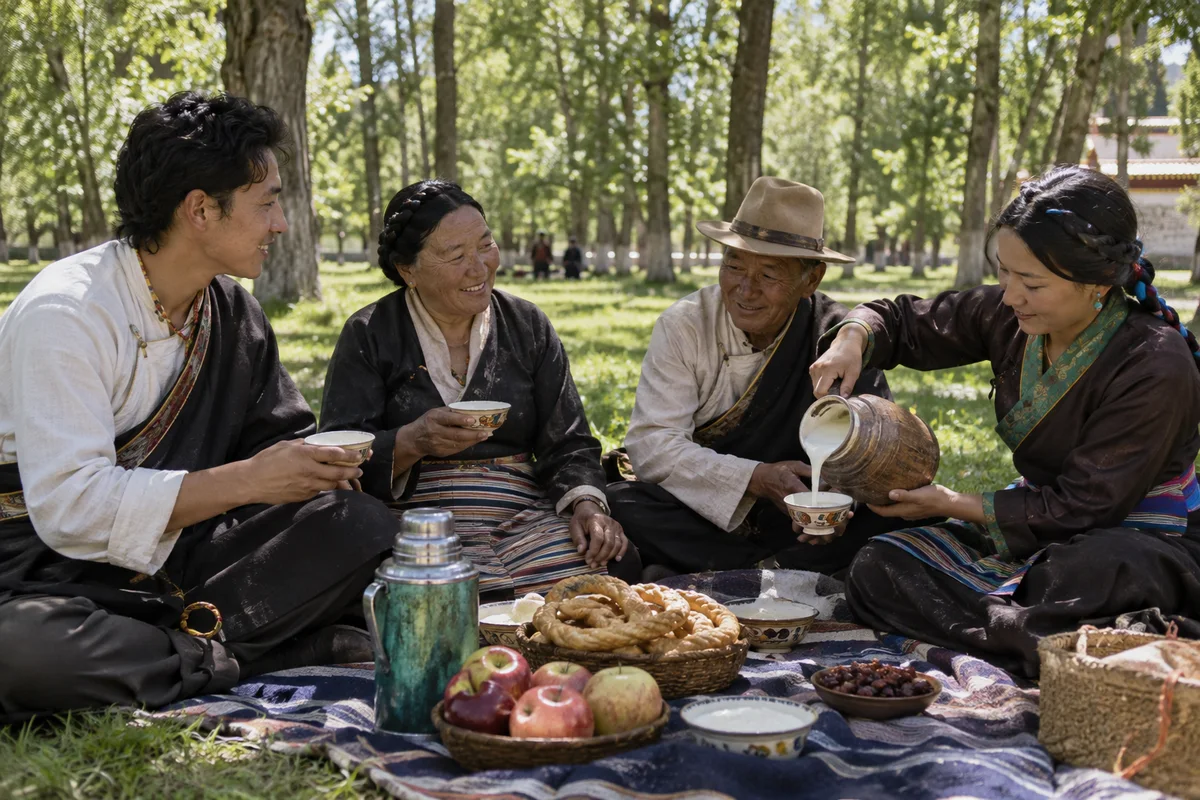
A family sharing yogurt on a picnic under trees

A shaded picnic with yogurt draws on the family outings and food traditions associated with Shoton in Lhasa.

Yogurt, Tibetan opera and gatherings in the summer gardens.

Where
Lhasa, Xizang
When
Around the end of Tibetan month 6 and start of month 7
  • Music & dance
  • Food & hospitality
Stories, customs & visiting

Background & history

The name Shoton is associated with a yogurt feast. Its history connects the end of a period of monastic retreat with laypeople offering yogurt. In Lhasa, the celebration later developed a strong relationship with Tibetan opera and summer gatherings, especially around Norbulingka.

How it is celebrated

Large religious image displays, opera performances and family outings are different parts of the festival. Opera combines singing, narration, costume and movement, so staying for a scene reveals more than a quick photograph. Families also gather in the gardens with food and conversation.

Meaning & local differences

Shoton shows how a festival can hold devotion, theater and leisure together. Each venue has its own program and rules; an opening ceremony is not the whole festival. Sacred observances should be approached as worship, while public opera offers another way to meet a living performance tradition.

As a guest

Check the program for each venue; respect worshippers and photography restrictions.

Timing basis: Community calendar
Zhuang, Li, She, Dong, Bouyei and other communities

Sanyuesan · Third Month Festival

三月三 · Sānyuè Sān

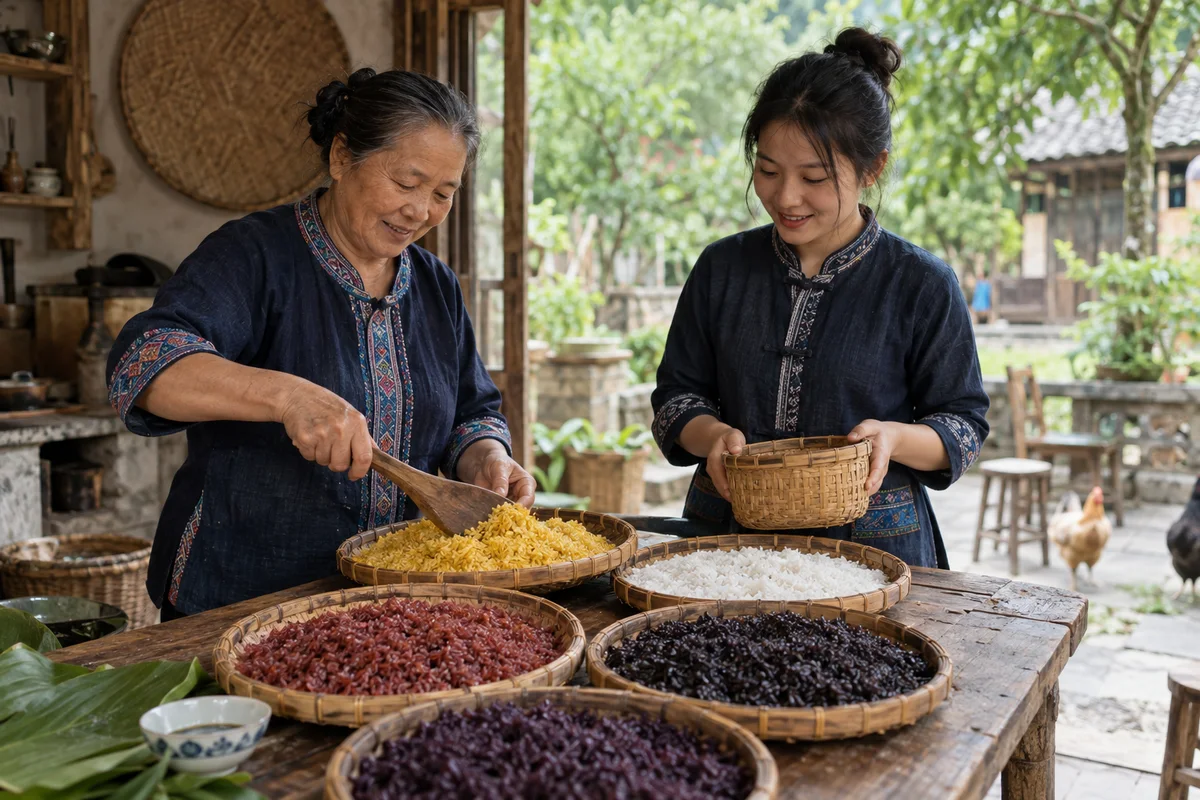
Two women preparing five-color glutinous rice

Five-color glutinous rice and hands at work highlight a Zhuang food tradition associated with Sanyuesan in Guangxi.

One date, many voices: song gatherings and springtime reunions.

Where
Guangxi, Hainan, Guizhou, Zhejiang and Fujian
When
Lunar month 3, day 3; celebrations may span several days
  • Music & dance
  • Food & hospitality
Stories, customs & visiting

Background & history

The third day of the third lunar month is shared by several traditions across southern China. Spring gatherings, remembrance and social visits have developed differently in different communities. Zhuang, Li and She celebrations share a calendar date without sharing a single origin or complete set of customs.

How it is celebrated

In parts of Guangxi, Zhuang celebrations are known for song exchanges, embroidered balls and five-color glutinous rice. In Hainan, Li festivities connect ancestor remembrance with songs and dancing; She communities have distinctive singing traditions too. The local host community is the best starting point for understanding an event.

Meaning & local differences

A song exchange can be conversation, a display of knowledge and a way to form relationships. Preparing festive rice also keeps knowledge of plants, color and cooking in circulation. These everyday skills make the festival more than a stage show and connect younger participants with older family members.

As a guest

Ask which community is hosting; listen before joining a song exchange.

Timing basis: Chinese lunar calendar

Miao communities in Taijiang

Sisters’ Meal Festival

苗族姊妹节 · Miáozú Zǐmèi Jié

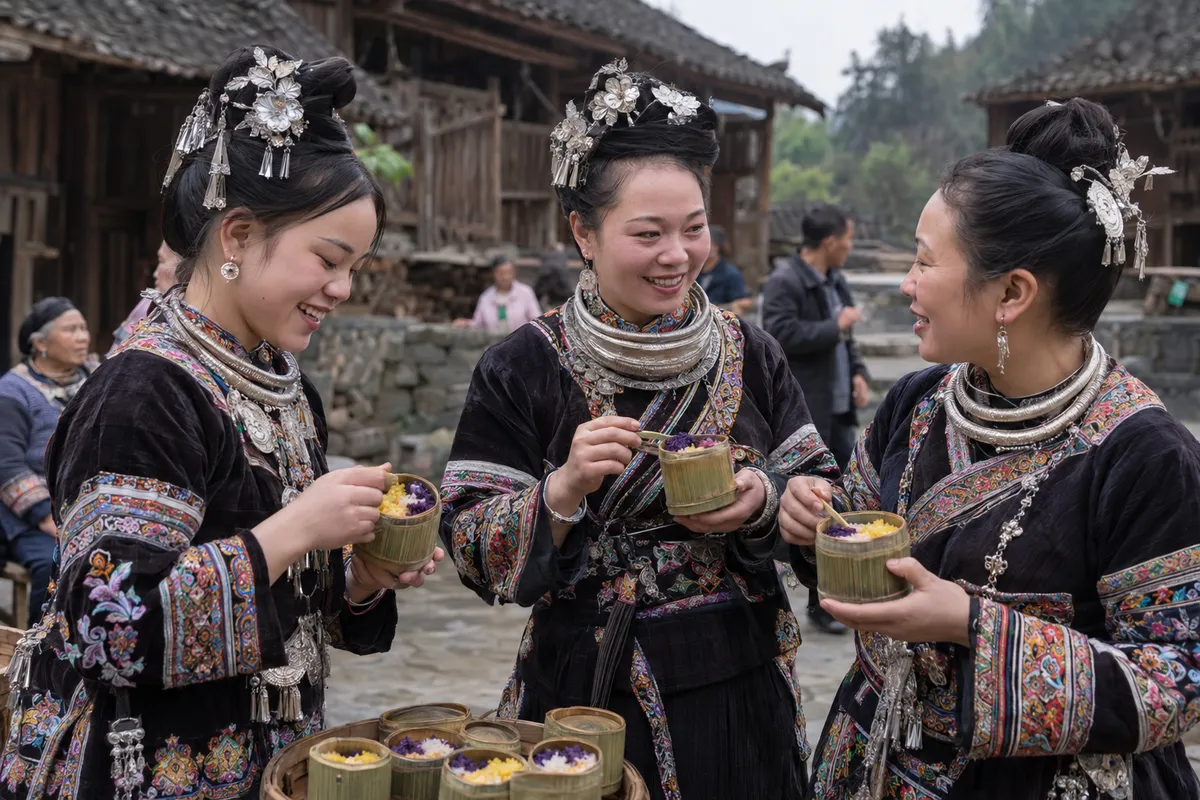
Women in embroidered clothing sharing colored rice

Colored rice, embroidery and silver ornaments evoke the visiting and sharing associated with the Miao Sisters’ Meal Festival in Taijiang.

Colorful rice, silverwork and songs carry friendship and affection.

Where
Shidong and Laotun, Taijiang, Guizhou
When
Lunar month 3, days 15–17 in the documented Taijiang tradition
  • Food & hospitality
  • Dress & craft
  • Music & dance
Stories, customs & visiting

Background & history

In the Shidong and Laotun area of Taijiang, this Miao festival has long offered a setting for courtship, visiting and community life. Young women are central to the celebrations. Local origin stories belong to oral tradition rather than a single securely dated founding event.

How it is celebrated

Girls prepare and give sisters’ rice, sometimes with small tokens whose meanings express different feelings. Festival dress, silver ornaments, drum dancing and antiphonal singing are important parts of the gathering. Embroidery and jewelry also reveal the work of makers and the support of family members.

Meaning & local differences

Although often introduced through romantic customs, the festival also sustains relationships among households and villages. It is an occasion to visit, make music and share pride in dress and craft. The meanings of tokens and clothing should be learned locally rather than treated as a universal code for all Miao people.

As a guest

Ask before portraits or touching clothing; gifts and song exchanges are not tourist props.

Timing basis: Chinese lunar calendar

Miao communities, with different local calendars

Miao New Year

苗年 · Miáonián

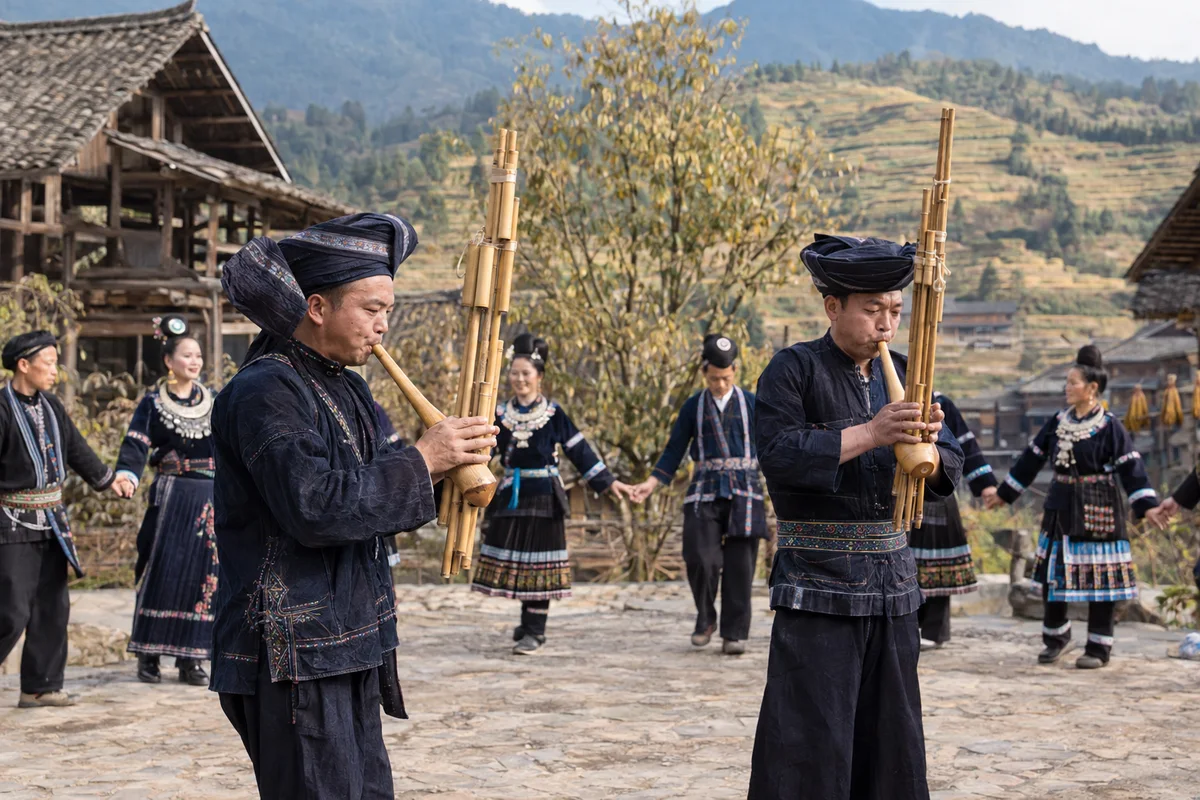
Two lusheng players with village dancers behind them

Lusheng music and village dancing evoke the gatherings that follow the harvest during Miao New Year in southeast Guizhou.

The harvest comes home, and the lusheng calls neighbors together.

Where
Leishan, Danzhai and neighboring areas of Guizhou
When
After the harvest; villages arrange different dates
  • Harvest & land
  • New year & renewal
  • Music & dance
Stories, customs & visiting

Background & history

Miao New Year follows the completion of agricultural work in many communities of southeast Guizhou. It joins harvest thanksgiving with remembrance of ancestors. Local calendars and arrangements between villages shape the season, so neighboring settlements may celebrate in sequence rather than on one common day.

How it is celebrated

Families prepare reunion meals, make glutinous rice cakes and visit relatives. Lusheng music and dancing bring people into village gathering spaces, while some places hold singing contests or other community events. A village’s own program is a better guide than a generalized list of festival activities.

Meaning & local differences

The New Year marks both the end of a working cycle and the renewal of social ties. Music, embroidery, food and stories are learned through participation. Presenting it only as a parade misses the household preparations and reciprocal visits that give the public celebration its meaning.

As a guest

Confirm the village’s own dates and whether a gathering welcomes outside guests.

Timing basis: Locally arranged dates

Dong communities

Dong New Year

侗年 · Dòngnián

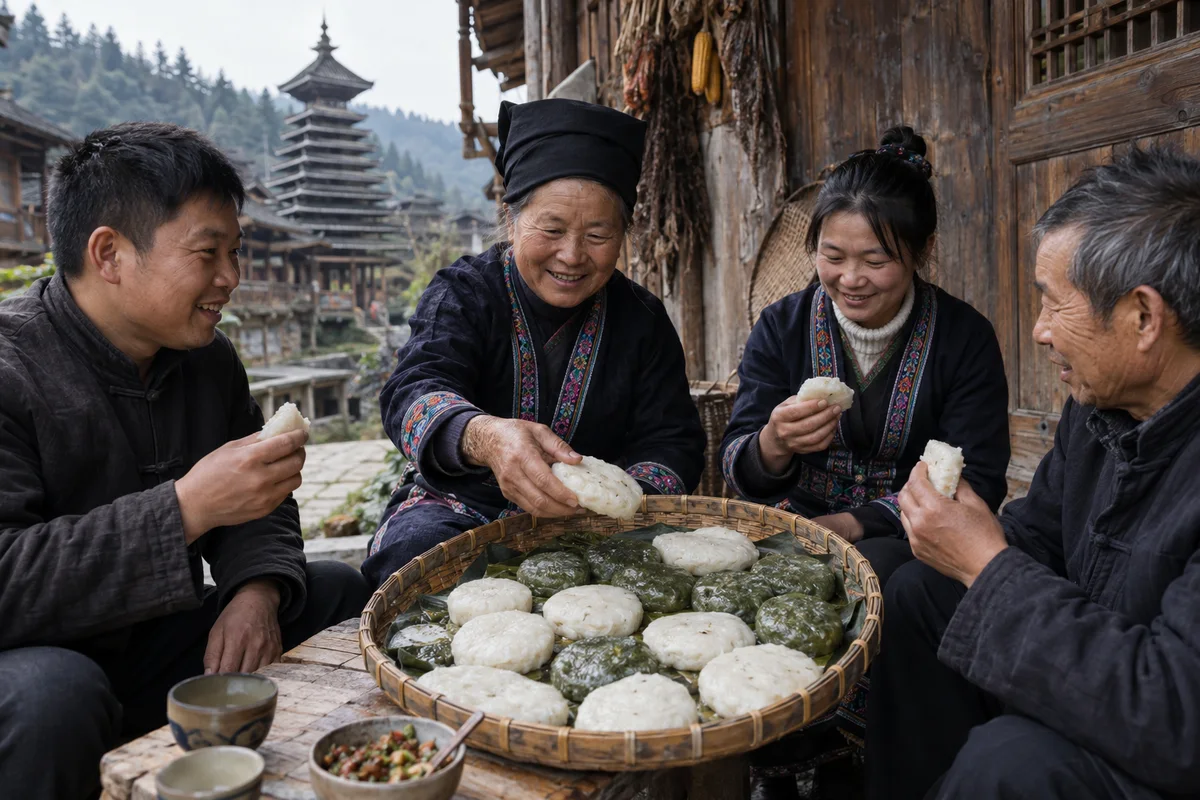
A family sharing rice cakes near a Dong drum tower

Shared rice cakes, timber homes and a distant drum tower suggest the family visits and village life surrounding Dong New Year.

After the harvest, relatives gather and villages renew their ties.

Where
Guizhou, Hunan and Guangxi
When
Often around lunar month 11, day 1; village dates differ
  • New year & renewal
  • Food & hospitality
Stories, customs & visiting

Background & history

Dong New Year is linked to the end of the farming year and is also described locally as “eating winter.” Communities in Guizhou, Hunan and Guangxi preserve different dates and practices. It should not be assumed that every Dong household celebrates the same form of New Year.

How it is celebrated

Preparing festive food, remembering ancestors and visiting relatives are central activities. Some local traditions include rice cakes and specially prepared fish dishes. Shared meals, singing and reciprocal hospitality connect households; which foods appear and how they are served depend on local and family practice.

Meaning & local differences

The festival makes the harvest a shared social occasion, not only a household achievement. Asking who prepared a dish or where a song was learned opens a view of cooperation across generations. Village-to-village differences are part of the tradition’s richness rather than exceptions to one fixed model.

As a guest

Ask hosts about the meaning of dishes and greetings in their own village.

Timing basis: Locally arranged dates

Bai communities and visitors from many neighboring groups

Third Month Fair

大理三月街 · Dàlǐ Sānyuè Jiē

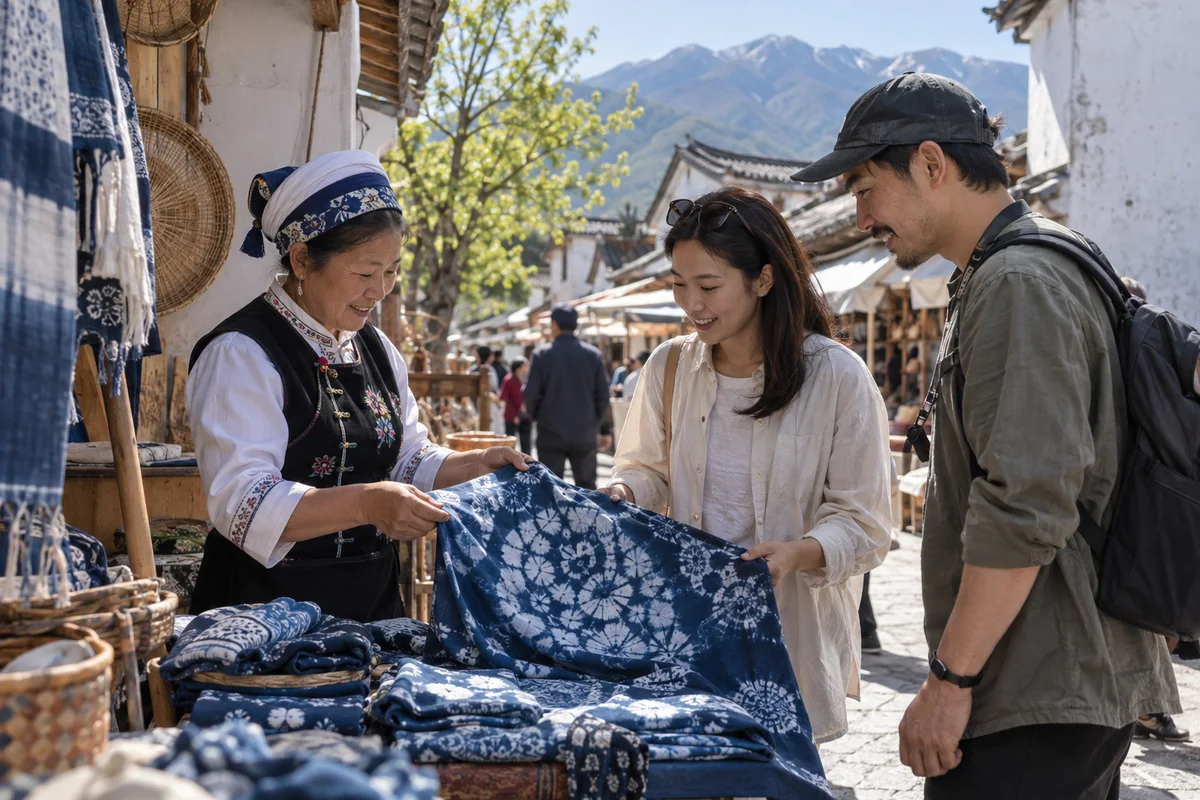
A craftswoman showing tie-dyed cloth to market visitors

A conversation over blue-and-white tie-dye evokes the crafts, trade and everyday encounters of Dali’s Third Month Fair.

A market becomes a meeting place for food, craft and conversation.

Where
Dali, Yunnan
When
Lunar month 3, days 15–21 in the traditional fair calendar
  • Dress & craft
  • Food & hospitality
  • Traditional sports
Stories, customs & visiting

Background & history

The Third Month Fair grew into a major gathering beside Dali’s old town at the foot of Cangshan. Historical market exchange and religious associations both appear in accounts of its development. Stories connecting the fair with Guanyin are part of its inherited cultural narrative, not a precise commercial founding record.

How it is celebrated

Trading is at the heart of the fair, with food, local products and handicrafts bringing sellers and visitors together. Songs, performance and sporting activities accompany the market. Browsing slowly, asking how something is made and learning its local name reveal the everyday knowledge behind the stalls.

Meaning & local differences

The fair reflects Dali’s place in networks of movement and exchange among many communities. Bai traditions are central, but the meeting of different visitors and makers also matters. The traditional fair calendar and the schedule of a modern organized festival may not have exactly the same boundaries.

As a guest

Talk with stallholders about their work and ask before photographing makers at close range.

Timing basis: Chinese lunar calendar

Jingpo communities

Munao Zongge

目瑙纵歌 · Mùnǎo Zònggē

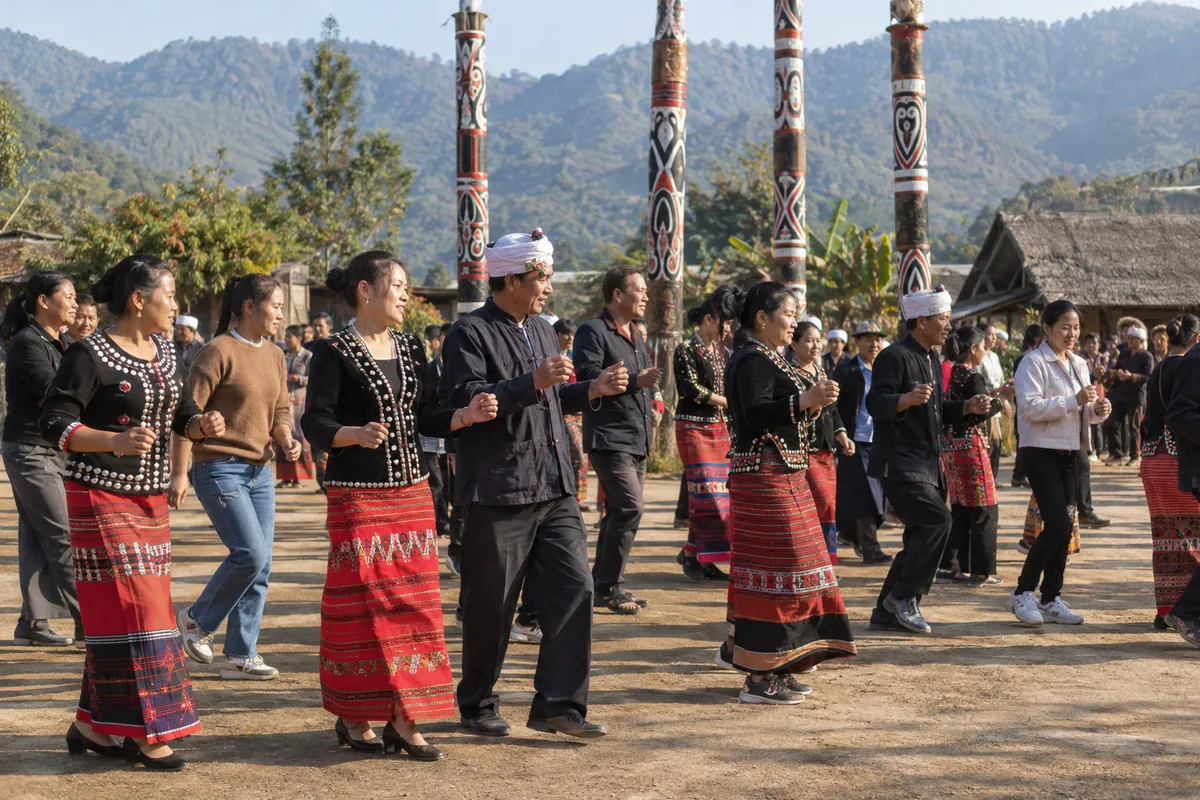
Jingpo-inspired dancers moving together beside decorated posts

Shared steps and winding lines evoke the collective movement at the heart of Jingpo Munao Zongge.

Long lines of dancers follow a shared rhythm around painted posts.

Where
Dehong, especially Longchuan, Yunnan
When
Traditionally around lunar month 1, days 15–16 in Dehong; check each event
  • Music & dance
  • Harvest & land
Stories, customs & visiting

Background & history

Munao Zongge is a major Jingpo communal celebration in Dehong. Different forms of munao have marked harvests, important achievements and other occasions. Stories about the origins of the dance and the community’s past are carried through the gathering and the imagery of its decorated posts.

How it is celebrated

Dancers follow leaders along organized, turning routes around the posts. The repeated steps, shoulder movements and shared rhythm allow a very large group to move together. Decorations and routes have meanings within the tradition, so the posts are more than a colorful backdrop for photographs.

Meaning & local differences

The gathering depends on coordination: leaders, musicians and dancers each contribute to a collective whole. Longchuan is an important setting for its transmission. Public celebrations can welcome visitors, but following the hosts’ invitation and the dance route is part of respecting the event itself.

As a guest

Join only when invited, follow the dance leaders and keep the procession moving.

Timing basis: Chinese lunar calendar

Yao communities; observances vary by branch and place

Panwang Festival

盘王节 · Pánwáng Jié

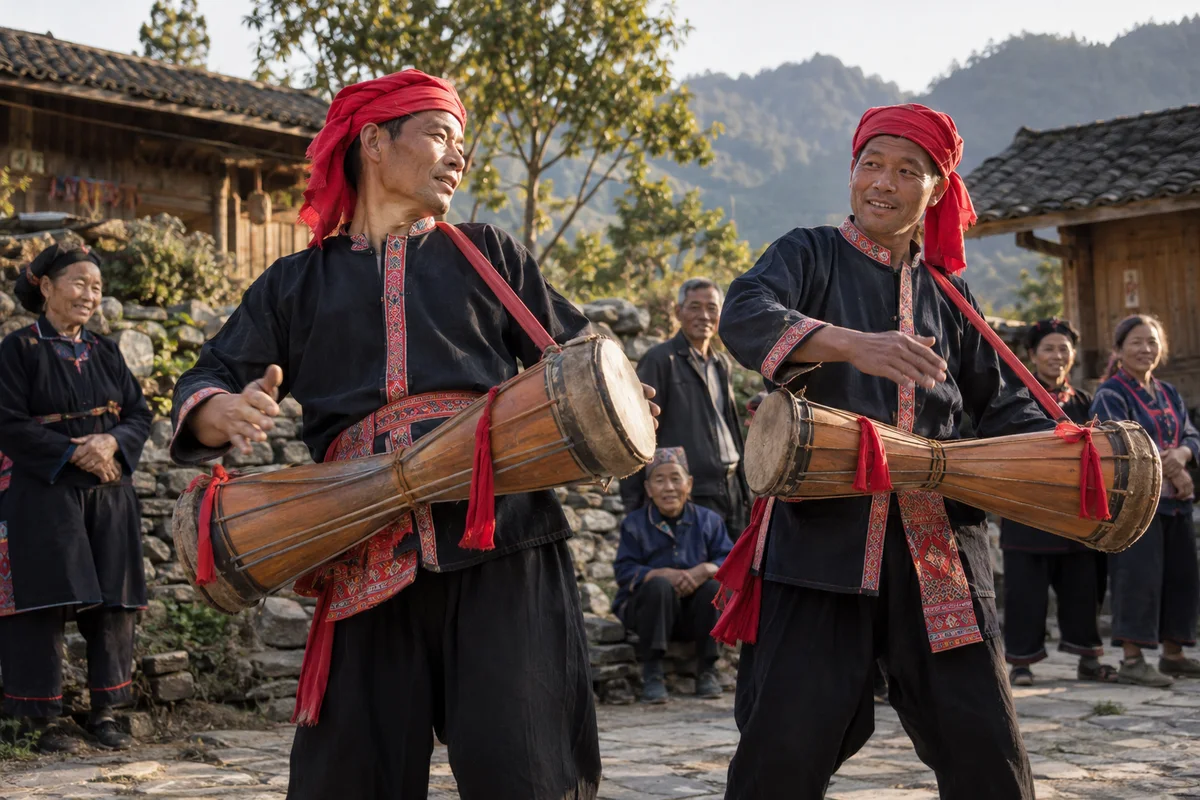
Two performers playing slender wooden long drums

Long-drum performers suggest one of the public music and dance traditions associated with Yao Panwang celebrations.

Songs remember Panwang and keep ancestral stories in the present.

Where
Guangxi, Hunan and Guangdong
When
Commonly lunar month 10, day 16; ritual cycles can differ
  • Music & dance
  • Harvest & land
Stories, customs & visiting

Background & history

Panwang is an ancestral figure in Yao cultural traditions. The festival connects remembrance of Panwang with songs, ritual vows and community gathering. Its stories belong to ancestral and religious tradition; the histories and practices of different Yao branches should not be collapsed into a single account.

How it is celebrated

The Panwang song tradition carries accounts of origins, history and social life. Ritual specialists, singers, musicians and long-drum performers have different roles in local observances. A household “repaying Panwang” ceremony and a public festival may have different durations, purposes and rules for participation.

Meaning & local differences

Remembering ancestors also creates occasions to strengthen present-day relationships, share harvest joy and meet other families. The value of the festival lies partly in the knowledge learned from experienced practitioners. Visitors can appreciate public music and dance while leaving private ritual choices to the host community.

As a guest

Ask which parts are public; do not enter a family ritual without an invitation.

Timing basis: Chinese lunar calendar

Sui communities

Duan Festival

水族端节 · Shuǐzú Duānjié

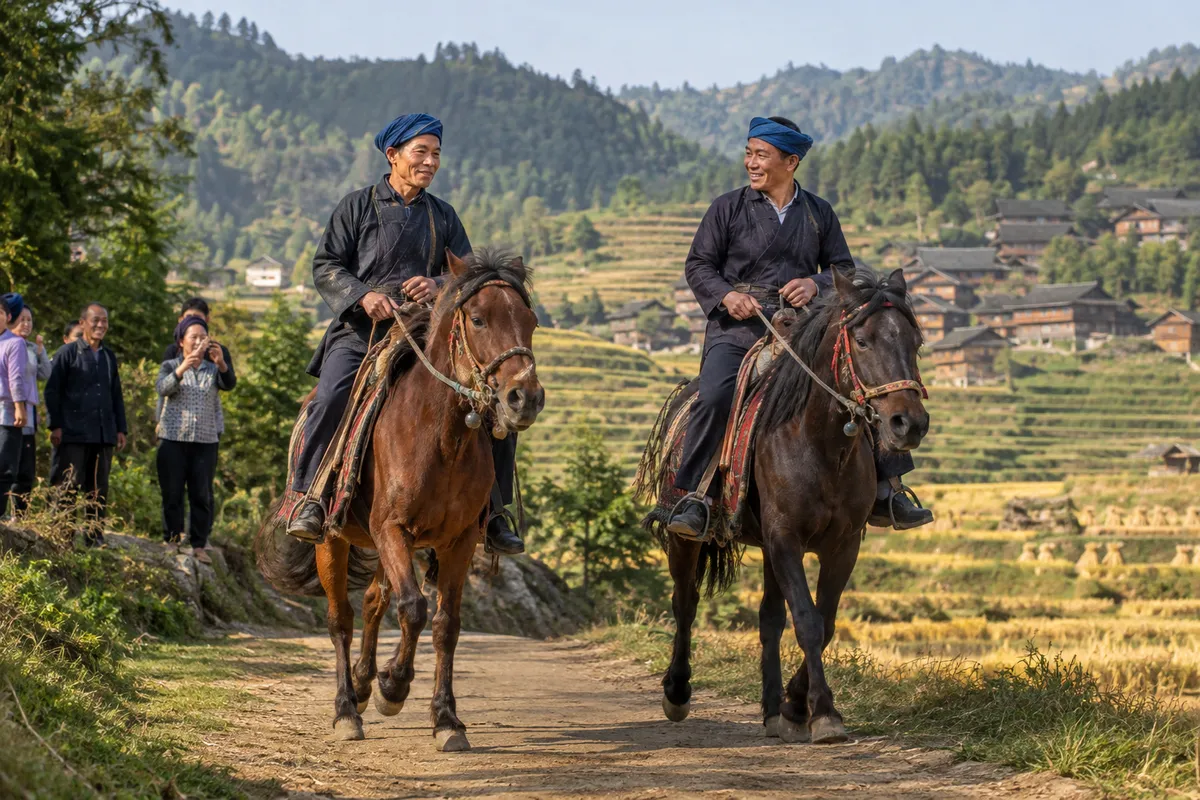
Two riders on an earthen track beside harvested terraces

A small horse gathering in a terraced landscape draws on the duan-slope horse events held by some Sui communities.

Bronze drums and horse gatherings mark the turn of the Sui year.

Where
Sandu and neighboring areas of Guizhou
When
Sui calendar New Year; staggered dates around lunar months 8–10
  • Harvest & land
  • Traditional sports
  • New year & renewal
Stories, customs & visiting

Background & history

Duan marks the Sui calendar’s transition from one year to the next when grain is ripe. Shuishu texts and calendrical knowledge guide the traditional timing. Communities celebrate in successive groups over a season, making the festival a cycle of connected observances rather than one uniform date.

How it is celebrated

Ancestor remembrance and ritual meals take place alongside the sound of bronze drums, singing and visits. At some gatherings, people converge on the duan slope for horse racing. Food rules around particular ritual meals are specific to the occasion, and hosts can explain how fish and other dishes fit those customs.

Meaning & local differences

The staggered celebrations connect villages through repeated visits and shared participation. They also provide occasions for transmitting calendar knowledge, music and collective memory. Despite the similar Chinese character, Duan is the Sui New Year tradition and is distinct from the Dragon Boat Festival.

As a guest

Confirm the specific village and batch; follow local guidance around ritual meals and racing.

Timing basis: Community calendar
Hani communities

Hani Tenth Month New Year

哈尼十月年 · Hāní Shíyuè Nián

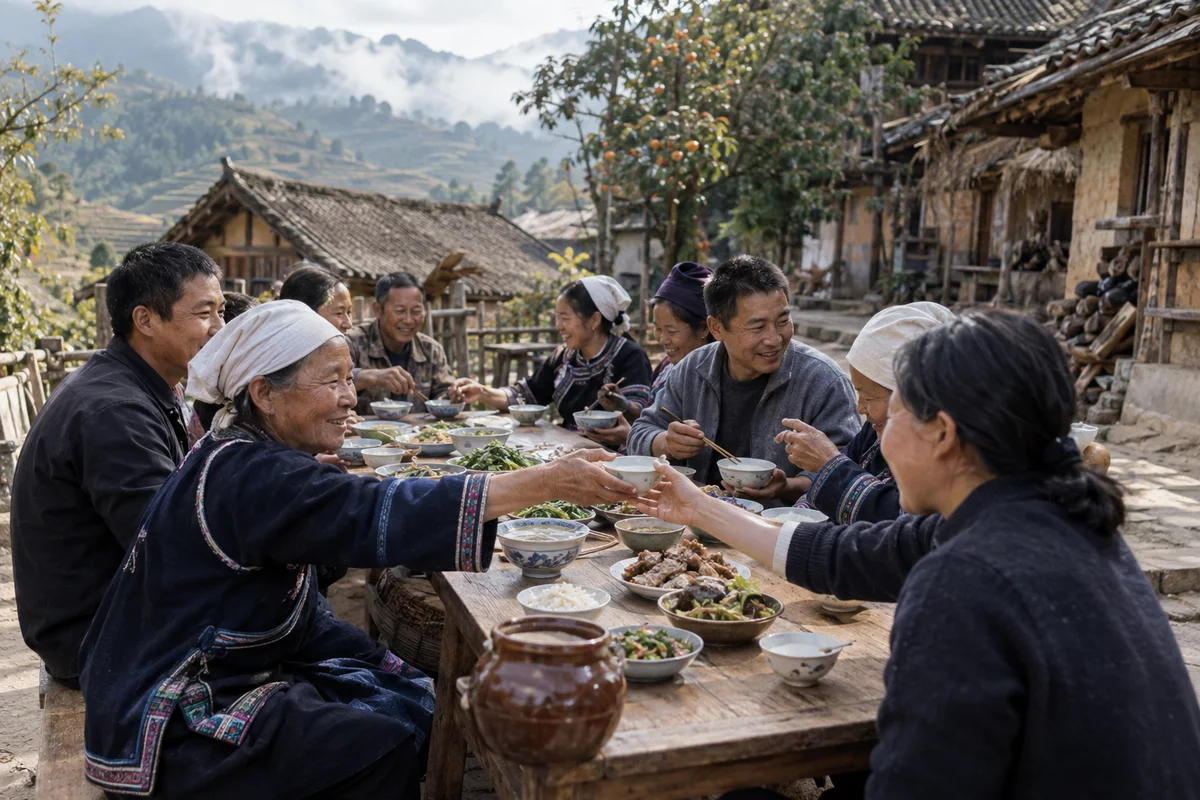
Neighbors passing bowls at a long village table

A shared village meal evokes the hospitality and harvest reunions of Hani Tenth Month New Year.

A year of work on the terraces ends with time for family and neighbors.

Where
Honghe and other Hani communities in Yunnan
When
After the harvest, around lunar month 10; dates vary locally
  • Harvest & land
  • New year & renewal
  • Food & hospitality
Stories, customs & visiting

Background & history

Hani Tenth Month New Year follows the rice harvest in many communities. Its place in the year reflects the close relationship between farming work, family life and seasonal observances. Local names and calendars differ, so “tenth month” is a useful cultural description rather than a universal event date.

How it is celebrated

Families prepare festive food, remember ancestors and visit one another after a year’s work. In some communities, shared feasting extends into village-wide hospitality. A communal or long-table meal belongs to its particular village and occasion; it should not be promised as part of every Hani New Year visit.

Meaning & local differences

The celebration brings the work of producing food back into relationships among people. In the Honghe terrace region, the surrounding fields help explain this connection between land and seasonal life. Listening to local accounts of the harvest gives a meal and a landscape a more personal meaning.

As a guest

Arrange village visits through local hosts and ask before joining a communal meal.

Timing basis: Locally arranged dates

Tujia communities

Sheba Festival

土家族舍巴日 · Tǔjiāzú Shěbā Rì

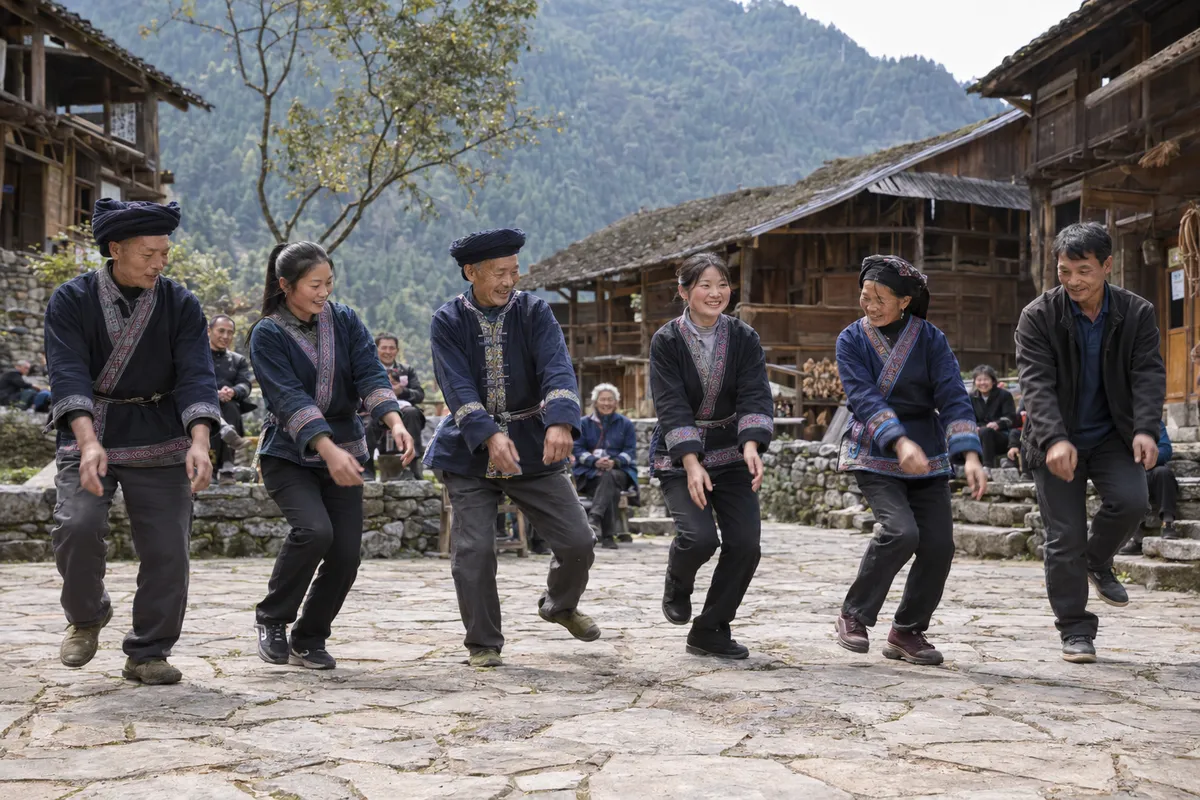
Villagers taking hand-swing dance steps in a square

Coordinated hand-swing dance steps evoke the communal movement associated with Tujia Sheba Ri gatherings.

Shared dance steps recall work, ancestors and village life.

Where
Longshan and neighboring areas of the Wuling Mountains
When
Dates depend on the village and the announced gathering
  • Music & dance
  • Harvest & land
Stories, customs & visiting

Background & history

Sheba is associated with Tujia hand-waving dance and communal remembrance in the Wuling Mountains and You River region. Historically, gatherings could be linked with ritual spaces and the New Year season. Larger and smaller forms of the dance have different traditions, and modern public festivals may use other schedules.

How it is celebrated

Participants move together to percussion, often following a leader in circles or organized formations. Gestures can recall farming, hunting and other work, bringing everyday experience into dance. Songs and remembrance accompany some gatherings, but the full program depends on the village and the occasion.

Meaning & local differences

Learning a few steps can reveal how collective memory is held in movement rather than written explanation alone. The dance connects elders, young people and returning relatives. Joining respectfully means watching how the group moves and distinguishing an open dance gathering from a ritual led by designated participants.

As a guest

Let local dancers show the steps and respect the boundaries of ritual spaces.

Timing basis: Locally arranged dates

Xibe communities

Westward Migration Festival

锡伯族西迁节 · Xībózú Xīqiān Jié

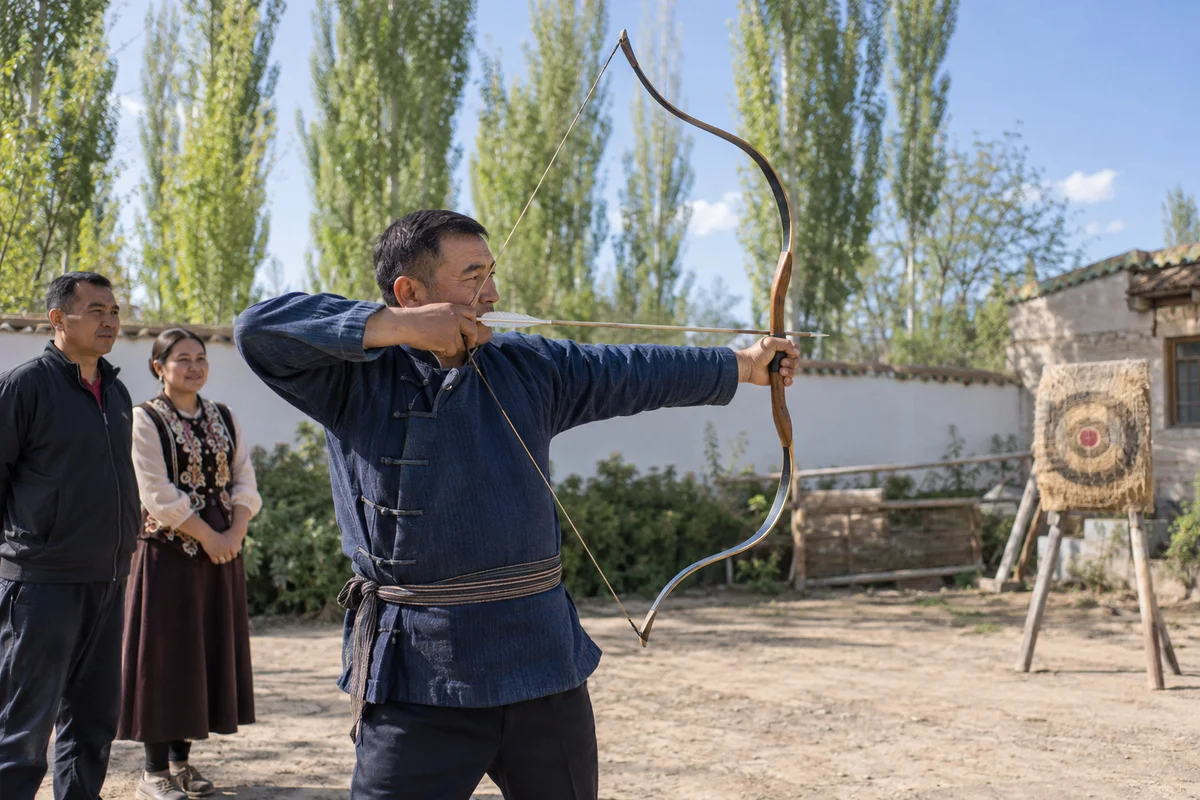
An archer drawing a bow toward a target with spectators behind

A contemporary archery gathering draws on a skill celebrated during Xibe Westward Migration commemorations.

Songs and archery keep the memory of a long journey alive.

Where
Qapqal, Ili, Xinjiang
When
Lunar month 4, day 18
  • Music & dance
  • Traditional sports
Stories, customs & visiting

Background & history

The festival remembers the Xibe soldiers and family members who set out from Shengjing, in present-day Shenyang, for Ili in 1764. The departure is commemorated on the eighteenth day of the fourth lunar month. The journey became a lasting reference point for community history in Xinjiang.

How it is celebrated

Gatherings bring migration songs and stories together with music, dance and archery. These activities recall both the journey and skills valued in community life. Listening to the words of a song helps connect the public celebration with remembered separation, endurance and the making of a new home.

Meaning & local differences

The festival sustains ties between ancestors and descendants and between places associated with the migration. It is also an occasion for language, instruments and oral history to be heard by younger generations. Qapqal’s local commemorations give this broader historical memory a specific community setting.

As a guest

Make time for the stories behind the songs as well as the performances.

Timing basis: Chinese lunar calendar

Oroqen communities

Oroqen Bonfire Festival

鄂伦春族篝火节 · Èlúnchūnzú Gōuhuǒ Jié

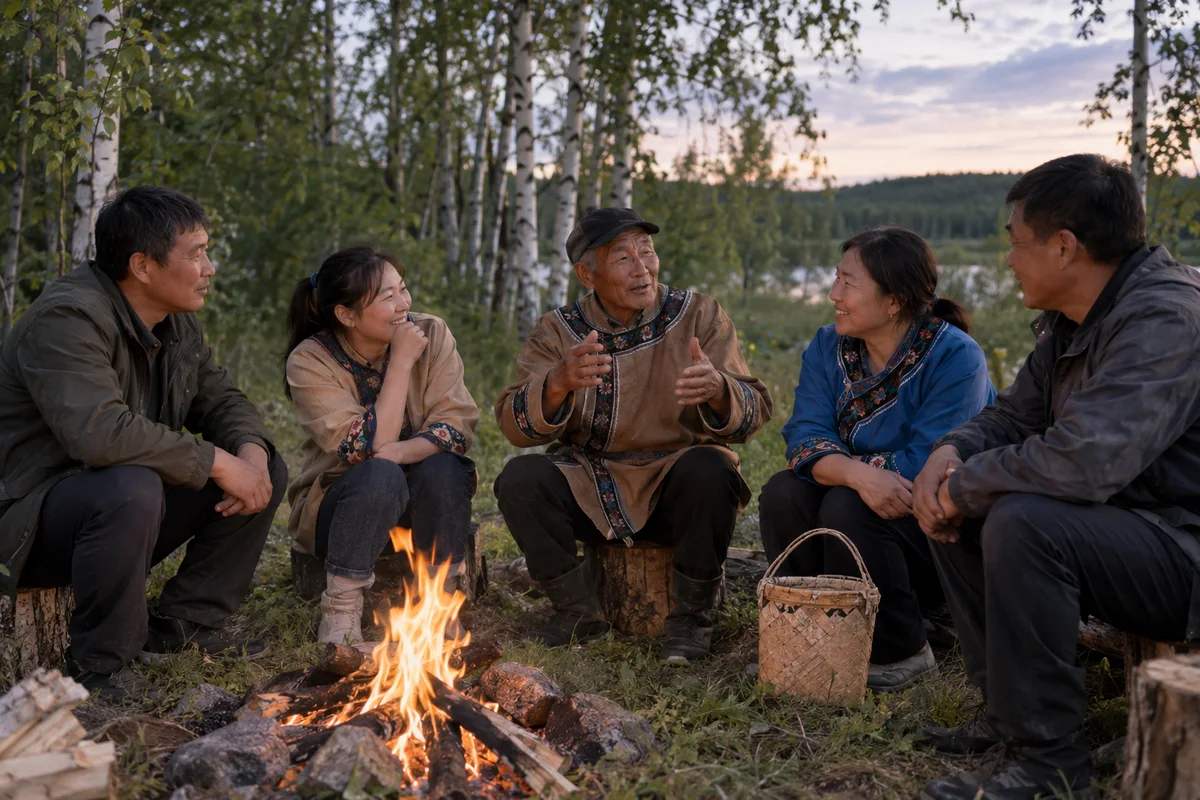
Neighbors listening to an elder beside a birch-forest bonfire

Firelight, conversation and a birch-forest setting evoke storytelling and community ties around Oroqen Bonfire Festival.

Firelight, songs and stories recall life in the northern forests.

Where
Oroqen Autonomous Banner, Inner Mongolia; related traditions in Heilongjiang
When
June 18 in Oroqen Autonomous Banner; other localities differ
  • Music & dance
  • Traditional sports
Stories, customs & visiting

Background & history

Respect for fire has an important place in Oroqen traditions shaped by life in the northern forests. Community fire gatherings connect that inherited relationship with present-day celebration. The June 18 festival in Oroqen Autonomous Banner is a local arrangement, not a timeless date for every Oroqen community.

How it is celebrated

Organized celebrations can include communal dancing, songs, storytelling and traditional sporting activities. The fire is a focus of gathering as well as a source of warmth and symbolic meaning. Programs elsewhere, including related Gulunmuta observances in Heilongjiang, may follow their own local patterns.

Meaning & local differences

The festival offers a setting for remembering forest knowledge, crafts and community histories while people live contemporary lives. Birch-bark work and other material traditions can help explain that wider background. They illustrate the culture surrounding the celebration, without implying that every object is a festival ritual item.

As a guest

Attend organized gatherings and follow hosts’ instructions around the ceremonial fire.

Timing basis: Locally arranged dates

Uyghur, Kazakh, Tajik, Kyrgyz and other communities

Nowruz · Nauryz

诺鲁孜节 · Nuòlǔzī Jié

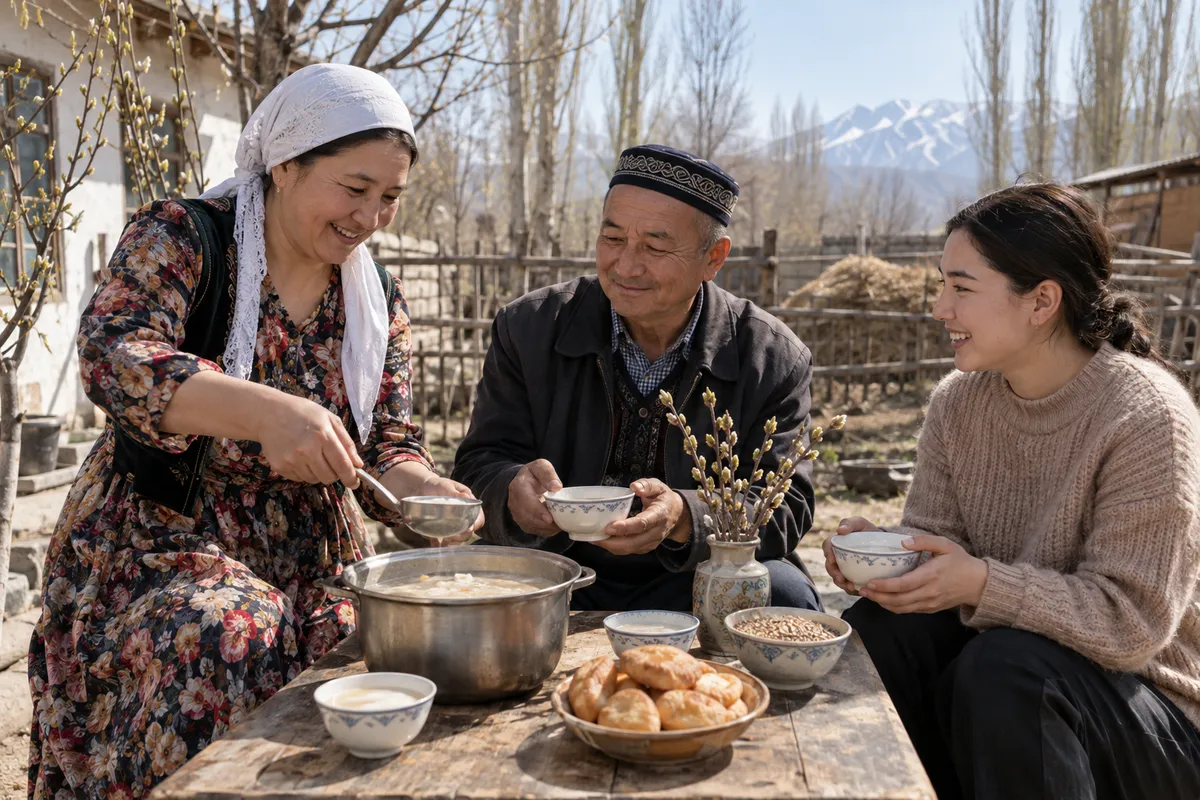
Family members sharing a milky grain soup in a spring courtyard

Sharing a grain soup in a spring courtyard draws on Kazakh Nowruz hospitality in Ili, one of the festival’s many local expressions.

The return of spring is welcomed with shared food, visits and music.

Where
Xinjiang and communities across Central Asia
When
Around the spring equinox, commonly March 21
  • New year & renewal
  • Food & hospitality
  • Music & dance
Stories, customs & visiting

Background & history

Nowruz is a spring renewal tradition shared across Central Asia and beyond, with roots that precede Islam. In Xinjiang it is observed in different forms by several communities. Its connection with the spring equinox places it in a solar seasonal cycle, distinct from the lunar timing of Eid festivals.

How it is celebrated

People welcome the new season through visits, music, poetry and shared food. Festival dishes may combine grains and other ingredients, with recipes and names varying between families and communities. The act of cooking and offering food expresses hopes for abundance and good relations in the coming season.

Meaning & local differences

The festival crosses national and community boundaries while remaining rooted in local homes and neighborhoods. That shared seasonal theme does not erase differences in language, dress or food. Asking hosts what they call the festival and how their family celebrates is a way to discover its local character.

As a guest

Ask hosts how they name the festival and prepare their family’s festive dish.

Timing basis: Solar season

Muslim communities, including Hui, Uyghur and Kazakh families

Eid al-Fitr · Rozi Festival

开斋节(肉孜节) · Kāizhāi Jié

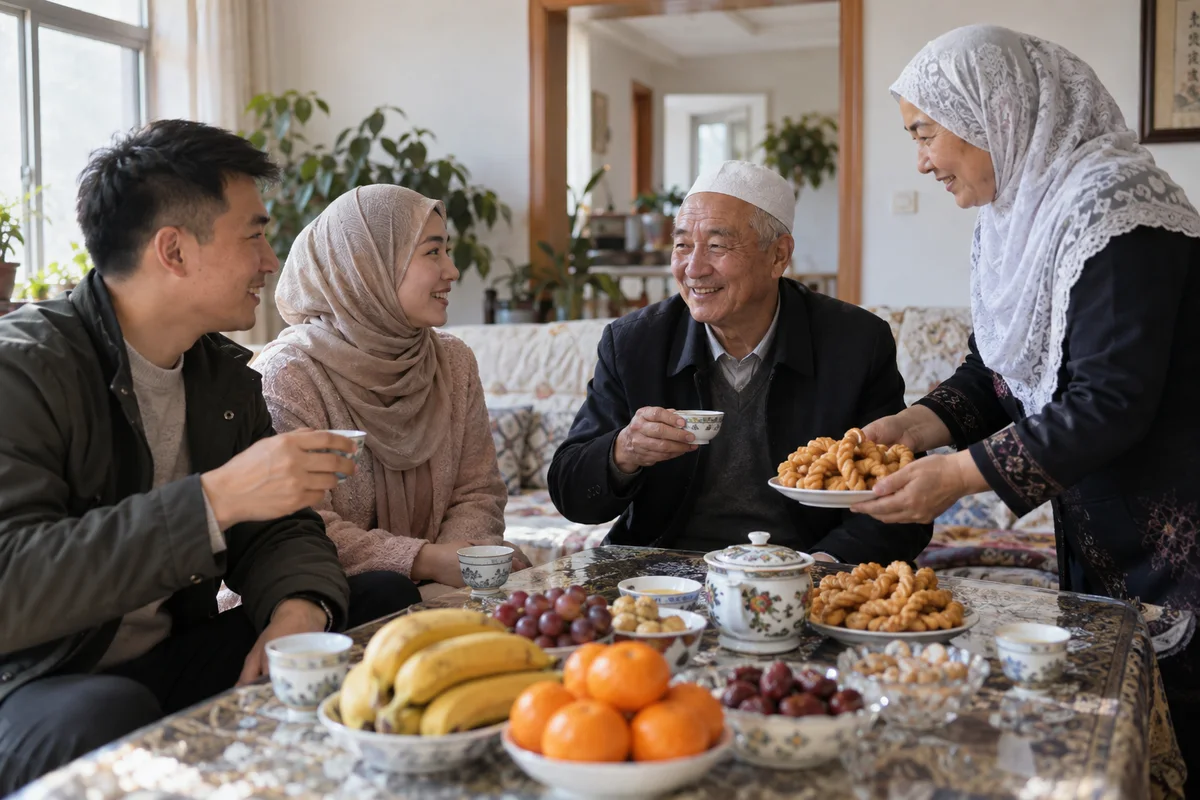
Relatives gathering over tea and festive food in a home

A family tea table evokes visits, greetings and hospitality associated with Eid al-Fitr in Hui communities.

The close of Ramadan brings greetings, prayer and time with loved ones.

Where
Ningxia, Xinjiang and communities across China
When
Islamic month 10, day 1; Gregorian observance needs local confirmation
  • New year & renewal
  • Food & hospitality
Stories, customs & visiting

Background & history

Eid al-Fitr marks the completion of Ramadan, the Islamic month of fasting, prayer and reflection. In parts of China it is also known as Rozi Festival. The date is the first day of the tenth Islamic month, and its position in the Gregorian calendar moves from year to year.

How it is celebrated

Worshippers gather for communal prayer, while families prepare festive food, visit relatives and exchange greetings. Giving to people in need is an important dimension of the season. Local foods and forms of hospitality differ among Hui, Uyghur and other Muslim communities, and between households.

Meaning & local differences

The celebration joins religious gratitude with renewed social ties. Muslim identity should not be inferred automatically from a person’s ethnic background. Visitors invited to a meal can ask about halal requirements and family customs; mosque worship and access are governed by the congregation’s own arrangements.

As a guest

Ask about visiting hours and halal food; follow mosque guidance on access and photography.

Timing basis: Community calendar
Muslim communities, including Hui and Uyghur families

Eid al-Adha · Corban Festival

古尔邦节 · Gǔ’ěrbāng Jié

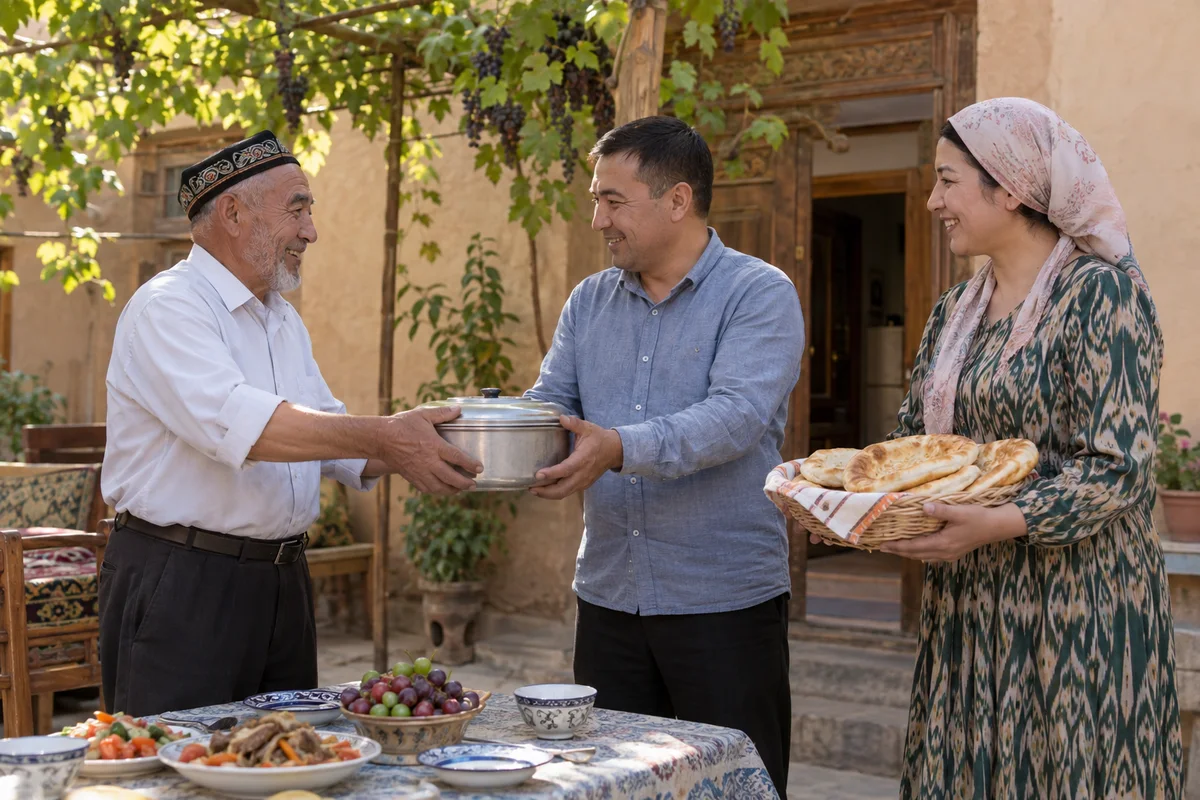
Neighbors exchanging a covered food container and bread

Sharing prepared food evokes the generosity and neighborly visits associated with Corban in Uyghur communities.

A time for devotion, hospitality and sharing with others.

Where
Xinjiang, Ningxia and communities across China
When
Islamic month 12, day 10; Gregorian observance needs local confirmation
  • Food & hospitality
Stories, customs & visiting

Background & history

Eid al-Adha, widely called Corban in China, falls on the tenth day of the twelfth Islamic month. It is connected with the pilgrimage season and the religious narrative of Ibrahim’s devotion. That story belongs to Islamic faith and provides a setting for themes of dedication and generosity.

How it is celebrated

Communal prayer, family visits and festive meals are important observances. Where ritual sacrifice is practiced, sharing food with relatives, neighbors and people in need is part of its social meaning. Household circumstances and local practice shape how each family participates; the festival is not a single uniform public spectacle.

Meaning & local differences

Corban brings devotion into acts of hospitality and mutual support. Across China, communities retain their own foods, greetings and gathering customs. Respectful participation begins with an invitation and attention to the host’s wishes, especially around religious rites and photography.

As a guest

Accept invitations on the host’s terms and ask before photographing religious activities.

Timing basis: Community calendar
Six widely observed traditions

Dates for your calendar.

Traditional festival dates, not public holiday schedules.

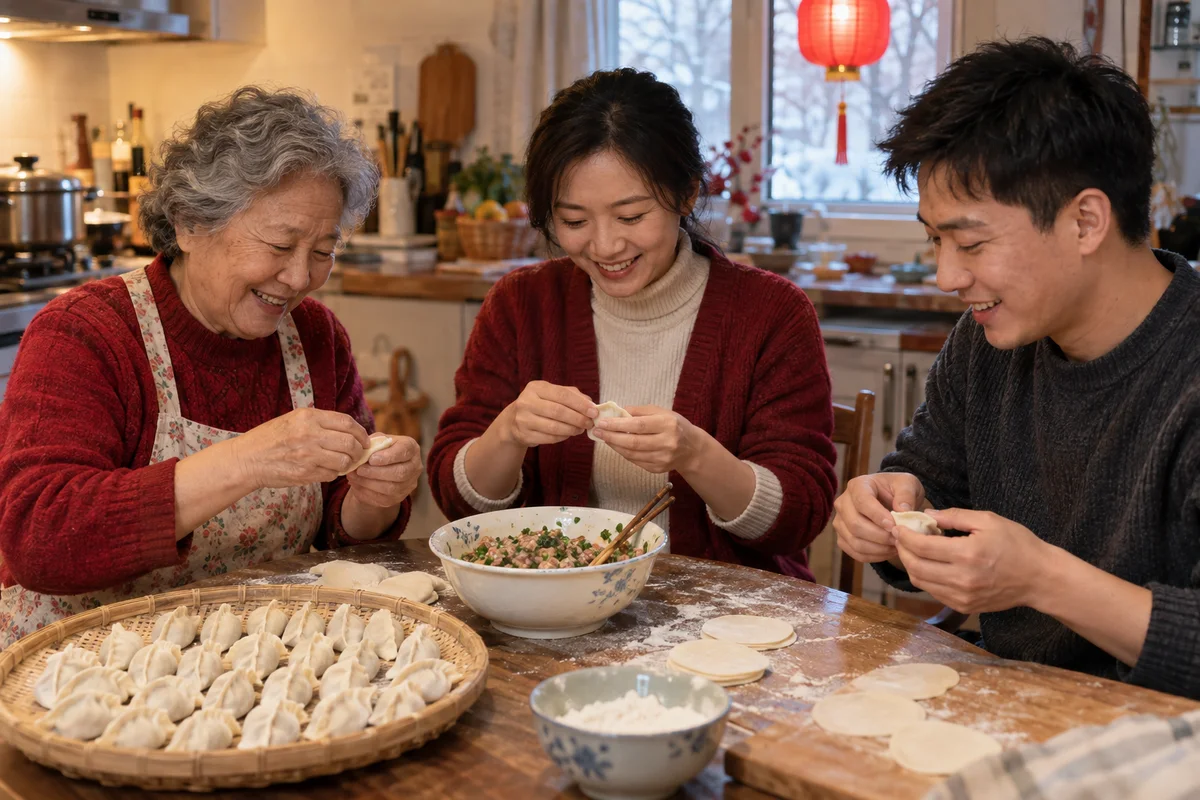
Three family members folding dumplings in a kitchen

Hands folding dumplings around a kitchen table evoke one northern Chinese family tradition of preparing for Spring Festival reunion.

Feb172026

Chinese New Year

春节 · Chūnjié

A new year, a shared table, and time to reconnect with family.

Traditions & date details

Background & history

The Spring Festival developed from traditions of marking the year’s end and welcoming a new agricultural cycle. It is a season of preparation, reunion and visits, extending beyond the first day of the lunisolar year. The tale of the Nian creature is folklore, not a documented account of the festival’s origin.

How it is celebrated

Households may clean their homes, put up couplets, prepare a reunion dinner and exchange New Year greetings. Dumplings, rice cakes and many other dishes carry local meanings and family memories. Red envelopes, visits and public performances take different forms across regions and generations.

Meaning & local differences

Reunion is central, but making food, writing wishes and welcoming guests are equally important acts of participation. Spring Festival customs are shared across many communities in China and beyond, with room for different beliefs and ways of living. A family’s own memories often explain a custom better than a universal rule.

Cultural references

First lunar month, day 1 · Chinese traditional calendar

Hong Kong Observatory: 2026 dates ↗
Explore the Spring Festival →
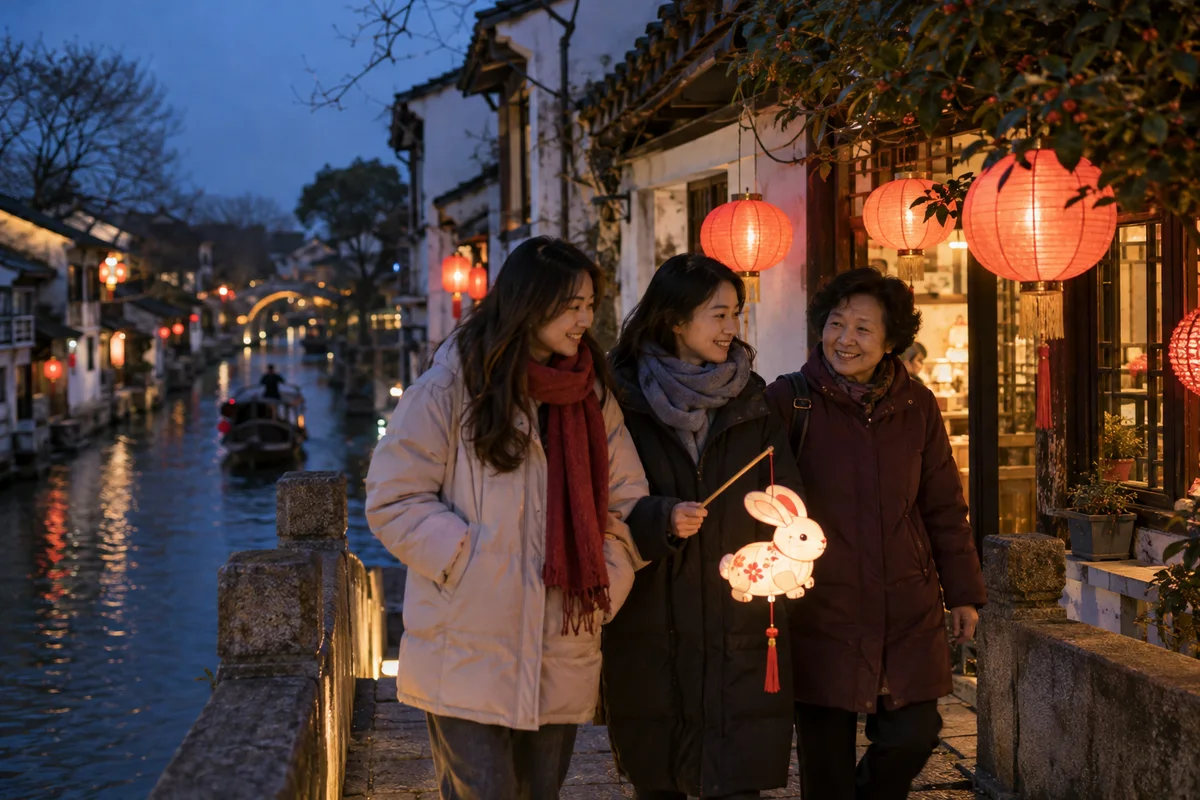
People viewing lanterns beside a Jiangnan canal at dusk

Warm lanterns and an evening walk beside a canal evoke the shared night outings of Lantern Festival.

Mar32026

Lantern Festival

元宵节 · Yuánxiāo Jié

Lantern light and a sweet finish to the New Year season.

Traditions & date details

Background & history

The Lantern Festival falls on the first full-moon festival date of the new year, the fifteenth day of the first lunar month, and is also called Shangyuan. Lighting and night-outing traditions developed over many centuries. No single origin story fully explains the varied religious, court and popular customs attached to it.

How it is celebrated

People view lanterns, solve riddles and eat round glutinous rice treats. Tangyuan are usually made by wrapping filling in dough, while yuanxiao are traditionally rolled in dry rice flour to build up a coating. Lantern forms range from modest handmade lights to elaborate local craft displays.

Meaning & local differences

Lantern light turns streets and shared spaces into places for meeting, while round foods suggest togetherness. The festival often brings the New Year season toward its close. Different cities preserve distinctive lantern crafts and processions, so the setting matters as much as the familiar red lantern image.

Cultural references

First lunar month, day 15 · Chinese traditional calendar

Hong Kong Observatory: 2026 dates ↗
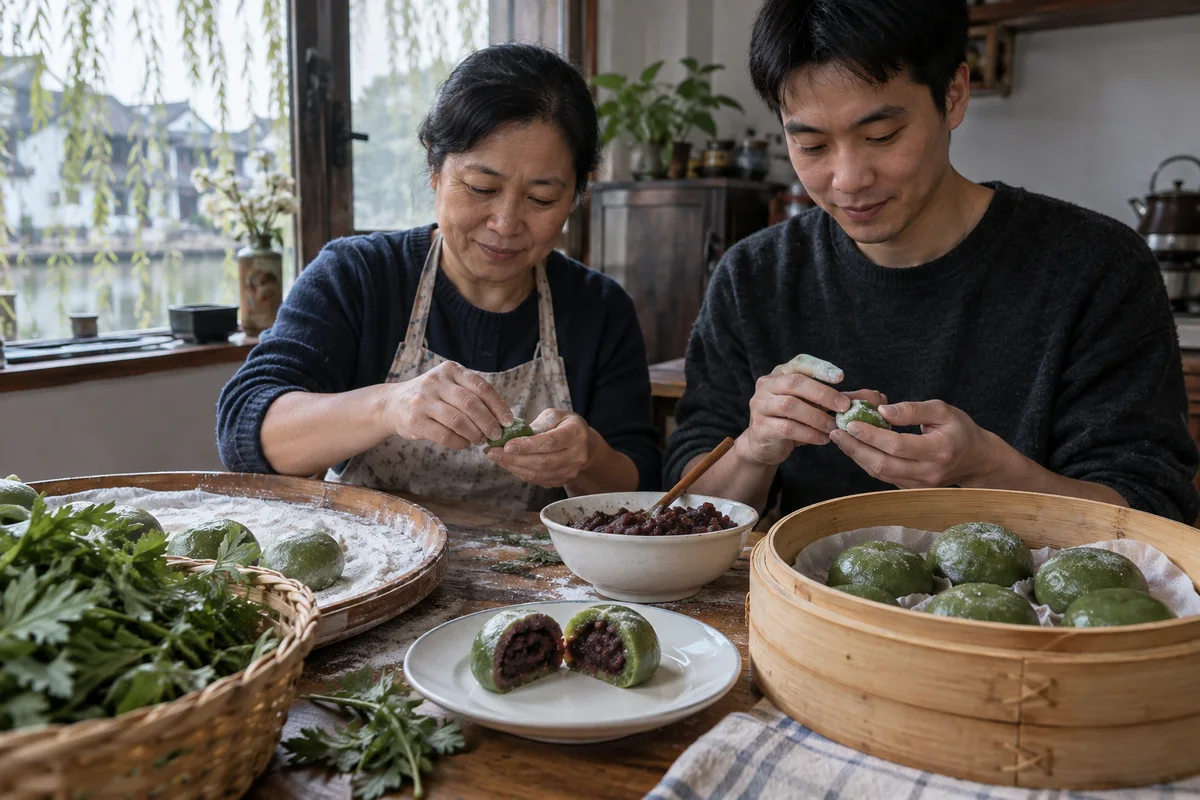
Hands wrapping green qingtuan beside a bamboo steamer

Green qingtuan, red bean filling and spring light evoke a Qingming food tradition found in parts of Jiangnan.

Apr52026

Qingming Festival

清明节 · Qīngmíng Jié

A time to remember ancestors and welcome the spring.

Traditions & date details

Background & history

Qingming is both a solar term and a festival. Its customs developed through the meeting of seasonal observances, Cold Food traditions and practices of remembering the dead. The story of Jie Zitui explains part of the inherited folklore around Cold Food; it is not a complete historical account of Qingming’s formation.

How it is celebrated

Families may clean graves, offer flowers or food and remember relatives who have died. Spring outings, walks and seasonal foods also belong to the occasion. Qingtuan are familiar in parts of Jiangnan, while other regions prepare different dishes; no single food represents every family’s Qingming.

Meaning & local differences

Remembrance and the return of spring sit alongside each other: caring for the past also renews attention to the living. Ways of mourning are personal and vary by belief and family history. Quiet respect matters more than photographing someone else’s memorial ritual or expecting one fixed set of ceremonies.

Cultural references

The Qingming solar term · Chinese traditional calendar

Hong Kong Observatory: 2026 dates ↗
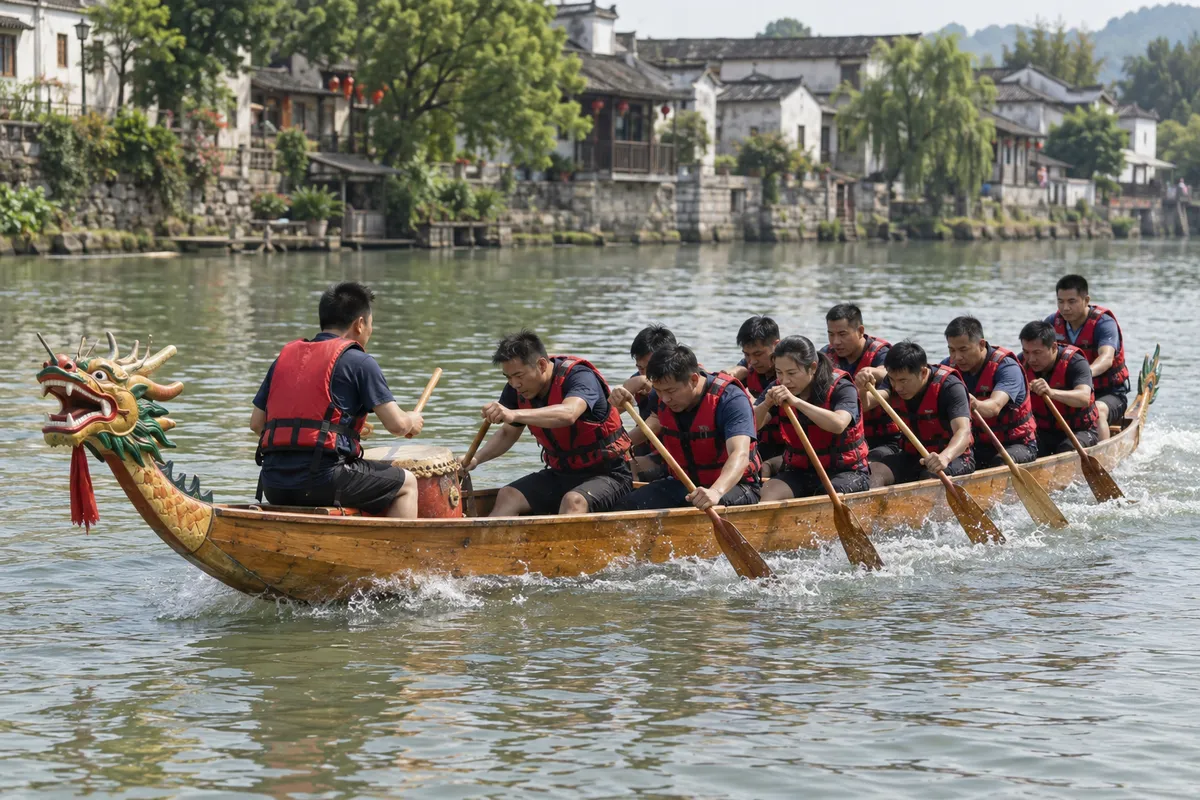
A dragon boat crew paddling in rhythm on a river

Paddles entering the water together evoke the teamwork and waterside community life of Dragon Boat Festival.

Jun192026

Dragon Boat Festival

端午节 · Duānwǔ Jié

Dragon boats, fragrant leaves, and zòngzi shared together.

Traditions & date details

Background & history

Duanwu falls on the fifth day of the fifth lunar month. It brings together early-summer customs concerned with protection and well-being, dragon boat traditions and remembrance of figures such as Qu Yuan. Some regions remember Wu Zixu or other figures, so the Qu Yuan story is not its only cultural thread.

How it is celebrated

Families wrap zongzi in leaves, while waterside communities may prepare boats and organize races. Mugwort, calamus, scented sachets and decorative cords appear in different local traditions. Zongzi vary in wrapping, shape and filling, making a shared festival recognizable through very different regional tastes.

Meaning & local differences

Preparing a boat or a batch of zongzi requires cooperation and skills learned through doing. These activities link families, craftspeople and neighborhood teams. Cultural descriptions of historical protective practices should be understood as tradition, without treating them as modern medical advice.

Cultural references

Fifth lunar month, day 5 · Chinese traditional calendar

Hong Kong Observatory: 2026 dates ↗
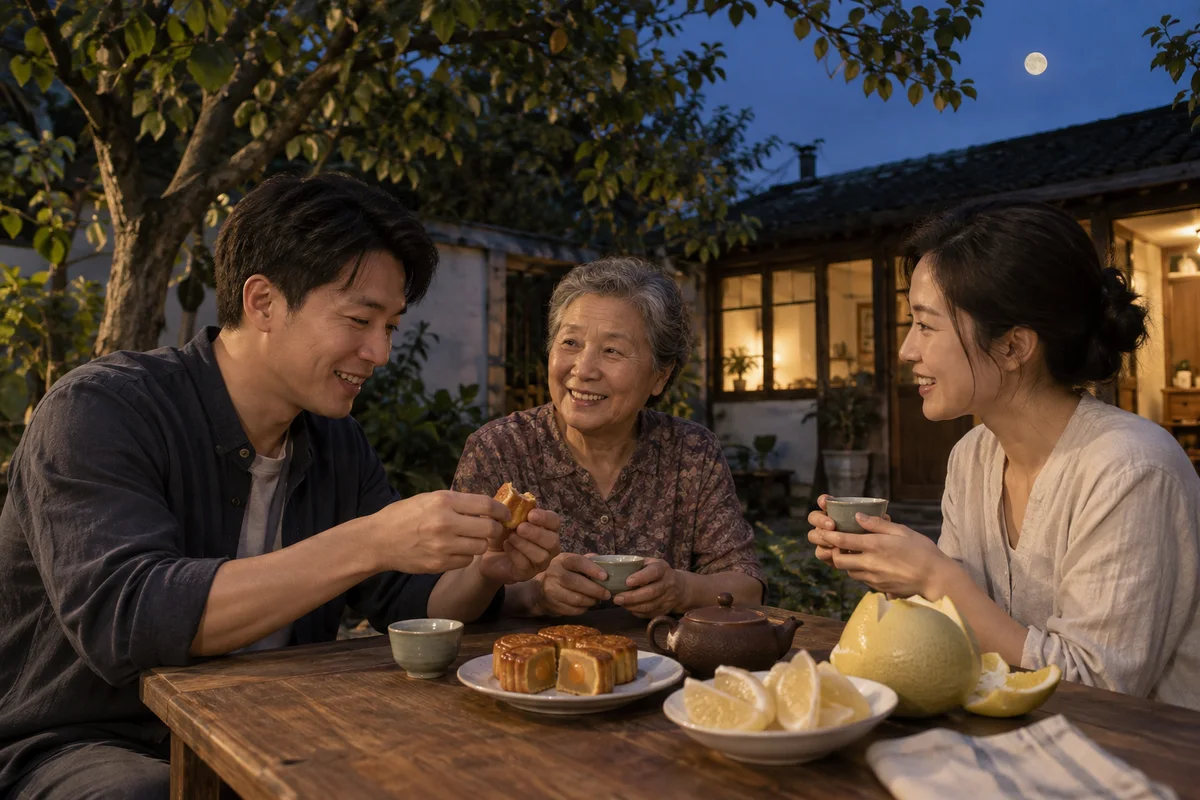
A family sharing mooncakes and tea in a courtyard

Mooncakes, tea and an autumn evening evoke Mid-Autumn’s family conversations and sense of reunion.

Sep252026

Mid-Autumn Festival

中秋节 · Zhōngqiū Jié

Moonlight, mooncakes, and the feeling of coming home.

Traditions & date details

Background & history

Mid-Autumn draws on traditions of moon observance and autumn seasonal life. Moon-viewing became prominent over time, and reunion grew into a central theme of the festival. Stories of Chang’e, the moon rabbit and other figures are folklore through which people have imagined the moon, rather than historical explanations.

How it is celebrated

Families share mooncakes, seasonal fruit and conversation, often while admiring the moon. Mooncakes vary widely in pastry and filling; local gatherings may also include lanterns or other distinctive customs. The familiar date is the fifteenth day of the eighth lunar month, though the astronomical full moon can fall on another day.

Meaning & local differences

The same moon offers a way to think about relatives who are far away, making the festival meaningful even without physical reunion. Poems, family recipes and gifts carry that feeling across distance. A local food or a remembered verse often reveals a more intimate Mid-Autumn than a single standard celebration.

Cultural references

Eighth lunar month, day 15 · Chinese traditional calendar

Hong Kong Observatory: 2026 dates ↗
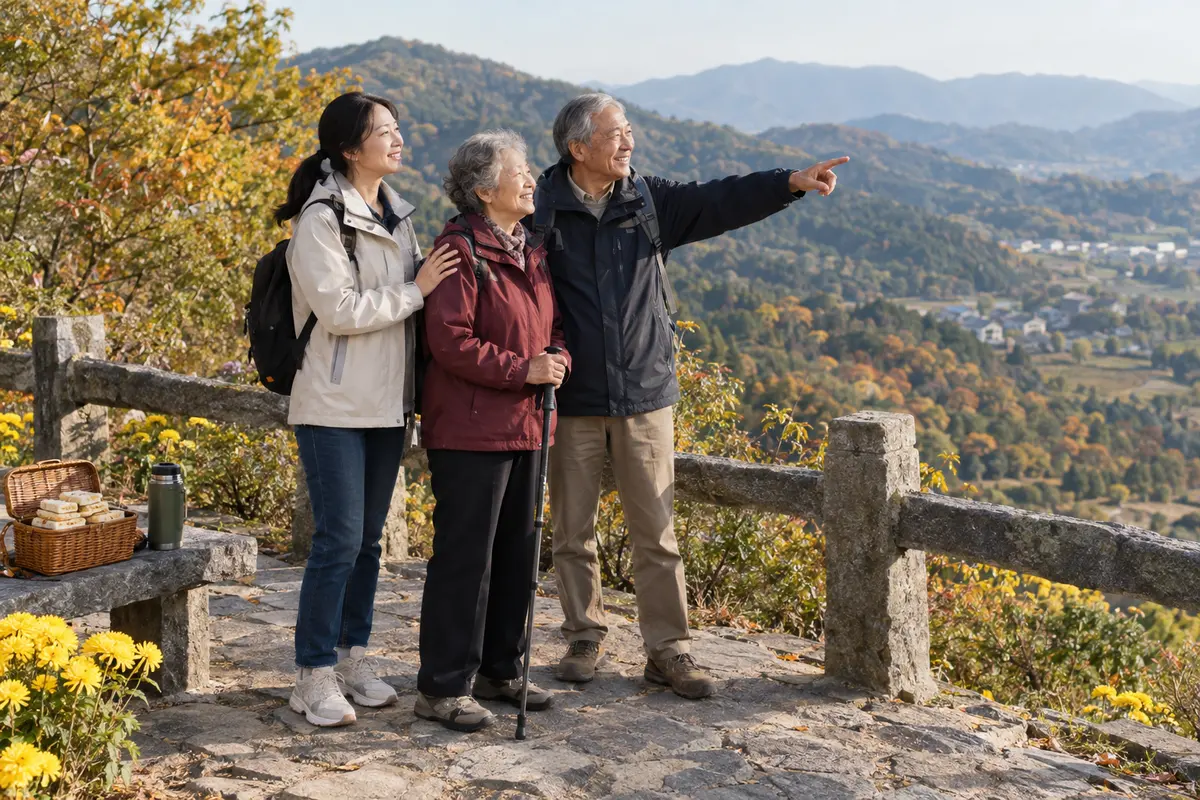
An older couple and their daughter enjoying an autumn hill walk

An autumn outing with older relatives evokes Chongyang’s traditions of hill walking, companionship and care.

Oct182026

Double Ninth Festival

重阳节 · Chóngyáng Jié

Climb a little higher. A day for autumn and older generations.

Traditions & date details

Background & history

The ninth day of the ninth lunar month is called Chongyang because nine is associated with yang in traditional numerical symbolism. The festival combines autumn seasonal customs with wishes for well-being. Several origin stories circulate, but its development is broader than any single legend about avoiding misfortune.

How it is celebrated

Climbing hills, appreciating chrysanthemums and eating Chongyang cakes are well-known practices. The cake’s name echoes the word for height, linking food with wishes to rise or prosper. Different places have distinct cake styles, outing routes and family customs, and some traditions also include wearing dogwood.

Meaning & local differences

Today, respect and care for older people are especially prominent themes. A visit, a shared meal or an outing suited to a relative’s needs can give that idea practical form. The autumn landscape and intergenerational companionship make the festival as much about relationships as about symbolic objects.

Cultural references

Ninth lunar month, day 9 · Chinese traditional calendar

Hong Kong Observatory: 2026 dates ↗
Three family members folding dumplings in a kitchen

Hands folding dumplings around a kitchen table evoke one northern Chinese family tradition of preparing for Spring Festival reunion.

Feb62027

Chinese New Year

春节 · Chūnjié

A new year, a shared table, and time to reconnect with family.

Traditions & date details

Background & history

The Spring Festival developed from traditions of marking the year’s end and welcoming a new agricultural cycle. It is a season of preparation, reunion and visits, extending beyond the first day of the lunisolar year. The tale of the Nian creature is folklore, not a documented account of the festival’s origin.

How it is celebrated

Households may clean their homes, put up couplets, prepare a reunion dinner and exchange New Year greetings. Dumplings, rice cakes and many other dishes carry local meanings and family memories. Red envelopes, visits and public performances take different forms across regions and generations.

Meaning & local differences

Reunion is central, but making food, writing wishes and welcoming guests are equally important acts of participation. Spring Festival customs are shared across many communities in China and beyond, with room for different beliefs and ways of living. A family’s own memories often explain a custom better than a universal rule.

Cultural references

First lunar month, day 1 · Chinese traditional calendar

Hong Kong Observatory: 2027 dates ↗
Explore the Spring Festival →
People viewing lanterns beside a Jiangnan canal at dusk

Warm lanterns and an evening walk beside a canal evoke the shared night outings of Lantern Festival.

Feb202027

Lantern Festival

元宵节 · Yuánxiāo Jié

Lantern light and a sweet finish to the New Year season.

Traditions & date details

Background & history

The Lantern Festival falls on the first full-moon festival date of the new year, the fifteenth day of the first lunar month, and is also called Shangyuan. Lighting and night-outing traditions developed over many centuries. No single origin story fully explains the varied religious, court and popular customs attached to it.

How it is celebrated

People view lanterns, solve riddles and eat round glutinous rice treats. Tangyuan are usually made by wrapping filling in dough, while yuanxiao are traditionally rolled in dry rice flour to build up a coating. Lantern forms range from modest handmade lights to elaborate local craft displays.

Meaning & local differences

Lantern light turns streets and shared spaces into places for meeting, while round foods suggest togetherness. The festival often brings the New Year season toward its close. Different cities preserve distinctive lantern crafts and processions, so the setting matters as much as the familiar red lantern image.

Cultural references

First lunar month, day 15 · Chinese traditional calendar

Hong Kong Observatory: 2027 dates ↗
Hands wrapping green qingtuan beside a bamboo steamer

Green qingtuan, red bean filling and spring light evoke a Qingming food tradition found in parts of Jiangnan.

Apr52027

Qingming Festival

清明节 · Qīngmíng Jié

A time to remember ancestors and welcome the spring.

Traditions & date details

Background & history

Qingming is both a solar term and a festival. Its customs developed through the meeting of seasonal observances, Cold Food traditions and practices of remembering the dead. The story of Jie Zitui explains part of the inherited folklore around Cold Food; it is not a complete historical account of Qingming’s formation.

How it is celebrated

Families may clean graves, offer flowers or food and remember relatives who have died. Spring outings, walks and seasonal foods also belong to the occasion. Qingtuan are familiar in parts of Jiangnan, while other regions prepare different dishes; no single food represents every family’s Qingming.

Meaning & local differences

Remembrance and the return of spring sit alongside each other: caring for the past also renews attention to the living. Ways of mourning are personal and vary by belief and family history. Quiet respect matters more than photographing someone else’s memorial ritual or expecting one fixed set of ceremonies.

Cultural references

The Qingming solar term · Chinese traditional calendar

Hong Kong Observatory: 2027 dates ↗
A dragon boat crew paddling in rhythm on a river

Paddles entering the water together evoke the teamwork and waterside community life of Dragon Boat Festival.

Jun92027

Dragon Boat Festival

端午节 · Duānwǔ Jié

Dragon boats, fragrant leaves, and zòngzi shared together.

Traditions & date details

Background & history

Duanwu falls on the fifth day of the fifth lunar month. It brings together early-summer customs concerned with protection and well-being, dragon boat traditions and remembrance of figures such as Qu Yuan. Some regions remember Wu Zixu or other figures, so the Qu Yuan story is not its only cultural thread.

How it is celebrated

Families wrap zongzi in leaves, while waterside communities may prepare boats and organize races. Mugwort, calamus, scented sachets and decorative cords appear in different local traditions. Zongzi vary in wrapping, shape and filling, making a shared festival recognizable through very different regional tastes.

Meaning & local differences

Preparing a boat or a batch of zongzi requires cooperation and skills learned through doing. These activities link families, craftspeople and neighborhood teams. Cultural descriptions of historical protective practices should be understood as tradition, without treating them as modern medical advice.

Cultural references

Fifth lunar month, day 5 · Chinese traditional calendar

Hong Kong Observatory: 2027 dates ↗
A family sharing mooncakes and tea in a courtyard

Mooncakes, tea and an autumn evening evoke Mid-Autumn’s family conversations and sense of reunion.

Sep152027

Mid-Autumn Festival

中秋节 · Zhōngqiū Jié

Moonlight, mooncakes, and the feeling of coming home.

Traditions & date details

Background & history

Mid-Autumn draws on traditions of moon observance and autumn seasonal life. Moon-viewing became prominent over time, and reunion grew into a central theme of the festival. Stories of Chang’e, the moon rabbit and other figures are folklore through which people have imagined the moon, rather than historical explanations.

How it is celebrated

Families share mooncakes, seasonal fruit and conversation, often while admiring the moon. Mooncakes vary widely in pastry and filling; local gatherings may also include lanterns or other distinctive customs. The familiar date is the fifteenth day of the eighth lunar month, though the astronomical full moon can fall on another day.

Meaning & local differences

The same moon offers a way to think about relatives who are far away, making the festival meaningful even without physical reunion. Poems, family recipes and gifts carry that feeling across distance. A local food or a remembered verse often reveals a more intimate Mid-Autumn than a single standard celebration.

Cultural references

Eighth lunar month, day 15 · Chinese traditional calendar

Hong Kong Observatory: 2027 dates ↗
An older couple and their daughter enjoying an autumn hill walk

An autumn outing with older relatives evokes Chongyang’s traditions of hill walking, companionship and care.

Oct82027

Double Ninth Festival

重阳节 · Chóngyáng Jié

Climb a little higher. A day for autumn and older generations.

Traditions & date details

Background & history

The ninth day of the ninth lunar month is called Chongyang because nine is associated with yang in traditional numerical symbolism. The festival combines autumn seasonal customs with wishes for well-being. Several origin stories circulate, but its development is broader than any single legend about avoiding misfortune.

How it is celebrated

Climbing hills, appreciating chrysanthemums and eating Chongyang cakes are well-known practices. The cake’s name echoes the word for height, linking food with wishes to rise or prosper. Different places have distinct cake styles, outing routes and family customs, and some traditions also include wearing dogwood.

Meaning & local differences

Today, respect and care for older people are especially prominent themes. A visit, a shared meal or an outing suited to a relative’s needs can give that idea practical form. The autumn landscape and intergenerational companionship make the festival as much about relationships as about symbolic objects.

Cultural references

Ninth lunar month, day 9 · Chinese traditional calendar

Hong Kong Observatory: 2027 dates ↗

Be a guest, get to know a place.

Start with a local host, a community cultural center or a public festival program. Ask before photographing people, entering a ceremony or joining a dance. A family’s clothing, songs and religious practices are part of their lives, with meanings worth listening to.

Food, embroidery, instruments and spoken stories are ways into a celebration. Learn who makes them, ask what they mean, and support local makers. The traditions here are a selection, not a complete portrait of every ethnic group in China.

Festival day ≠ days off.

Planning a visit? Check official days off and travel crowds →

The annual date table uses the traditional Chinese calendar. Public holidays, substitute working days and local observances depend on the region and official notices. Our travel guide includes the verified 2026 mainland China schedule. The 2027 schedule remains unverified in this edition.

Celebrations also vary across families and communities. Ask your host about their own traditions, rather than assuming every household celebrates the same way.