Roasts, braises, hotpots and vegetables: a bigger picture of regional cooking.
The eight major cuisines are a useful introduction: Shandong, Sichuan, Guangdong, Jiangsu, Fujian, Zhejiang, Hunan and Anhui. They are not a complete map. Northeastern, Xinjiang, Tibetan, Yunnan, Guizhou and many other food traditions deserve their own space.
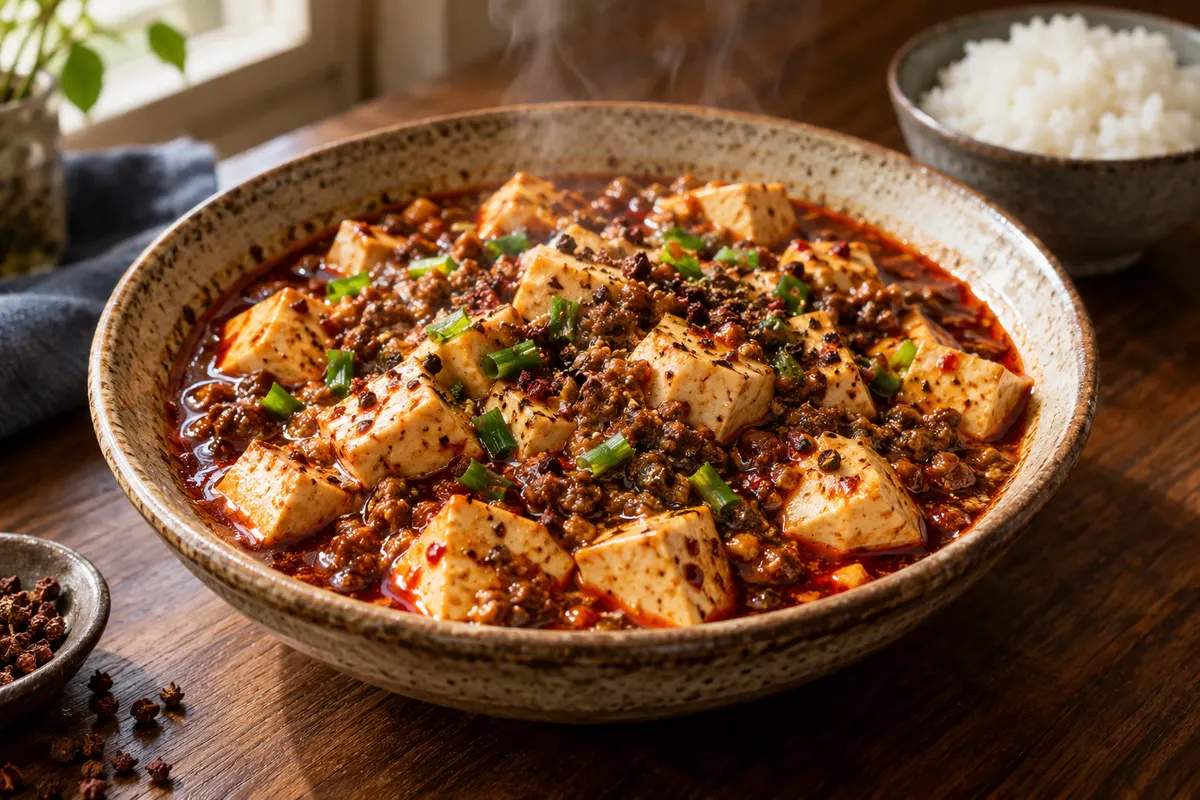
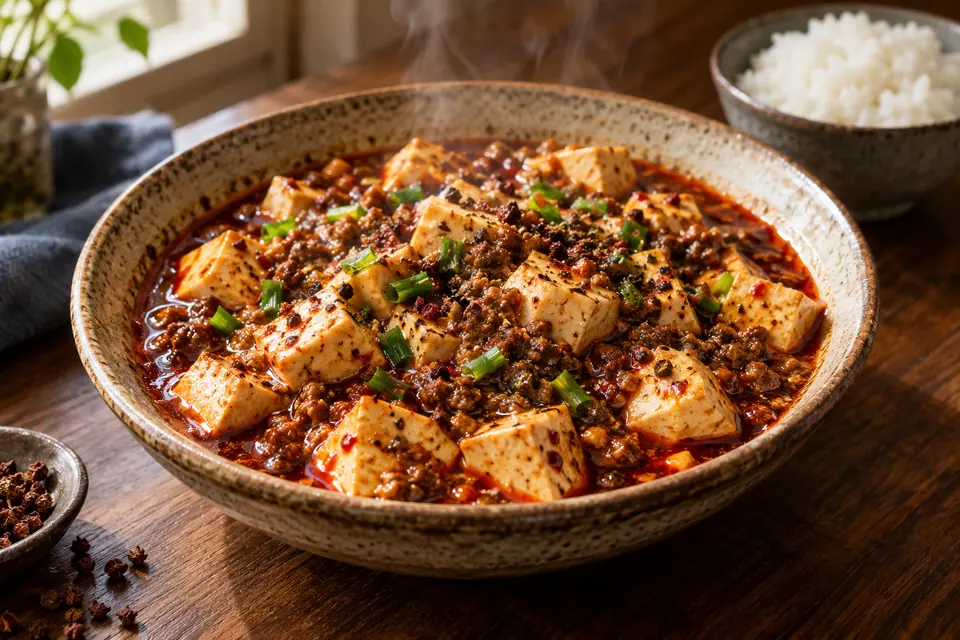
Soft tofu in a chili-bean sauce with Sichuan pepper and usually minced beef or pork.
The story behind it
A signature of Sichuan cooking, mapo tofu brings together hot, numbing and savory flavors with tender texture. The familiar Chengdu shopkeeper origin story belongs to the dish’s local heritage; modern kitchens have developed many variations.
At the table
Serve with plain rice. A tofu main ingredient does not make the standard dish vegetarian.
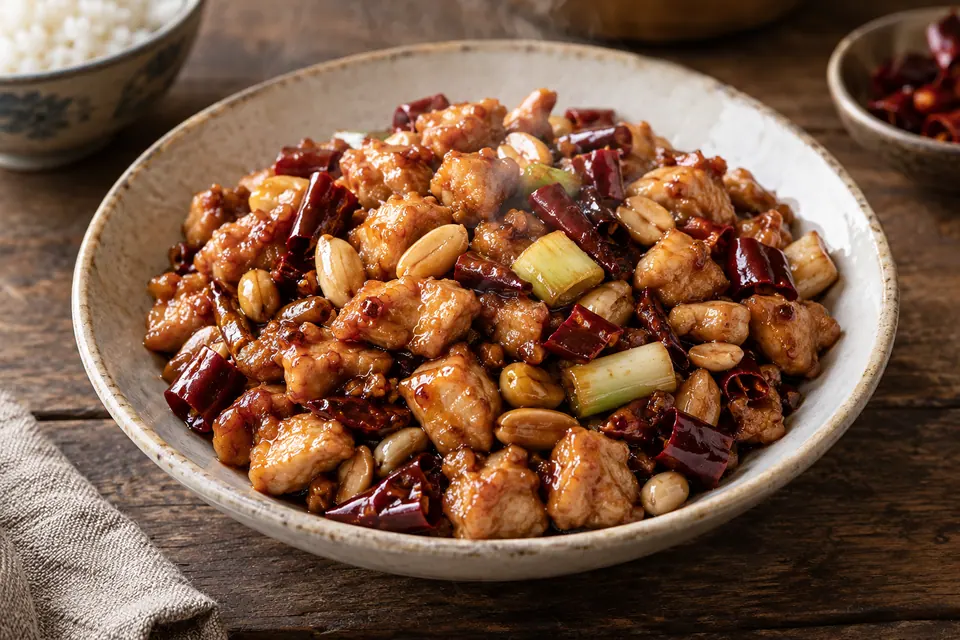
Gongbao / kung pao chickenAI-generated · representative preparation
Diced chicken, peanuts and dried chilies in a savory, tangy sauce with a little sweetness.
The story behind it
The name is commonly linked to the official title of Ding Baozhen, but regional versions differ. Sichuan preparations emphasize a quick stir-fry and balanced sauce; the dish’s global popularity has produced many adaptations.
At the table
Enjoy with rice; peanuts are a defining ingredient in many versions.
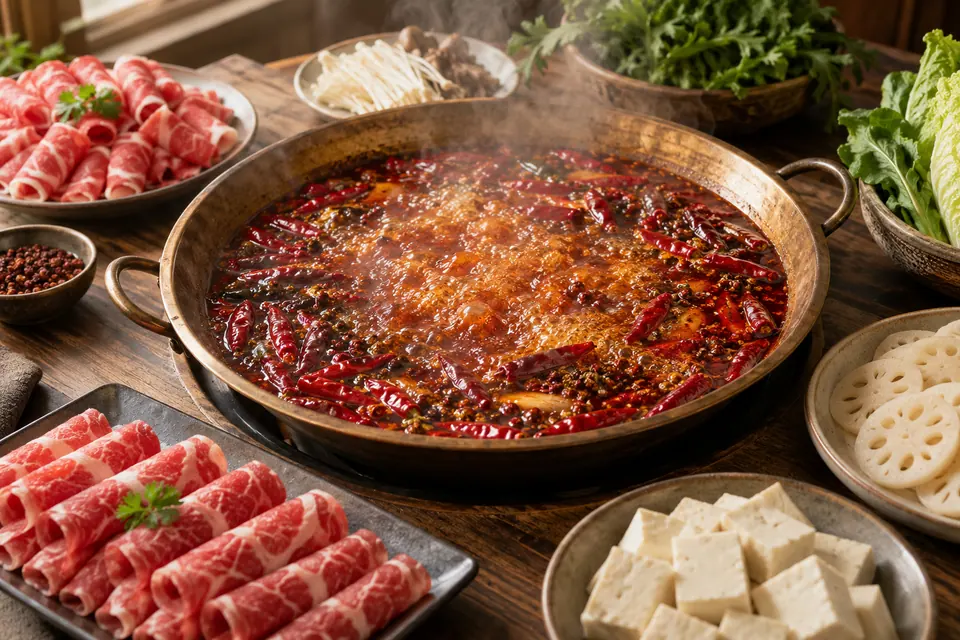
Ingredients cooked at the table in simmering broth, often fragrant with chili, Sichuan pepper and beef fat.
The story behind it
Hotpot is a shared dining format, not a single dish. Chongqing and Sichuan styles are only part of a larger hotpot landscape that also includes northern lamb, Chaoshan beef and mushroom broths.
At the table
Choose a broth and dipping sauce, and cook each ingredient fully with separate serving utensils.
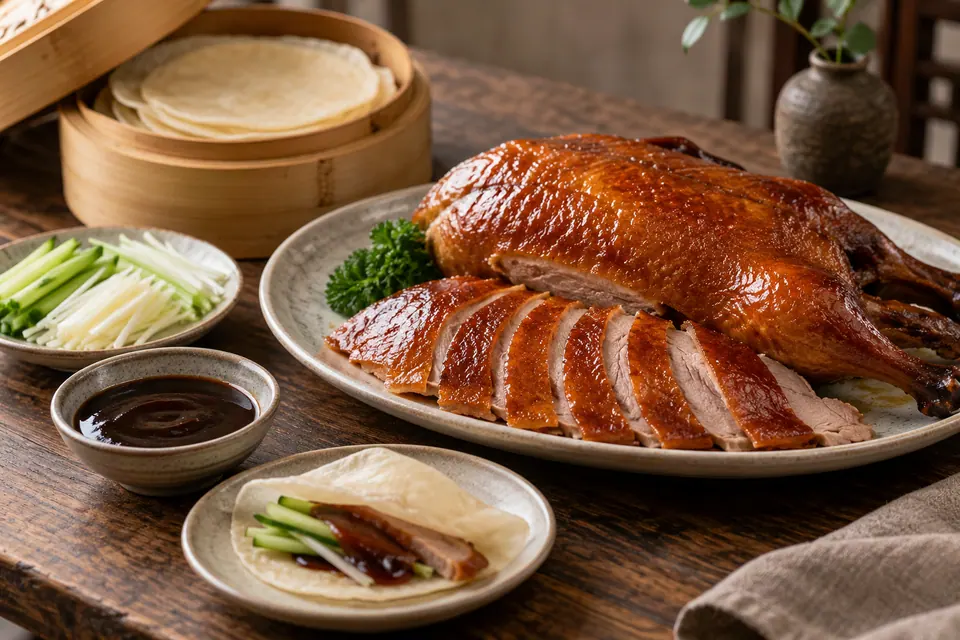
Roast duck with crisp lacquered skin, sliced and wrapped in thin pancakes with sauce and vegetables.
The story behind it
Beijing roast duck connects banquet dining with specialist roasting shops. Hung-oven and closed-oven traditions use different heat arrangements, while the ritual of carving and assembling a pancake is part of the meal.
At the table
Use a small amount of sauce so the duck flavor remains clear.
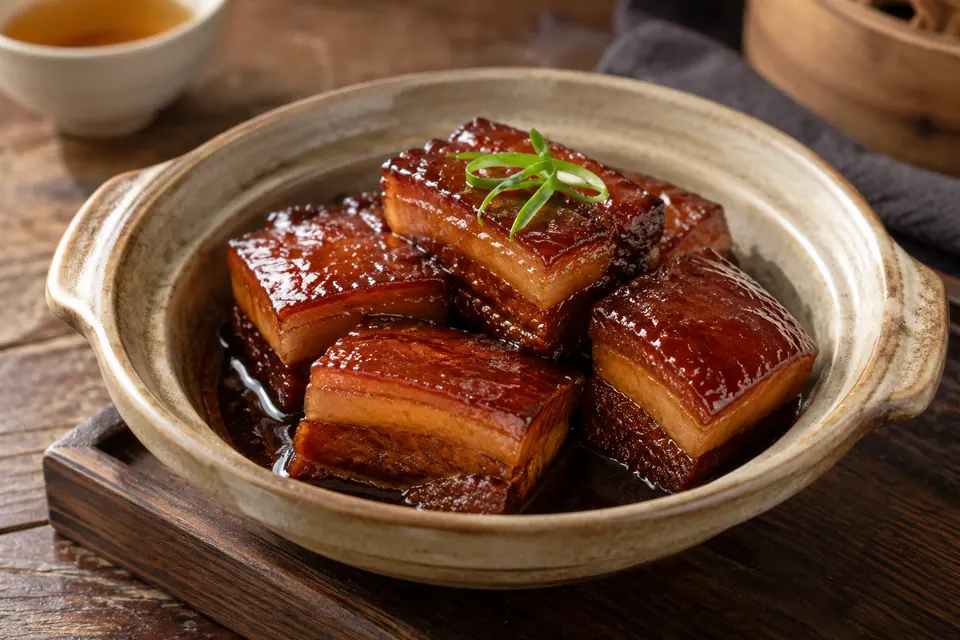
Large pieces of pork belly slowly braised until the fat is tender and the sauce glossy.
The story behind it
Named for the poet-official Su Dongpo, the dish sits at the meeting point of literary memory and regional cooking. Stories of his direct invention vary; the dependable culinary feature is slow, careful braising.
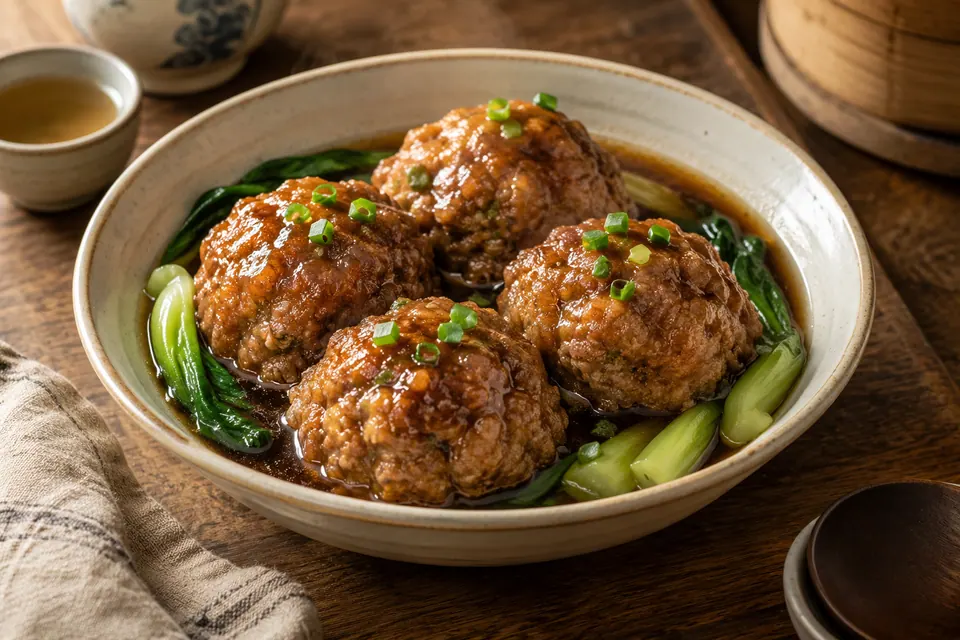
Red-braised lion’s head meatballsAI-generated · representative preparation
Large, tender pork meatballs, gently braised in clear broth or a darker soy-seasoned sauce.
The story behind it
Huaiyang cooking is known for patient preparation and fine control of texture. Lion’s head values loose, tender meat rather than a tightly springy ball; cabbage often surrounds it in the pot.
At the table
Break apart with a spoon and taste the broth with the meat.
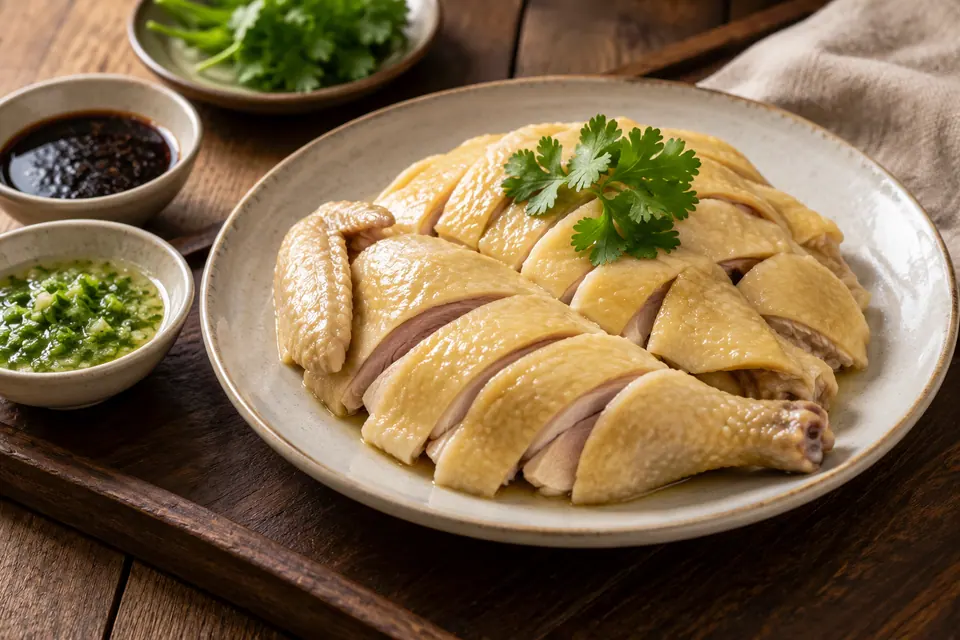
Gently poached chicken chopped on the bone, with ginger-scallion or other dipping sauces.
The story behind it
This Cantonese classic puts the bird’s flavor and skin texture at the center. “White-cut” describes the relatively plain preparation, not a lack of technique: controlling the poaching and cooling is essential.
At the table
Expect bones in the pieces and use the dipping sauce sparingly.
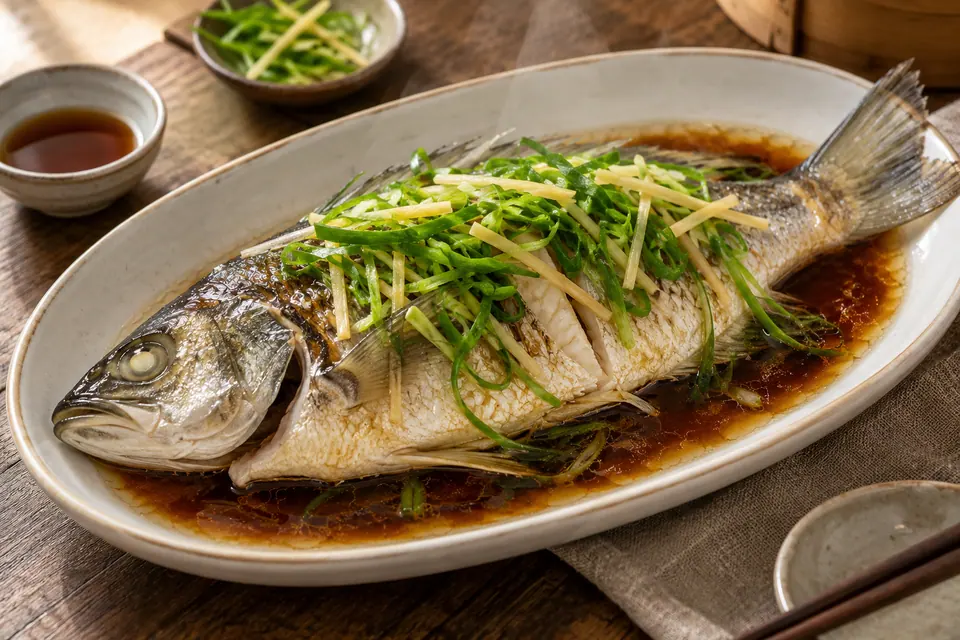
Fish steamed with ginger and scallions, finished with light soy seasoning and hot oil.
The story behind it
Fresh fish and precise steaming are important to Cantonese cooking. A whole fish also appears at celebratory meals because yu, fish, sounds like surplus; the symbolism is a custom, not a rule for every meal.
At the table
Lift the flesh carefully from the bones and spoon over a little sauce.
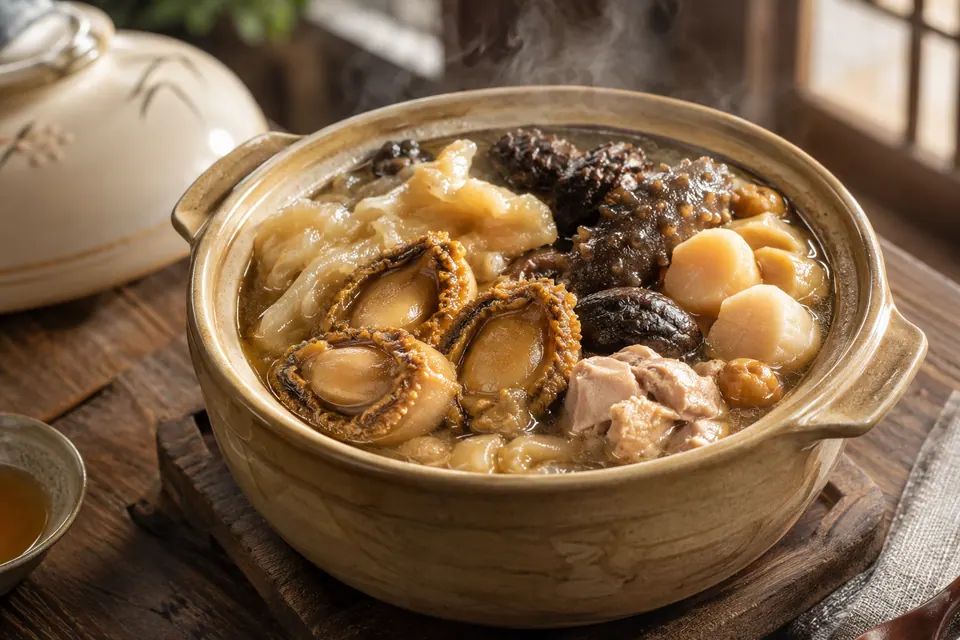
Buddha Jumps Over the WallAI-generated · representative preparation
An elaborate slow-cooked soup combining seafood, meat and other rich ingredients; recipes vary widely.
The story behind it
Fujian cooking is celebrated for soup-making and combining mountain and coastal produce. The dish’s striking name comes with aroma-themed legends, while its real craft lies in preparing different ingredients before a long simmer.
At the table
Treat it as a shared banquet dish and ask which seafood and meats the kitchen uses.
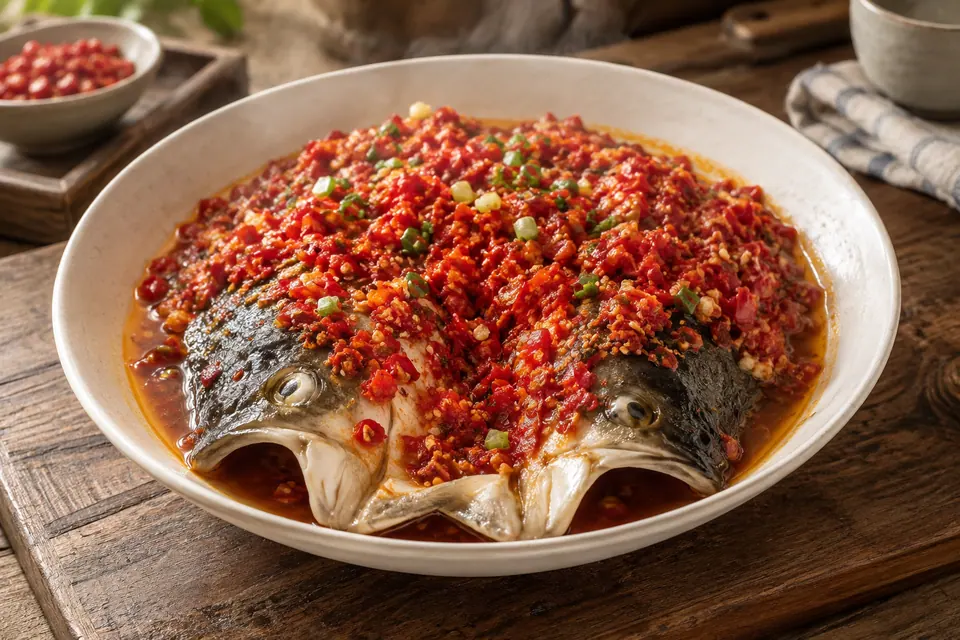
Steamed fish head with chopped chiliesAI-generated · representative preparation
Fish head steamed under a generous layer of chopped, salted or fermented red chilies.
The story behind it
Hunan cooking has many forms of heat, including fresh and preserved chilies. This dish combines the richness of the fish head with salty, fragrant chili juices; its heat differs from Sichuan pepper’s numbing sensation.
At the table
Watch for bones; plain noodles are sometimes added to the flavorful juices after the fish.
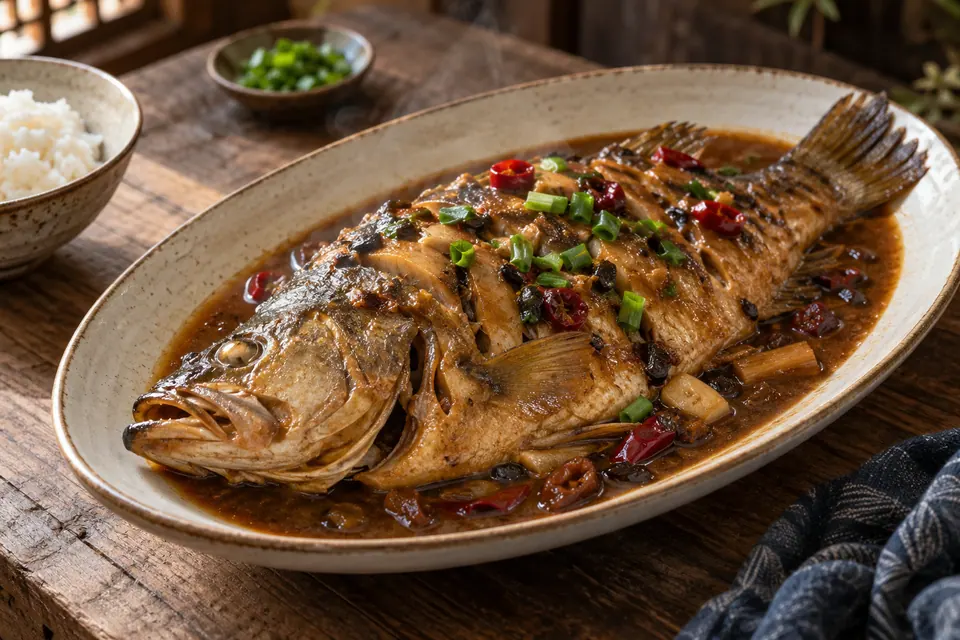
Lightly fermented mandarin fish braised with aromatics, with a distinctive smell and firm flesh.
The story behind it
This Huizhou specialty reflects traditions of preserving ingredients before cooking. The aroma is intentional, but fermentation practices vary by producer; the finished dish is thoroughly cooked rather than eaten raw.
At the table
Try a small shared portion if the fermented aroma is new to you.
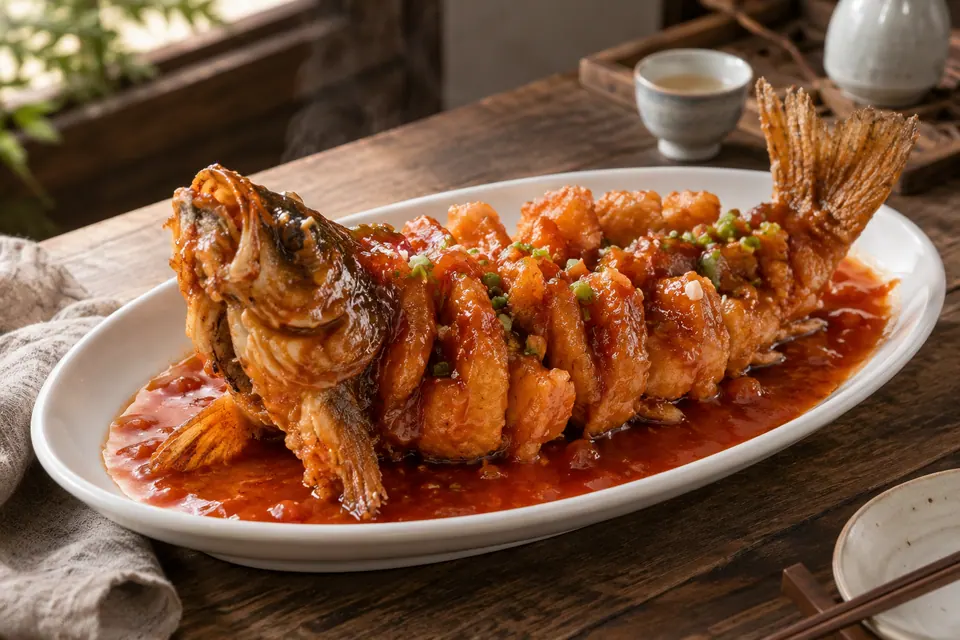
Whole carp scored, fried until crisp and coated in a bright sweet-and-sour sauce.
The story behind it
Shandong cooking includes much more than one flavor, from seafood to broths and stir-fries. This banquet-style fish highlights knife work, frying and sauce balance, with an impressive whole-fish presentation.
At the table
Share at the table and separate the flesh carefully from the fine bones.
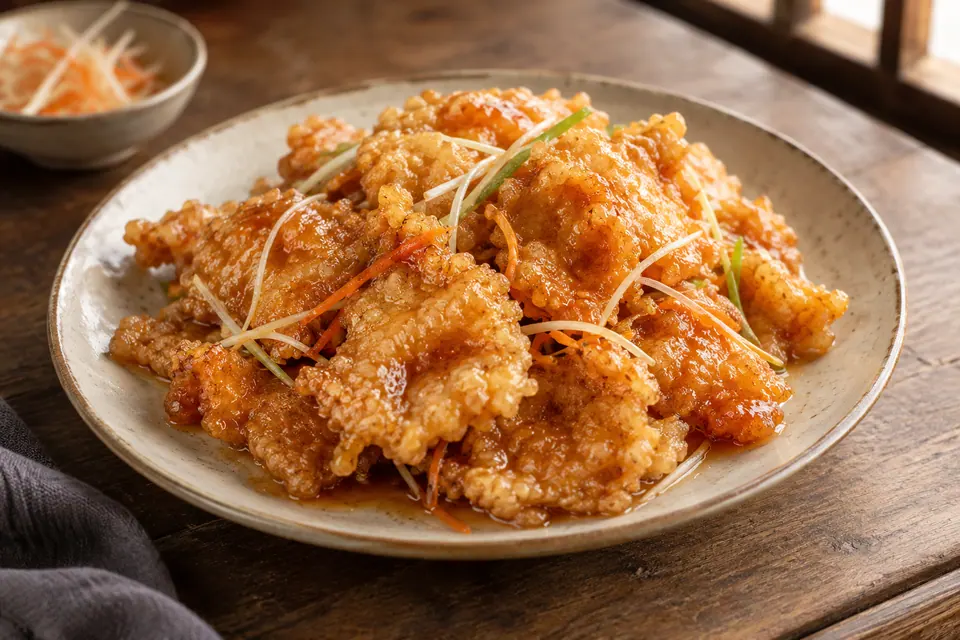
Thin pork slices in a crisp starch coating, tossed quickly in a sweet-and-sour glaze.
The story behind it
Closely associated with Harbin, guobaorou is a recognizable northeastern restaurant dish. It depends on a light, crisp shell and a sauce that coats without soaking; regional versions differ in vinegar, sweetness and color.
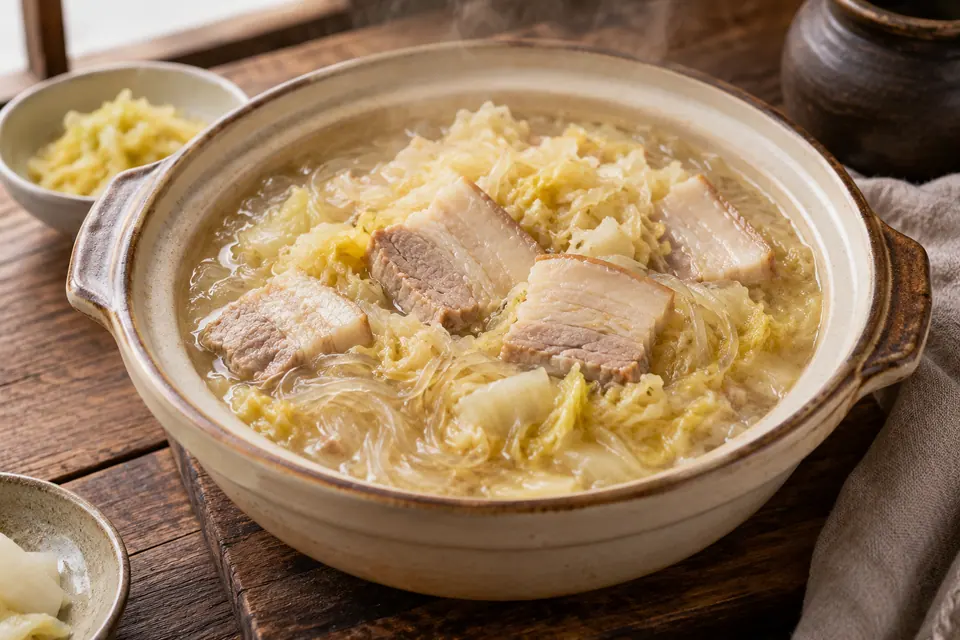
Northeastern pork, pickled cabbage and glass noodlesAI-generated · representative preparation
Fermented napa cabbage simmered with pork belly, sometimes with glass noodles.
The story behind it
Preserving cabbage helped carry vegetables through long northeastern winters. Its clean sourness balances rich pork, making this a home-style cold-weather dish rather than a spicy pickle stew.
At the table
Try with rice or steamed bread; broth and meat are both part of the dish.
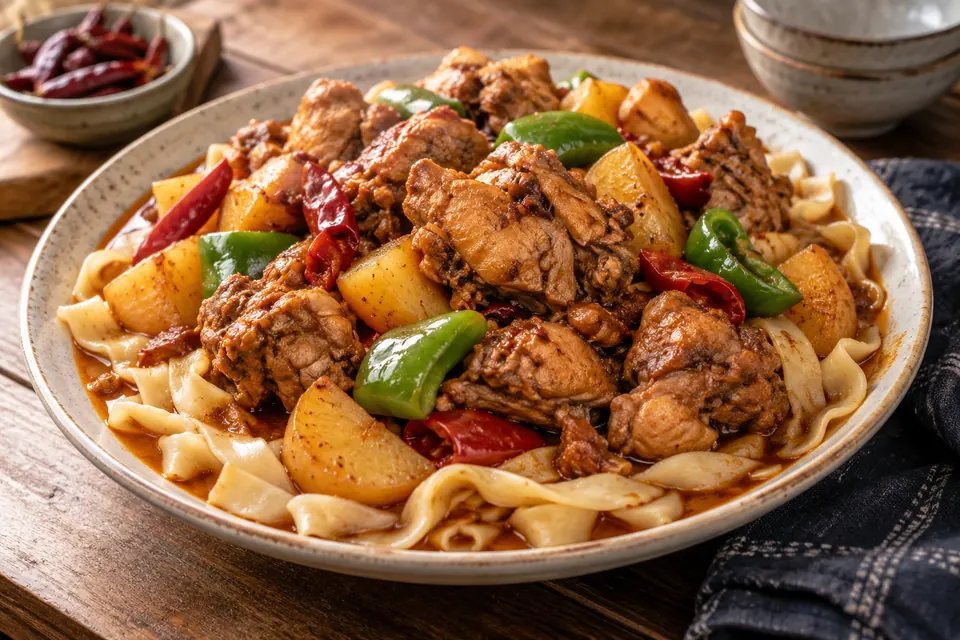
Chicken, potatoes and peppers braised in a bold sauce, often served over broad wheat noodles.
The story behind it
A modern regional favorite shaped by restaurant and roadside dining, dapanji shows the exchange of tastes within Xinjiang. Several origin stories circulate, so a single inventor or date should not be treated as certain.
At the table
Order to share and save some sauce for the noodles; chicken pieces often include bones.
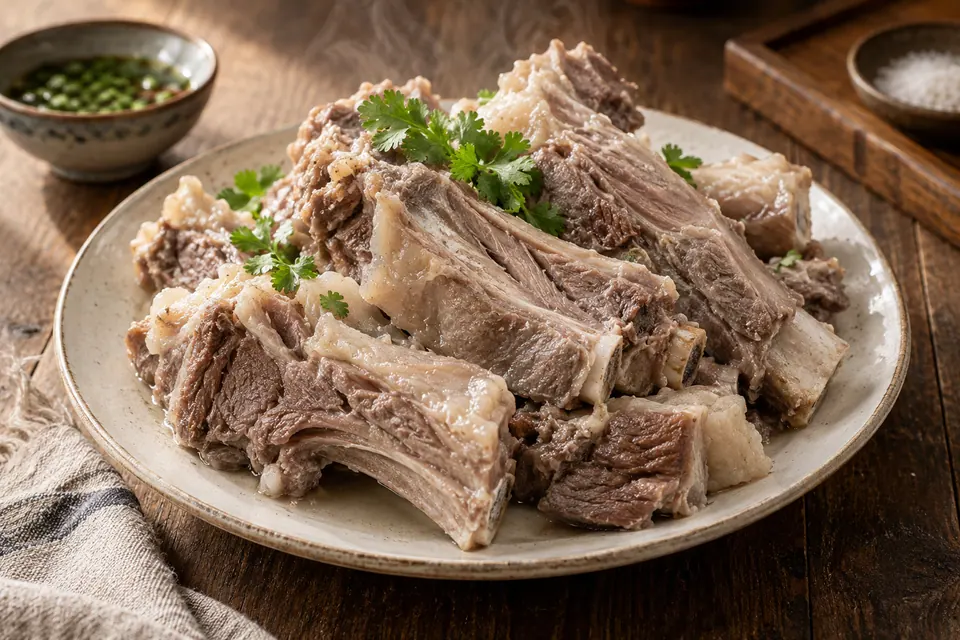
Lamb cooked simply in water or a lightly seasoned broth, served in generous pieces.
The story behind it
Northwestern pastoral and Muslim food traditions give lamb a central place at the table. The restrained seasoning lets the meat’s aroma lead; Ningxia and neighboring areas each have their own cuts and accompaniments.
At the table
Try with raw onion or a local dipping seasoning, adding only as much as you need.
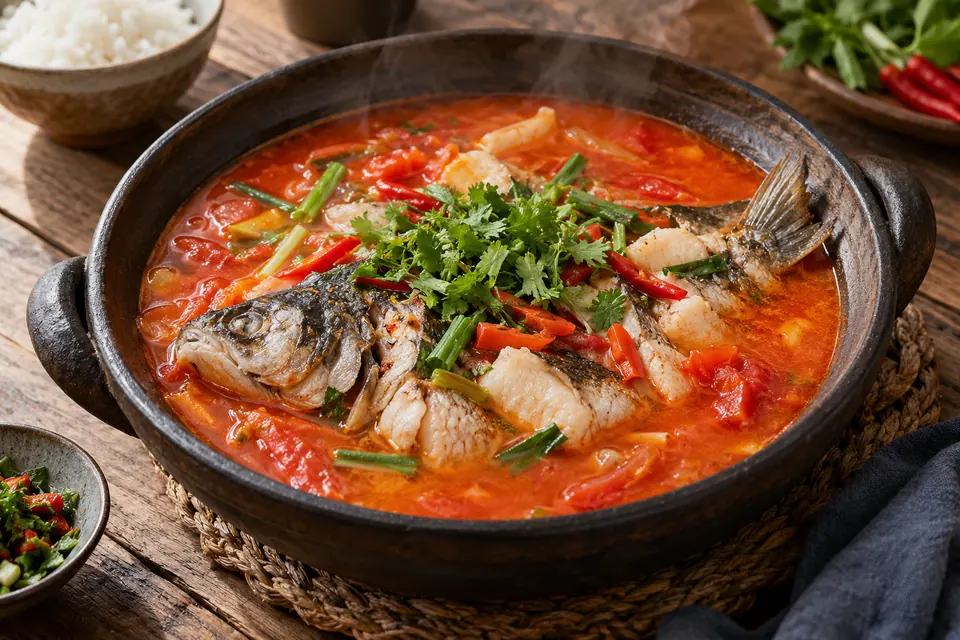
Fish cooked in a bright sour broth, with fermented rice or tomato-based traditions and local aromatics.
The story behind it
Sour flavors are central to many Guizhou foodways, including Miao and Dong communities. Fermentation gives depth beyond simple vinegar sourness, and red and white sour soups represent different local methods.
At the table
Taste the broth first, then try the local dipping sauce; recipes and spice levels vary.
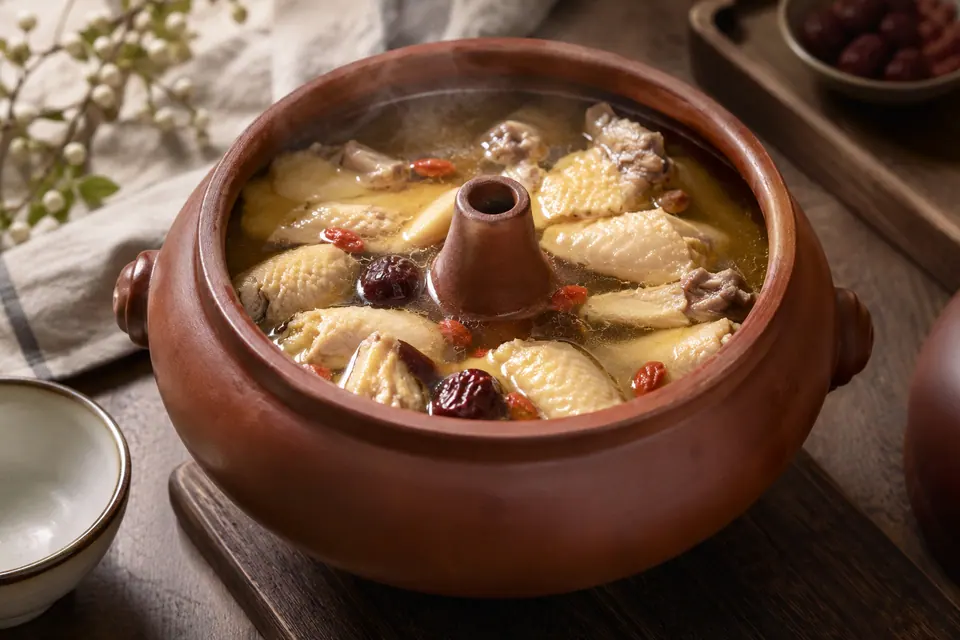
Chicken gently cooked in a special earthenware pot whose central chimney channels steam into broth.
The story behind it
The vessel is part of the cooking method, not just presentation. Associated with Yunnan and Jianshui pottery, steam-pot chicken emphasizes patient steaming and a clear chicken flavor rather than a thick braise.
At the table
Start with the broth; herbs and additional ingredients vary by kitchen.
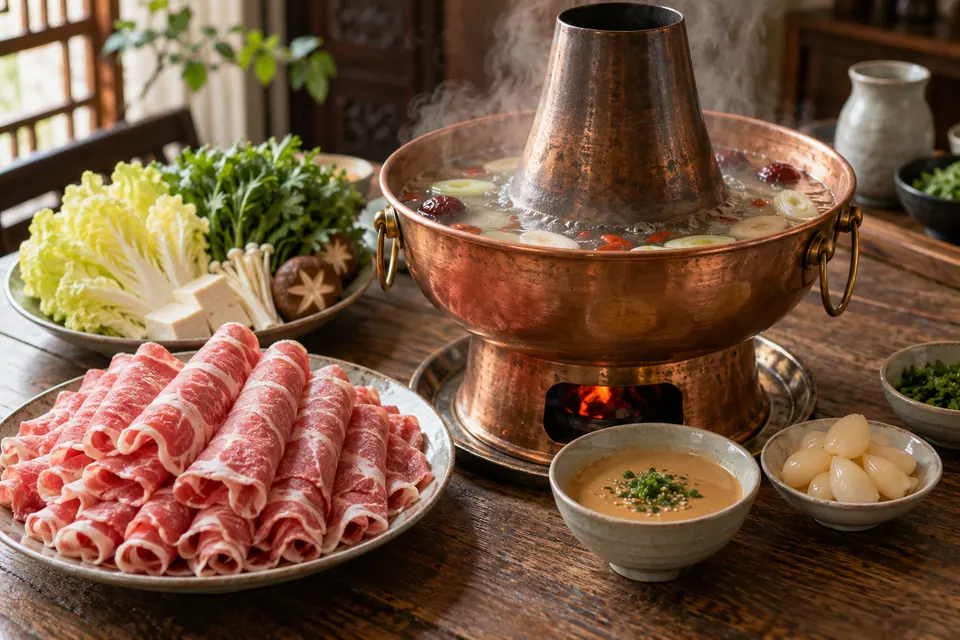
Paper-thin lamb cooked briefly in a light broth, with sesame-paste dipping sauce and pickled accompaniments.
The story behind it
The copper pot with its central chimney is a familiar symbol of Beijing-style shuanrou. Its light broth lets the lamb lead, in contrast to the heavily seasoned broths of many southwestern hotpots. Sesame sauce, fermented tofu and chive-flower paste contribute flavor at the table.
At the table
Cook a few slices at a time until fully done, then dip lightly. Cabbage, tofu and glass noodles can follow.
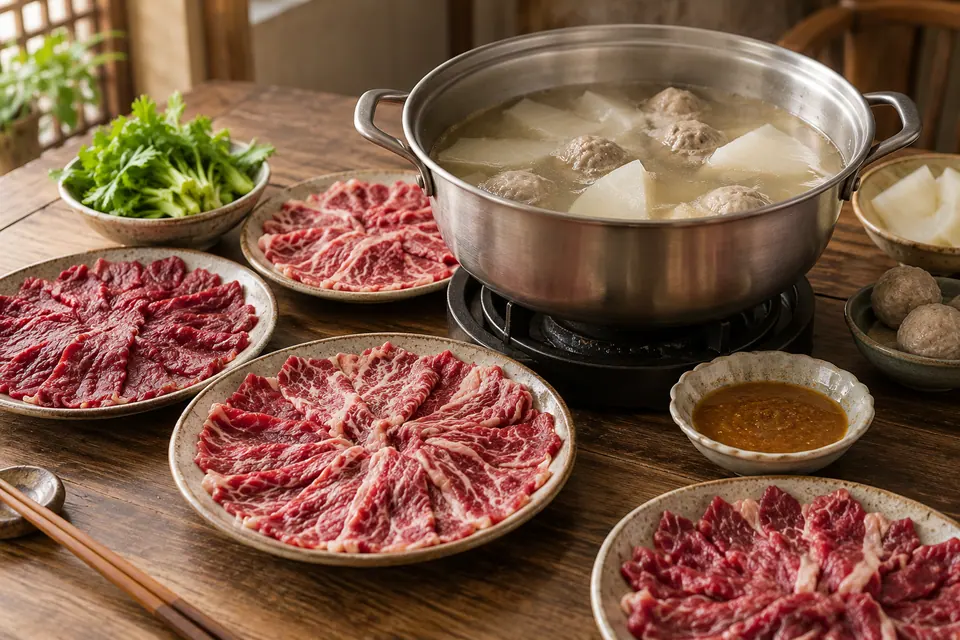
Different cuts of beef cooked in a light broth, with beef balls and often a savory shacha dipping sauce.
The story behind it
Chaoshan beef hotpot makes butchery and texture central to the meal. Menus distinguish cuts by their local names, fat and connective tissue; each behaves differently in the pot. Hand-beaten beef balls belong to a related craft, valued for their springy bite.
At the table
Follow the restaurant’s guidance for each cut and cook it fully. Ask about seafood ingredients in shacha sauce if needed.
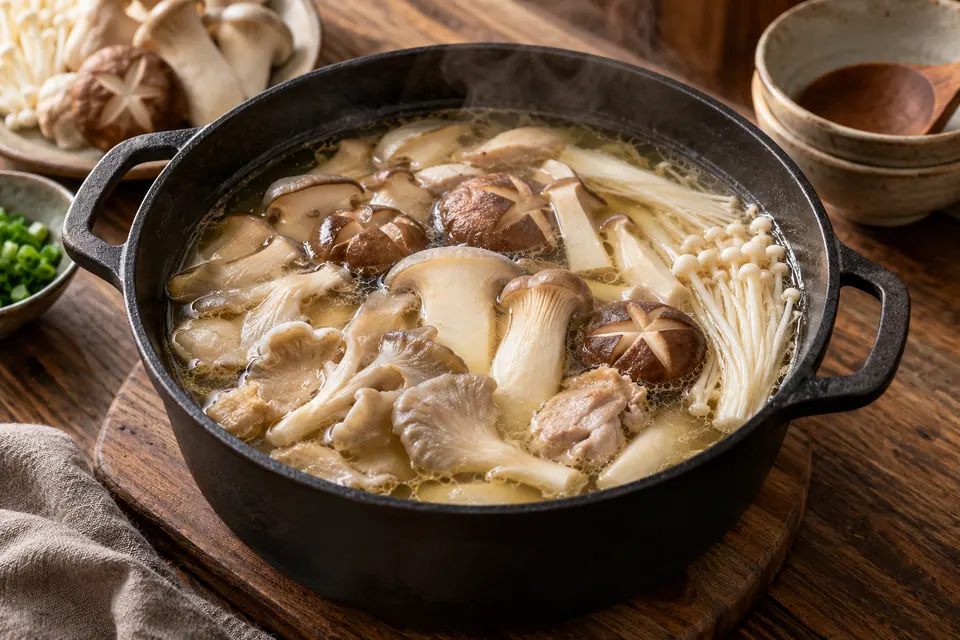
A cultivated-mushroom preparation in chicken brothAI-generated · representative preparation
An aromatic broth with assorted edible mushrooms, sometimes built on a chicken soup base.
The story behind it
Yunnan’s varied environments support a rich mushroom-food culture. Seasonal mushroom meals emphasize aroma and texture rather than chili heat. Restaurant assortments may combine cultivated mushrooms with carefully selected seasonal varieties; there is no single fixed mix.
At the table
Let the restaurant identify and cook the mushrooms properly; do not add self-foraged mushrooms. Follow the full cooking time before tasting the broth.